
Independent Golf Reviews is reader-supported, when you buy through links on our site, we may earn a commission.

The Best Budget Rangefinders in 2026

Updated:
Ryan Heiman
Founder and Head Author of Independent Golf Reviews
Best Budget Rangefinders 2026

Behind Independent Golf Reviews: How we test & review


There is certainly a wide range of rangefinders on the market, and surprisingly, you don’t have to overspend to purchase a quality product. On the other hand, not every product is equally valuable to have, especially when they fail to connect. To help you, we’ve tackled the hard question. What is the best golf rangefinder for your budget?

Over the years, we’ve used dozens of rangefinders with all types of added features and high price tags at Independent Golf Reviews. We’ve seen impressive new tech as it comes on the market and reviewed dozens of high-end products. This time, we’re focusing on value.

Our list doesn’t just include a single recommendation for the best budget rangefinder. Instead, we’ve broken them down by features and functions, accuracy and reliability, and how easy they are to use. Not everyone’s needs are the same, but we’ll help you find the best rangefinder for your specific game-play needs.

Official Budget Golf Rangefinders Rankings 2026

Wosports L06

Best Budget Rangefinder Overall

Wosports L06

Jump To Details
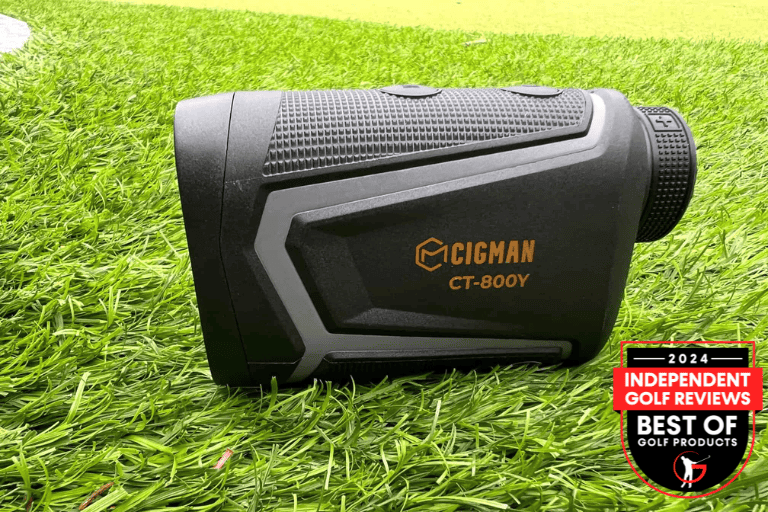
Cigman CT-1000

Alternative Best Budget Rangefinder

Cigman CT-1000

Jump To Details
Flagfront

Cheapest Rangefinder You Can Buy

Flagfront

Jump To Details
Bushnell Phantom 3

Best Budget Handheld GPS Rangefinder

Bushnell Phantom 3

Jump To Details
ShotScope Pro L5

Best Budget Direct to Consumer Rangefinder

ShotScope Pro L5

Jump To Details
Garmin S40

Best Budget Golf GPS Watch

Garmin S44

Jump To Details
Dprofy Smart Golf GPS Rangefinder Caddie Pro

Best Budget Golf GPS

Dprofy Smart Golf GPS Rangefinder Caddie Pro

Jump To Details
MGI SlimPro

Most Compact Budget Rangefinder

MGI SlimPro

Jump To Details
ShotScope Pro X

Most Accurate Budget Rangefinder

ShotScope Pro X

Jump To Details
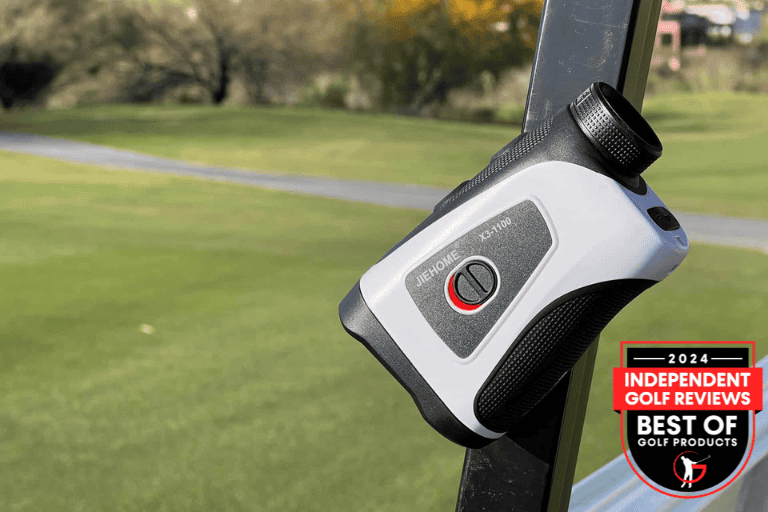
Jiehome X3-1100

Best Budget Rangefinder for Shaky Hands

Jiehome X3-1100

Jump To Details

A golf rangefinder is easily one of the most indispensable tools on the green. It measures the exact distance between you and course landmarks, such as hazards or a flagstick. With that information, you can reach for the best golf club in your bag to help you hit an accurate shot.

There is certainly a wide range of rangefinders on the market, and surprisingly, you don’t have to overspend to purchase a quality product. On the other hand, not every product is equally valuable to have, especially when they fail to connect. To help you, we’ve tackled the hard question. What is the best golf rangefinder for your budget?

Over the years, we’ve used dozens of rangefinders with all types of added features and high price tags at Independent Golf Reviews. We’ve seen impressive new tech as it comes on the market and reviewed dozens of high-end products. This time, we’re focusing on value.

Our list doesn’t just include a single recommendation for the best budget rangefinder. Instead, we’ve broken them down by features and functions, accuracy and reliability, and how easy they are to use. Not everyone’s needs are the same, but we’ll help you find the best rangefinder for your specific game-play needs.

In More Depth: Our TOp Picks

Wosports L06

Best Budget Rangefinder Overall

Wosports L06

5

Check Price↗

Pros & Cons

  • Exceptional accuracy rivals premium models
  • Slope compensation aids club selection
  • Pulse vibration confirms flag lock immediately
  • Clear optics deliver sharp target visibility
  • Affordable pricing, great for beginning golfers
  • Basic build quality feels less premium
  • Battery life shorter than high-end competitors

Expert’s Thoughts

Testing the Wosports L06 over several rounds completely changed my expectations for what budget rangefinders can deliver. I approached this model with some healthy skepticism, assuming corners were cut to hit the price point, but the performance proved me wrong throughout my rounds.

The accuracy was the biggest pleasant surprise. I compared readings against premium units my playing partners used, and the L06 matched them within a yard consistently. Whether shooting flags at 150 yards or hazards at 220, the measurements were spot on for accurate club selection.

The slope function worked beautifully during testing rounds on hilly courses. The adjusted yardages accounted for elevation changes appropriately, helping me avoid the classic mistake of coming up short on uphill approaches. I could toggle slope on and off easily, which is important for tournament play where the slope function isn’t legal.

What I particularly appreciated was the pulse vibration feature. When I locked onto the flag, the unit vibrated distinctly, confirming I’d hit my target rather than trees behind the green. This feedback was especially valuable on courses with background clutter where visual confirmation was tricky.

The optics provided clear, sharp images throughout testing. I could identify flags easily even in challenging light conditions. The magnification brought distant targets into focus without excessive shakiness that plagues some cheaper units.

Build quality is where the budget pricing shows as the unit feels lighter and less hefty than premium models. However, it survived multiple rounds bouncing around in my bag without issues.

Who It’s For

Budget-conscious golfers seeking accurate distance measurements with slope compensation will find the Wosports L06 delivers exceptional value. If you are new to rangefinders and just want a model that delivers reliable performance without significant investment you should definitely start here. It’s also ideal for recreational golfers who need yardages they can trust for better club selection without premium features or build quality.

Cigman CT-1000

Alternative Best Budget Rangefinder

Cigman CT-1000

5

Check Price↗

Pros & Cons

  • Fast acquisition locks targets quickly
  • Slope technology provides adjusted yardages accurately
  • Magnetic mount attaches to cart securely
  • Rechargeable battery eliminates replacement costs
  • Good optics clarity for price point
  • Slightly larger than ultra-compact alternatives available
  • Instructions unclear for some features initially

Expert’s Thoughts

The Cigman CT-1000 impressed me immediately with how quickly it acquired targets compared to other budget options I’ve tried. Speed matters when you’re trying to keep pace during busy rounds and this unit delivered readings almost instantly in most situations.

What stood out after a few holes was also the target acquisition speed when looking at hazards. I’d aim at a bunker I was hoping to avoid, press the button, and get a reading within a second or two. Even on water areas partially obscured by trees or with busy backgrounds, the CT-1000 locked on reliably. This efficiency kept my pre-shot routine moving smoothly without awkward delays while fumbling with equipment.

The slope feature proved accurate on holes with significant elevation changes. The compensated distances helped me club up or down appropriately rather than relying on guesswork. I particularly appreciated how the display clearly differentiated between actual and adjusted yardages, preventing confusion about which number to use.

The magnetic mount was useful during my testing rounds as I could slap the rangefinder onto my cart’s frame and have it instantly accessible rather than digging through pockets or bags. This convenience sped up my routine and reduced the chances of leaving it behind somewhere on the course.

Battery life was excellent throughout testing. The rechargeable system meant I wasn’t constantly buying replacement batteries, which adds up over time. A single charge lasted multiple rounds without issues.

The optics provided adequate clarity for identifying targets, though not quite as crisp as some pricier alternatives. Still, I never struggled to see what I was aiming at during testing rounds across various lighting conditions.

Who It’s For

Golfers wanting fast target acquisition and convenient magnetic cart mounting will appreciate the CT-1000’s practical features and low price point. Players who ride in carts frequently and want easy rangefinder access will benefit from the magnetic attachment. This Cigman model is perfect for those casual golfers needing reliable slope technology, rechargeable convenience, and quick readings without paying a premium price.

Flagfront

Cheapest Rangefinder You Can Buy

Flagfront

5

Check Price↗

Pros & Cons

  • Lowest price point makes entry affordable
  • Basic functionality covers essential distance needs
  • Rechargeable battery included eliminates additional costs
  • Adequate accuracy for recreational play requirements
  • Slope feature available at minimal price
  • Build quality feels fragile and cheap
  • Slower target acquisition than better models

Expert’s Thoughts

I tested the Flagfront with realistic expectations given its rock-bottom pricing. This isn’t trying to compete with premium rangefinders and understanding that context is important for fair evaluation. For golfers on extremely tight budgets, this rangefinder delivers basic functionality that’s certainly better than guessing your yardage based on markers on the course.

The accuracy proved solid, if unspectacular, during my testing rounds for recreational purposes. Measurements were generally within 2-3 yards of premium units, which is close enough for casual play where you’re not splitting hairs over exact distances. On straightforward shots to visible flags without obstacles, it performed its job acceptably.

Target acquisition required much more patience than pricier alternatives. And I must admit that I became frustrated at times as I had to hold steadier and make multiple attempts before getting a reading, especially on flags with busy backgrounds. But that aside, you are getting this rangefinder because it’s a steal at this price.

While I couldn’t verify its perfect accuracy without sophisticated equipment, the adjusted yardages seemed reasonable during testing on hilly courses. Having this feature available when many budget units skip it entirely adds significant value for the budget conscious golfer.

Build quality is where you truly see the cost savings. The unit feels lightweight and somewhat fragile. I was extra careful during testing to avoid drops or impacts that it might not survive. The buttons felt less responsive than better rangefinders, requiring deliberate presses. But once you get the hang of using this model, it won’t bother you.

Who It’s For

Extremely budget-conscious beginners who need basic distance measurements and can’t afford anything pricier will find the Flagfront functional. Players wanting to test whether they’ll actually use a rangefinder before investing more should consider this minimal-risk option. I also feel it’s adequate for casual golfers who play infrequently and need simple yardages without expecting premium performance, speed, or durability from their equipment.

Bushnell Phantom 3

Best Budget Handheld GPS Rangefinder

Bushnell Phantom 3

5

Check Price↗

Pros & Cons

  • Simple button operation eliminates smartphone dependence
  • Preloaded courses ready immediately without downloads
  • Front, center, back distances displayed clearly
  • Compact size fits pockets easily always
  • Long battery life lasts multiple rounds
  • No slope compensation for elevation adjustments
  • Screen visibility struggles in bright sunlight

Expert’s Thoughts

Testing the Bushnell Phantom 3 introduced me to handheld GPS technology, and I was surprised by how much I appreciated the simplicity compared to laser rangefinders. This device strips away complexity and just tells you what you need to know.

The ease of use was immediately apparent during my first testing round. I turned it on, it located my position within seconds, and distances appeared on the screen. No aiming required, no steadying my hands, no waiting for locks. I could glance down, see my yardages to front, center, and back of the green, and make my club selection confidently.

What I particularly valued was having distances ready before I even reached my ball. While walking up the fairway, I could check the yardage and start planning my approach. This pre-planning sped up my routine and helped me play more deliberately rather than rushing decisions.

The preloaded course database covered every course I played during testing without requiring downloads or subscriptions. The device recognized courses automatically and switched between holes seamlessly as I played. This plug-and-play experience eliminated the technology frustrations that sometimes plague smartphone apps.

Battery life exceeded expectations throughout testing. A single charge lasted multiple rounds without issues, and I never experienced the device dying mid-round. This reliability built trust that the Phantom would be ready whenever I needed it.

Worth noting, the screen visibility became problematic during particularly sunny rounds. I had to shade it with my hand occasionally to read the display clearly. This wasn’t a dealbreaker but represented my main frustration during testing.

Who It’s For

Golfers preferring simple GPS distances without aiming lasers will appreciate the Phantom 3’s effortless operation. It’s ideal for those seeking reliable, straightforward distance information at budget pricing without slope features or advanced functionality they won’t use. If you want instant yardages to greens without carrying smartphones or dealing with apps this dedicated device is for you.

ShotScope Pro L5

Best Budget Direct to Consumer Rangefinder

ShotScope Pro L5

5

Check Price↗

Pros & Cons

  • Premium accuracy matches expensive competitors
  • Advanced optics provide exceptional clarity
  • Vibration and visual confirmation lock feedback
  • Durable construction feels quality throughout use
  • Direct pricing delivers value by eliminating markup
  • Online purchasing requires leap of faith
  • Limited physical retail presence for testing

Expert’s Thoughts

The ShotScope Pro L5 challenged my assumptions about the relationship between price and performance. Testing this direct-to-consumer rangefinder over multiple rounds, I kept comparing it mentally to units costing significantly more and finding virtually no meaningful performance gaps.

The optical quality was genuinely impressive. Images were crisp and bright with excellent contrast that made flags stand out clearly against backgrounds. Even in low-light conditions during early morning and late afternoon rounds, I could identify targets confidently. The clarity rivaled premium rangefinders I’ve tested that cost twice as much.

Accuracy felt spot-on throughout my testing. I verified readings against playing partners using established premium brands, and the measurements matched consistently. Whether shooting pins, hazards, or intermediate targets, the Pro L5 delivered reliable numbers I trusted for club selection without second-guessing.

The dual confirmation system worked beautifully. When I locked onto a target, the unit provided both vibration feedback and a visual indicator. This redundancy eliminated doubt about whether I’d actually locked the flag versus background objects. The confidence this built accelerated my pre-shot routine.

Build quality exceeded expectations for the price point. The unit felt substantial and well-constructed in my hands. Nothing felt cheap or fragile during testing rounds. The buttons were responsive, the battery compartment sealed properly, and the overall finish suggested longevity.

What makes this pricing possible is the direct-to-consumer model that eliminates retail markup. You’re getting premium performance at budget pricing because there’s no middleman taking a cut.

Who It’s For

Golfers comfortable buying online who want premium rangefinder performance at budget pricing will love the Pro L5’s exceptional value. If you are seeking advanced optics, reliable accuracy, and quality construction without retail markup you should explore ShotScope’s direct model. It’s great for those willing to purchase sight unseen based on reviews to access performance that rivals units costing significantly more.

Garmin S40

Best Budget Golf GPS Watch

Garmin S44

5

Check Price↗

Pros & Cons

  • Convenient wrist-based access eliminates carrying devices
  • Preloaded courses cover thousands of locations
  • Green view shows contours for reading breaks
  • Activity tracking beyond golf adds versatility
  • Touchscreen interface operates intuitively
  • Smaller screen harder to read sometimes
  • Battery drains faster with GPS active

Expert’s Thoughts

Wearing the Garmin S44 during testing rounds fundamentally changed how I interacted with distance information. Having yardages literally at a glance on my wrist proved more convenient than I anticipated before trying this format.

The biggest advantage was accessibility. I never had to pull anything from my pocket, aim at targets, or fumble with devices. A quick wrist rotation showed me distances to front, middle, and back of greens instantly. This seamless access kept my routine flowing smoothly without equipment interruptions.

The green view feature impressed me more than expected. Before putting, I could check the green’s general contour and break tendency. While not replacing actual green reading skills, it provided helpful context that influenced my approach to longer putts. On unfamiliar courses during testing, this information proved genuinely valuable.

Course coverage was comprehensive throughout my testing. Every course I played was preloaded and ready to use. The watch transitioned between holes automatically as I played, requiring zero input beyond starting a round. This hands-off operation let me focus entirely on golf rather than managing technology.

What surprised me was how much I used the fitness tracking features between rounds. The S44 doubled as an activity tracker that monitored steps, heart rate, and other metrics. This versatility made the watch more valuable beyond just golf applications.

The screen size represented the main compromise. Reading information required more focus than larger handheld units, and bright sunlight occasionally made the display harder to see. Battery life also demanded attention as GPS-intensive golf rounds drained power noticeably.

Who It’s For

You’ll love the S44’s wrist-based convenience if you’re tired of fumbling for a handheld rangefinder mid-round. Beyond golf, it tracks your daily steps and workouts throughout the week. Perfect for regular players who need quick distances to hazards and greens without paying for advanced features they’ll never touch.

Dprofy Smart Golf GPS Rangefinder Caddie Pro

Best Budget Golf GPS

Dprofy Smart Golf GPS Rangefinder Caddie Pro

5

Check Price↗

Pros & Cons

  • Large color screen displays information clearly
  • Voice distances eliminate looking at screen constantly
  • Hazard yardages aid strategic course management
  • Compact handheld size fits comfortably anywhere
  • No subscription fees for course access
  • Plastic construction feels less durable overall
  • Screen visibility reduced in direct sunlight

Expert’s Thoughts

The Dprofy GPS intrigued me during testing primarily because of the voice feature, which I’d never experienced before. Having distances spoken aloud changed how I used GPS information in ways I didn’t anticipate.

The voice function proved surprisingly useful during rounds. As I approached my ball, the device would announce my distance to the green without me touching anything or even looking at it. This hands-free information delivery meant I could stay focused on reading the hole, checking wind, and planning strategy rather than managing a device.

The large color screen was easy to read during most conditions. Information displayed clearly with good contrast between elements. I could see front, center, and back yardages plus hazard distances at a glance. The interface was intuitive enough that I figured out most functions during my first testing round without consulting instructions.

Hazard information added real value during testing on unfamiliar courses. Knowing exact distances to carry bunkers or clear water helped me make smarter club selections. This strategic information improved my course management and likely saved me several strokes during testing rounds.

Course coverage was comprehensive in my area. Every course I tested was available and loaded quickly. The device found my location reliably at the start of rounds and tracked my position accurately throughout play.

The construction quality felt basic during testing as the plastic housing seemed functional but not particularly durable. I was careful about drops and impacts, suspecting it wouldn’t survive rough treatment. The screen also struggled somewhat in very bright conditions, requiring shading occasionally.

Who It’s For

The Dprofy works best if you want distance callouts without looking down at a screen between shots. You get hands-free yardages that let you focus on your pre-shot routine while hearing exact numbers to the front, center, and back of greens. If you play courses with tricky hazards and need complete layout information without monthly fees, this delivers GPS functionality at a price that won’t strain your equipment budget.

MGI SlimPro

Most Compact Budget Rangefinder

MGI SlimPro

5

Check Price↗

Pros & Cons

  • Extremely slim profile fits shirt pockets
  • Lightweight design minimizes carrying burden always
  • Adequate accuracy for recreational distance needs
  • Simple operation without complicated features unnecessary
  • Affordable pricing for minimal footprint design
  • Small size harder to grip steadily
  • Basic optics lack premium clarity completely

Expert’s Thoughts

Size matters when you’re trying to minimize what you carry during rounds, and the MGI SlimPro delivered on its compact promise throughout my testing. This rangefinder disappeared into my pocket so completely that I sometimes forgot I was carrying it.

The slim profile was immediately noticeable. Unlike bulkier rangefinders that create obvious pocket bulges or require belt cases, the SlimPro slipped into my shirt pocket and stayed there comfortably. During hot rounds when I wanted to minimize gear, this minimal footprint proved genuinely valuable. I could walk the course feeling unencumbered while still having distance technology available.

The lightweight construction complemented the slim design. Carrying it felt effortless throughout testing rounds. There was no pocket sagging or weight pulling on my clothing. For golfers sensitive to carrying extra items, this minimalist approach removes excuses about rangefinders being burdensome.

Performance was adequate for my recreational needs during testing. The accuracy seemed reasonable, generally within a few yards of playing partners’ premium units. For casual rounds where I’m not obsessing over exact distances, the readings provided sufficient information for decent club selection.

The compact size created handling challenges. Gripping the small unit steadily while acquiring targets required more focus than larger rangefinders. My hands aren’t particularly large, but I still felt the SlimPro was almost too small for comfortable operation. People with bigger hands might find this frustrating.

Optical quality was basic throughout testing. Images lacked the crispness of better rangefinders, appearing somewhat dim and less defined. I could still identify targets adequately, but the viewing experience wasn’t particularly enjoyable.

Who It’s For

You’ll appreciate the SlimPro if you hate bulky gear weighing down your pockets during walking rounds. It delivers straightforward yardages without the heft of traditional rangefinders. Best suited for recreational players who need basic distances and value portability over crystal-clear optics or rock-solid stability in windy conditions.

ShotScope Pro X

Most Accurate Budget Rangefinder

ShotScope Pro X

5

Check Price↗

Pros & Cons

  • Exceptional precision rivals tour-level units consistently
  • Advanced laser technology locks targets rapidly
  • Premium optics deliver crystal-clear target visibility
  • Robust construction suggests excellent long-term durability
  • Direct pricing provides remarkable value proposition
  • Slightly larger than ultra-compact alternatives
  • Online purchase limits hands-on evaluation beforehand

Expert’s Thoughts

Accuracy was my primary concern during testing because unreliable measurements make rangefinders worthless regardless of other features. The ShotScope Pro X addressed this concern immediately and maintained precision throughout extensive testing that built complete trust in its readings.

I verified accuracy obsessively during my first few testing rounds by comparing readings against premium units costing significantly more. The Pro X matched them within a yard repeatedly across distances from 80 to 250 yards. Whether shooting pins, trees, bunkers, or other targets, the measurements felt absolutely reliable. This consistency eliminated any doubt about trusting the numbers for club selection.

The laser technology locked onto targets quickly and confidently. Even flags partially obscured by branches or with busy backgrounds didn’t cause problems during testing. The unit would vibrate distinctly when locked, confirming I’d hit my intended target rather than something behind it. This positive feedback accelerated my pre-shot routine.

Optical quality was outstanding for this price category. Images appeared bright and sharp with excellent color rendition. Even in challenging light conditions during early morning rounds, I could identify flags clearly at distance. The viewing experience rivaled rangefinders costing considerably more.

Build quality suggested this unit would last for years. Everything felt solid and well-assembled during testing. The buttons operated with satisfying precision, the battery door sealed properly, and the overall construction inspired confidence about durability. Nothing felt cheap or likely to fail prematurely.

Who It’s For

If you’re serious about your golf and need tournament-ready accuracy, the Pro X delivers measurements you can trust when every yard counts. I found the optics surprisingly sharp for this price point, with fast lock-on that rivals rangefinders costing twice as much. You’ll get pro-level precision and durable construction that holds up round after round.

Jiehome X3-1100

Best Budget Rangefinder for Shaky Hands

Jiehome X3-1100

5

Check Price↗

Pros & Cons

  • Stabilization technology compensates for hand movement
  • Fast lock acquisition despite unsteady grip
  • Clear optics aid target identification significantly
  • Pulse confirmation validates successful flag lock
  • Affordable pricing for stabilization feature inclusion
  • Slightly heavier than non-stabilized budget models
  • Battery consumption higher with stabilization active

Expert’s Thoughts

Hand steadiness has always challenged me when using rangefinders, so testing the Jiehome X3-1100 with its stabilization technology felt particularly relevant. Over multiple rounds, this feature transformed my rangefinder experience from frustrating to functional.

The stabilization made an immediate difference during my first testing round. Where I typically struggle holding the image steady enough to lock targets, the X3-1100 smoothed out my natural shakiness electronically. The view remained stable enough that target acquisition became dramatically easier and faster. What used to require multiple attempts now worked on the first try consistently.

This capability proved especially valuable on longer shots where even slight hand movement gets magnified. Shooting pins beyond 200 yards, which previously frustrated me with other rangefinders, became straightforward with the X3-1100. I could lock distant targets confidently without the image jumping around excessively.

The pulse vibration provided reassuring confirmation when I’d successfully locked the flag. This feedback eliminated doubt about whether I’d measured my intended target or something behind it. Combined with the stabilization, my confidence using rangefinders increased substantially during testing.

Optical clarity was good throughout testing rounds. Images appeared reasonably sharp and bright, making target identification straightforward in most lighting conditions. While not matching premium optics, the quality was more than adequate for reliable use.

Who It’s For

If you’ve ever fought to keep your rangefinder steady enough to lock onto a flag, the X3-1100’s stabilization changes everything. The technology compensates for hand shake that makes standard rangefinders nearly impossible to use accurately. You get steadying assistance that older players and anyone with tremors will immediately notice, bringing premium stabilization down to a price point where it’s actually accessible instead of reserved for top-tier models.

How We Tested These Budget Rangefinders

The reality is that the only way to actually test a rangefinder is to take it out onto the course and try it out firsthand. Ultimately, this comes down to how accurate the tool is. To test this, we looked for locations throughout the golf course where we knew the distance to be highly accurate, such as 100-yard or 200-yard markers. We used that as a starting point to determine if the device connected properly and displayed the right length.

Good news, all of those on the list did that. But there’s more to think about with these tools. Conditions change, GPS signals can sometimes be hard to connect to, and battery settings can cause a lack of accuracy. The solution here is to test rangefinders at various times in their battery lifecycle, in various weather conditions, as well as with both reflective and non-reflective targets.

I’ve used so many rangefinders over the years that it’s rather easy to tell which are going to be frustrating and, at times, too time-consuming, and which enhance the golf game without slowing down the pace. Most rangefinders work great right out of the box, but can begin to fail quickly over time if they are an inferior product. That’s why we also looked at some used and new models to see the differences.

The results? I’ve personally tested every one of the rangefinders on this page for accuracy and reliability, and whether they improve club selection. You may have some differences of opinion, but in all situations, you can appreciate the combination of value and functionality these tools offer.

Join The GOLF CLub

Get insider access & stay up to date with the latest releases in golf

You may unsubscribe from the newsletters at any time.

How to Choose the Best Budget Rangefinder

The goal is to select a rangefinder that improves your game and helps you avoid overspending. To do that, consider the following factors that ultimately define what makes a rangefinder better than the others, in our experience.

Accuracy

  • The best budget rangefinder provides accuracy to about one yard.

There’s no point in purchasing a rangefinder that lacks accuracy. Accuracy determines your ability to benefit from the tool.

Aim for those that are =/- 1 yard. Anything more than this limits the overall value it provides. Remember, the goal is to quickly use the tool, determine the distance, and reach for the best club in your bag.

High-end models are superior in accuracy. This is one area you may choose to spend a bit more on. In competitive play, for example, those small differences in accuracy can shave shots off your game. I wouldn’t recommend purchasing a rangefinder that’s off by more than a yard or so, but only upgrade if superior precision is important to your game.

Range and Magnification

The next feature is the range itself. How far can the device accurately measure? This is one area where the value of the product comes into play. You’ll see that some of the inferior products require you to be fairly close to provide function, and that limits their benefit to you. Each course differs, and playing conditions vary from one game to the next. You’ll need a rangefinder that offers varying ranges.

Standard rangefinders in the budget-friendly range should provide 400 to 600 yards of measurement. If you’re spending more, some can reach over 1000. Is that necessary? For the average game, probably not.

Magnification goes alongside range. Choose a magnification between 5x and 7x. That allows you to see targets significantly farther with better clarity. Better magnification translates into more accurate measurement of the hazards or flagstick on the course.

  • Choose a rangefinder with at least 400 to 600 yards of range and 5x to 7x magnification ideally.

Battery Life

This is one of the frustrating aspects of some rangefinders. Battery life has improved over the years. We’ve seen tools become more reliable even when you forget to take them out of your bag. However, make sure the battery life is not only long, but, as it dwindles, the accuracy remains the same. This comes down to the quality of the product’s design.

  • Choose a rangefinder with a battery life indicator with a long-lasting power up.

Speed in Locking In

Have you ever been on the course with someone using an inferior rangefinder for the first time? It’s frustrating to watch as they try to adjust and move to lock in their target. It takes away from the sport of it all.

When choosing a budget rangefinder, look for those that lock in fast. Often called acquisition speed, it helps find the target quickly so you can keep the game moving. That matters, especially when you’re trying to keep pace during busy rounds.

The best rangefinders display nearly instantly. If the target is further, say beyond 200 yards, it will take slightly longer but should still only take a few seconds to find the target.

  • Choose a range finder that offers nearly instant acquisition of targets.

Slope Indicators

The slope feature is another valuable investment in your rangefinder. It should provide you with an accurate calculation of the “plays like” distance. That takes into consideration factors such as the elevation of the layout. This must be accurate to be worthy of your investment.

  • Choose a device that calculates plays-like. Not all devices offer this feature, but it is worth investing in.

Ease of Use

Depending on your skill and desire, choosing a user-friendly design can make sense. Some rangefinders pack in the features, but that makes them more challenging to use until you learn the intricacies of how they work. (We recommend choosing the best rangefinder for you and then actually reading the guide and learning how to use it fully.)

For ease of use, look for a product that offers:

  • Intuitive controls
  • A bright, clear display with adjustable brightness for those sunny days
  • Simple and straightforward operation

The best budget rangefinders keep things simple with one-button operation. Click the button, point, and it reads and then displays within seconds.

  • Choose a rangefinder with intuitive controls and a simple design with a clear screen for the best overall investment.

Weather Resistance

Not every great game of golf happens in bright, sunny weather. You still will want to use your rangefinder when conditions are less-than-ideal. For this reason, choose a rangefinder with a weather-resistant design. The best products are waterproof, meaning they are built to keep water out. Weather-resistant options cost a bit less and can handle a few drops of rain. If you consistently play in wet weather, it’s worth investing in a water-resistant model.

  • Choose a rangefinder with a durable build that’s at least weather-resistant.

Best Budget Rangefinders by Type

When choosing a budget rangefinder, you have a range of styles to select from, and as a result, you’ll want to consider those individual features carefully to determine which is the right fit for you. To help you, here’s a look at the critical features in some of the various types of range finders that are worth spending a bit more on for your purchase.

  • Laser rangefinders: These are higher-end, more expensive, and offer highly precise readings that enhance shot accuracy. Choose this style when every shot matters. If you’re going to spend more, ensure it comes with magnification lenses to hit far targets accurately.
  • GPS rangefinders: More affordable, these are typically your go-to for value. Many are preloaded with courses, which can be beneficial for accuracy improvement. If you go this route, choose one you can update over time to keep golf course maps accurate.
  • Hybrid rangefinders: These use laser and GPS and tend to be more expensive because of their accuracy and enhanced technology. They are also harder to use, typically, and heavier to carry. If you choose a hybrid model, ensure it offers the features you need, not just a long list of functions.

Where to Spend Your Money on Budget Rangefinders

A rangefinder’s task is to improve your game. Some are filled with features that seem impressively helpful but are less likely to be used in the course. For this reason, if you want the right balance of moderate to low cost and features, this is where you’ll want to spend your money:

  • Absolutely focus on accuracy. Aim for 1, and no more than 2 yards of accuracy with the rangefinder, tested and proven.
  • Rechargeable and long-lasting battery with an indicator.
  • Simple one-button design that produces results at near instant speed or within a few seconds for longer shots.
  • Durable design. You’ll drop it. It will be caught in the rain with you. Choose a device that’s durable.
  • Clear screens. Surprisingly, this is not always the case, especially in bright conditions.

With these factors in mind, you’ll be able to purchase the best budget rangefinder that will meet your needs. Added technology, slope readings, and downloaded maps are great enhancements when your budget allows for them.

FAQ

Is there one brand of rangefinder that you would recommend for everyone?

Numerous products exist from a wide range of brands. Is one better than all the others? Not necessarily. While it’s easy to feel comfortable choosing a well-known brand, we recommend choosing based on accuracy and functionality instead. That’s going to produce the best overall results in your gameplay.

Is a pocket-sized golf rangefinder accurate?

Some are very small and easy to use. As long as the screen is clear and the accuracy is on target, they can be a reliable solution for most needs. Pocket devices need to be durable as they are the most likely products to hit the course and could throw off your swing. Choose what you’re more comfortable with in terms of size and function.

Is it worth spending more for a hybrid golf rangefinder?

A hybrid golf rangefinder is becoming one of the more sought-after products, but they do cost significantly more. In competitive game play, when you want both laser and GPS accuracy, they can be worth it. For everyday use, it may not be worth splurging on these unless you are on the course constantly.

Is a rangefinder actually worth investing in as an average player?

A rangefinder can certainly be a worthy investment, at any skill level. It provides very precise data that allows you to make better club decisions at each shot. These devices can provide front, middle, and back distances to the green and various golf hazards. That will improve your ability to use the appropriate club and, as a direct result, enhance your ability to play well.

Ryan Heiman – Founder and Head Author of Independent Golf Reviews
Founder of Independent Golf Reviews, Ryan plays to about a 3 handicap and writes most of the articles about the equipment, accessories and travel. Now living in Tucson, AZ he enjoys year round golf. He’s been writing reviews here and for other websites for over 10 years now. He has worked with every brand over that time.
Learn more…