Independent Golf Reviews is reader-supported, when you buy through links on our site, we may earn a commission.
Best Driving Irons 2025

Behind Independent Golf Reviews: How we test & review
1000+
Clubs Tested
14+
Years of Reviews
100%
Unbiased
Our Top Tested Picks
– Best Driving Iron Overall (Low Handicappers)
– Best Driving Iron for Most Golfers (Mid Handicappers)
– Most Forgiving Driving Iron (High Handicappers)
– Best Budget Driving Iron
– Best Driving Iron for Seniors
– Best Driving Iron for Beginners
– Best Driving Iron for Distance
– Best Direct To Consumer Option
Official Driving Iron Rankings 2025


In More Depth: Our TOp Picks

Best Driving Iron Overall (Low Handicappers)
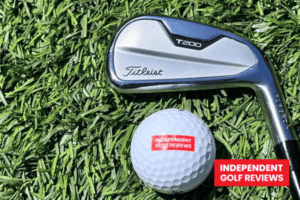
Titleist T250 Utility Iron
Pros & Cons
- Max Impact technology expands sweet spot significantly
- Forged construction delivers premium feel and feedback
- D18 density control optimizes center of gravity
- Clean address profile inspires confidence at setup
- Progressive design suits multiple loft options perfectly
- Higher price keeps this club for serious golfers only
Expert’s Thoughts
After spending time with the T250U, I’m convinced Titleist has cracked the code on making utility irons appealing to traditional golfers. What stands out immediately is how this club doesn’t ask you to compromise your bag’s identity. It genuinely looks like it belongs next to your scoring irons, not like you’ve admitted defeat and stuck another hybrid in your bag because you need help.
The real revelation comes during actual play. I’ve tested countless utility irons that promise performance but require perfect contact to deliver. This one’s different. The technology packed inside, which you’d never know existed just by looking, creates a margin for error that lets mid handicappers actually use a 3 iron without embarrassment. My toe strikes still traveled respectable distances and maintained reasonable dispersion, which frankly shocked me given the inconsistent contact pattern.
What impressed me most was the trajectory control. I’ve always struggled getting traditional long irons airborne enough to hold greens, but this club launches higher without ballooning. The flight is penetrating yet stops quickly, giving you genuine strategic options on long approaches. The workability surprised me too. When I caught it flush, shaping shots felt natural rather than forced.
For players caught between wanting the authenticity of an iron and needing modern forgiveness, this driving iron might be your answer.
Who It’s For
I’d recommend this for single-digit handicappers who strike their long irons consistently and want a utility club that feels like an extension of their forged iron set. The T250 suits players who place an emphasis on workability and shaping shots to achieve complete control, yet need a smidge of forgiveness.

Best Driving Iron for Most Golfers (Mid Handicappers)
Cobra King Tec Utility Iron
Pros & Cons
- PWRShell face design increases ball speed dramatically
- Tungsten weighting lowers center of gravity effectively
- Hollow body construction forgives mishits generously
- V-Shaped sole glides through turf cleanly
- Multiple loft options accommodate various gaps
- Larger profile less workable than compact blades
Expert’s Thoughts
My experience with the King Tec revealed something unexpected about modern utility iron design. Cobra has made accessible what was once strictly players’ territory, creating a club that welcomes golfers beyond the single digit handicap crowd while maintaining enough sophistication for skilled ball strikers.
The standout feature for me was how this club rescued my mistakes. I’m prone to catching these long irons low on the face, and that typically meant watching a weak line drive down the fairway. But not here with the King Tec. Instead, that off-center contact still produced decent results with enough carry and spin to remain close to my target line. That alone changes the calculus for whether someone like me should even consider carrying a utility iron.
I found myself genuinely excited to pull this club on tight par 4s and longer approaches on par 5s, which tells you everything. The confidence it inspired came from knowing my mediocre strikes wouldn’t ruin holes. When I did catch it clean, the ball absolutely jumped off the face with a piercing trajectory that cut through the wind with high speed.
My only real criticism involves what Cobra took away rather than what they added. Losing adjustability feels like a step backward when competitors are moving toward more customization. Still, for golfers seeking their first utility iron or those wanting to simplify the top of their bag, this remains an excellent choice.
Who It’s For
I think this club is perfect for golfers holding handicaps over who struggle with traditional long irons but want more control than hybrids provide. The King Tec makes sense if you need a reliable 200-yard plus option that offers a ton of forgiveness to produce wthe results you need.

Most Forgiving Driving Iron (High Handicappers)
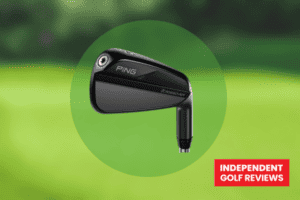
Ping iDi Driving Iron
Pros & Cons
- Largest profile provides maximum forgiveness available
- Maraging steel face generates exceptional ball speed
- Extreme perimeter weighting stabilizes off-center hits
- Adjustable hosel allows loft and lie customization
- High launch makes getting airborne effortless
- Substantial size less versatile from tight lies
Expert’s Thoughts
Testing the iDi left me genuinely satisfied with how far Ping has evolved its utility iron options over the years. The yearly revamp (rather than simple tweaks to previous designs) increases ball speed, improves ball flight, and increases overall shot quality. These three characteristics absolutely shine with the new iDi.
Once we got it on the range, the sensory experience separates this from competitors. Whatever engineering design Ping employed with the internal air chamber creates an impact sensation that feels both explosive and refined simultaneously. I’ve hit plenty of hollow body utility irons that sound hollow or harsh, but this one delivers feedback that actually enhances confidence rather than making you wince on bad impact.
Performance wise, I was genuinely taken aback by the ball speed generated from seemingly routine swings. My average yardage exceeded expectations consistently, not just on occasional flush strikes. The flight characteristics matched what I needed too, with enough height to actually stop the ball on firm surfaces instead of watching helplessly as it bounces through greens.
If I have a complaint, it’s that there’s a visual element at setup that takes some adjustment for players used to cleaner lines. However, once you move past that initial impression and focus on execution, the results speak loudly enough to overcome any aesthetic reservations. This belongs in conversations when discussing the most elite utility irons on the market today.
Who It’s For
I believe this suits high handicappers who’ve given up on traditional driving irons because they couldn’t get them airborne consistently. The iDi works if you need a club off the tee box that provides driver-alternative distance without requiring perfect contact.

Best Budget Driving Iron
Takomo 101U Driving Iron
Pros & Cons
- Direct-to-consumer pricing offers tremendous value
- Hollow body design provides legitimate forgiveness
- Multiple loft options available for gapping
- Quality construction matches premium competitors
- 60-day trial period reduces purchase risk
- Limited brand recognition affects resale value
Expert’s Thoughts
The Takomo 101U genuinely blew away my preconceived notions about what direct to consumer brands can deliver at this price point. Right out of the box, the build quality feels indistinguishable from clubs costing twice as much.
The forging work is clean, the stock shaft is well made, and the overall presentation suggests a company that understands its target audience doesn’t want compromises in quality, only value.
What became clear after a few swings is that Takomo designed this with a very specific mission profile in mind. This isn’t trying to be everything to everyone. It produces a flat, traditional trajectory that eats up real estate and ignores crosswinds. If you’ve ever watched your high launching hybrid stray sideways on a windy day, you’ll appreciate what this club offers instead.
The trade off is accessibility. Takomo hasn’t masked the fact that this requires a competent swing to optimize. Players struggling with launch or who need help getting the ball airborne will find this club unforgiving of their swing flaws. There’s also the reality of buying sight unseen without the benefit of an in person fitting session. For golfers accustomed to testing multiple shaft options and dialing in specifications, the limited customization might feel restrictive.
But when it comes to performance, the 101U delivers exactly what it promises once you provide the necessary swing speed. My drives stayed remarkably centered with minimal side spin, and the rollout exceeded my hybrid by noticeable margins. The hollow body construction provides satisfying feedback without feeling dead, and toe strikes stay relatively playable to keep you in contention.
Who It’s For
I’d point budget-conscious golfers who refuse to compromise performance toward this club immediately. The 101U makes sense if you are willing to sacrifice brand prestige and accept limited resale value in exchange for legitimate performance at half-price. With this caveat, the Takomo delivers value that’s genuinely hard to ignore.

Best Driving Iron for Seniors
Wilson Staff RB Utility Iron
Pros & Cons
- Lightweight construction promotes increased swing speed
- Low center of gravity produces effortless launch
- Offset design helps square face at impact
- Forgiving sweet spot accommodates off-center hits
- Traditional value for budget-seeking golfers
- Offset appearance less appealing to better players
Expert’s Thoughts
My time with the Staff Model RB reinforced something I’ve suspected for years in that Wilson remains criminally underrated in the top-tier equipment conversation. This utility iron delivers Tour caliber appearance and performance while flying completely under the radar compared to flashier competitors.
Wilson made interesting choices regarding who this serves. The compact footprint and minimal offset clearly target accomplished players who already possess consistent contact patterns. Golfers still developing their ball striking might find the forgiveness adequate but not exceptional compared to bulkier alternatives.
Where this club truly separates itself is predictability. My launch conditions stayed remarkably consistent across multiple sessions, producing flight windows I could actually trust when planning approaches. The internal rib structure represents genuine innovation rather than marketing speak, creating crisp contact where other hollow bodies fall short.
The forged face provides honest feedback without punishing slight misses, and the stock shaft pairing complements rather than fights the head design. For players seeking a long iron that behaves like an improved version of what they’re already playing, this hits the mark precisely.
Who It’s For
I think this club fits senior golfers who’ve lost swing speed and struggle launching the golf ball with lower-lofted clubs. The lightweight construction and offset design help if you fight slicing or need assistance squaring the face consistently.

Best Driving Iron for Beginners
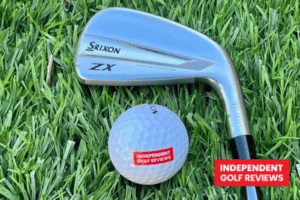
Srixon ZXi Utlity Iron
Pros & Cons
- Forgiving design builds confidence at address
- Rebound Frame technology increases ball speed consistently
- Tour V.T. Sole improves turf interaction dramatically
- Progressive head shapes suit different lofts
- Reasonable price point
- Less workable than compact player utilities
Expert’s Thoughts
Srixon’s commitment to feel in the ZXiU proves that even in utility irons, sensory feedback matters tremendously. The dual steel construction creates something genuinely special at impact, a sensation that falls somewhere between premium forged irons and traditional hollow utilities.
The introduction of their Tour V.T. sole technology into this category represents smart evolution rather than a gimmicky selling point. My ground game improved noticeably, particularly with the higher lofted option where turf interaction becomes critical. The versatility this driving iron adds transforms the club from primarily a tee box weapon into something genuinely useful across various lies and situations.
Srixon did make one puzzling design choice that caught my attention. The trailing edge grew in size compared to their previous utilities, creating a busier look at address than I’ve grown accustomed to from this brand. They’ve attempted to camouflage this with reflective chrome finishes, which helps somewhat, but it remains noticeable if you scrutinize the setup position. For golfers transitioning from cleaner profiles, this requires a mental adjustment when standing over the golf ball.
What truly impressed me was the speed generation combined with controlled launch characteristics. My carry numbers exceeded expectations while maintaining trajectories stable enough to trust in windy conditions. This club excels at longer carry situations where you need maximum height and distance to cross obstacles such as water or a bunker.
Who It’s For
I believe the club suits golfers new to the game who need a forgiving long iron that doesn’t expose every one of their swing flaws. The ZXi works if you are searching for a driving iron that grows with your game rather than requiring immediate replacement as you improve, this utility iron delivers forgiveness now while maintaining performance you’ll appreciate later.

Best Driving Iron for Distance
Callaway Apex UT Iron
Pros & Cons
- Cup Face construction maximizes ball speed effectively
- Tungsten weighting optimizes launch and spin
- Jailbreak technology stiffens body for face flex
- Multiple loft options suit various distance needs
- Adjustable hosel fine-tunes performance precisely
- Distance focus sacrifices some workability
Expert’s Thoughts
Callaway’s refinement of the Apex UT addresses what was arguably the previous model’s most glaring weakness: how it presented itself at address. That adjustment alone elevates this club significantly for players who rely on visual confidence to execute quality swings.
The industrial aesthetic Callaway embraced here divides opinion immediately. That modular, almost mechanical appearance with exposed fasteners won’t win universal approval from traditionalists seeking seamless integration. I personally appreciate the design, the willingness to show rather than hide the engineering. It communicates purpose over polish, which aligns with how this club actually performs.
What separates this utility iron from alternatives is the unmistakable stability it maintains throughout the swing. Too many competitors in this space feel ambiguous, neither fully iron nor hybrid but somewhere awkwardly between, but not the Apex UT.
Callaway committed to one identity here and executed it convincingly. On the course, the dampened impact sensation provided clear feedback without the jarring harshness that plagues some hollow constructions.
My data revealed exceptional spin consistency that genuinely impressed me given the variability in this club category. Thin impact across the face produced remarkably similar numbers, eliminating the unpredictability that often makes utility irons nerve wracking on critical shots.
The mid launch window paired with controllable descent angles created a flight profile versatile enough for multiple course conditions. Wind didn’t push this ball around excessively, and shaping shots felt natural rather than forced or manufactured.
Who It’s For
I’d recommend this driving iron for golfers who need a legitimate tee box weapon that provides 200-plus yards without sacrificing too much accuracy. If you play long courses where reaching par 5s in two requires maximum distance from every club, this utility iron delivers the distance that makes strategic play possible.

Best Direct To Consumer Option
New Level NLU V2 Utility Iron
Pros & Cons
- Direct pricing offers nice discount
- High-quality construction matches major brands
- Custom fitting included with purchase
- Multiple shaft options accommodate swing speeds
- 30-day satisfaction guarantee reduces risk
- Limited brand awareness affects perception
Expert’s Thoughts
I’ve become skeptical of brands promising meaningful upgrades to clubs I already trust. New Level earned my attention by being refreshingly honest about what they changed and why. The transparency about finish wear and firmer feel suggests a company more interested in managing expectations than overpromising and that paid dividends once I started hitting balls on the range.
What matters most in the new version is that thin strikes launched significantly better than their previous versions. Anyone who’s ever topped a utility iron into oblivion understands why this single improvement changes everything about carrying one of these clubs.
The shaft options deserve highlighting because they represent genuine value rather than token customization. Having access to premium graphite at a reasonable upcharge means you’re not stuck choosing between the perfect head and the right shaft. I went with Fujikura Ventus Blue at an affordable price, which fundamentally changes the buying equation compared to manufacturers forcing proprietary stock options.
What surprised me on the course was discovering versatility I didn’t anticipate getting from this driving iron. I expected a point and shoot club for specific yardages. Instead, I found myself experimenting with trajectories and shapes because the head responded intuitively to my customization.
Who It’s For
I think this suits tech-savvy golfers comfortable buying equipment online who appreciate the value proposition of eliminating retail markup. The NLU V2 delivers performance via quality that matches major manufacturers at significantly lower cost.
Buying Guide: How to Choose a Utility/Driving Iron
Here are the factors we here at Independent Golf Reviews consider the most crucial when buying a new driving iron.
We’ve been testing equipment and golf gear for decades, and feel confident in our quick advice!
Utility Iron vs. Long Irons vs. Hybrids – How to Choose
After examining our list, we hope you’re now aware that not only extremely precise, elite-level ball strikers can utilize and enjoy utility and driving irons.
Each of the 3 categories we listed has its advantages and disadvantages, but here’s how we quickly break them down for players trying to decide which category they should play in and buy for.
Utility Irons / Driving Irons – These clubs are often specifically designed with penetrating tee shots and approach shots in mind, but they can also launch high depending on club build and swing. They feature head shapes between the size of long irons and hybrids and are the focus of our list.
Long Irons – Most all sets of golf clubs include some long irons (5-4-3, etc.), but traditional long irons offer significantly less forgiveness than most utility and driving irons available. Sure, their thinner head shapes are often great for digging out of rough and trickier lies, but in reality, very few players are skilled enough to play traditional long irons as they lower in loft (2 iron and 1 iron in particular).
Hybrids – As given away in their name, Hybrid clubs are a “hybrid” between woods and long irons, and feature the largest head shapes on our list. They also feature longer shafts than irons (for more speed potential). What they gain in distance, they lose in accuracy.

Distance Needed / Yardage Gapping
Utility irons are often used to fill the “yardage gap” that’s created between your shortest fairway wood and your longest iron.
Say you hit your 4 iron 205 yards and your 5 wood 235. This “gap” will lead to lost shots if not filled, creating the need in your game for a driving or utility iron.

Style of Golf Courses You Frequent
Utility irons improve accuracy, roll-out length achievable, and confidence in players when they’d otherwise be anxious on a tee/approach shot.
If your local golf courses are more wide-open, you can get away with a slight loss in accuracy, and a hybrid could be a better fit for your game.
If you’re like many of us at IGR and play tighter, tree-lined, or desert-lined fairways and need an equally dependable and controllable shot off the tee, a driving iron can be a perfect choice.
Driving irons help players maximize roll-out, creating a weapon in both accuracy and length when used appropriately.

Frequently Asked Questions:
What are utility irons for?
Utility irons are the perfect club to add more accuracy, roll-out length, dependability, and confidence to most golfers’ bags. Tight, tricky tee shots or approach shots requiring a lot of length and roll are immediately aided by a high-performing utility iron.
Can you hit driving irons off the fairway?
1 million times YES! The sentiment that “driving irons” are only meant for driving is ridiculous and part of the reason why we were sure to include their other name (utility irons) as often as we could – because they provide “utility” to everybody!
Can high handicappers use utility irons?
While most high handicappers will struggle regardless, they can find a utility iron that will improve their performance.
Take my 15-handicap friend, for example, who routinely lost 2 balls on his home course every round. He found a driving iron that gave him a shot to hit off the tee on these two holes, saving himself 3-5 shots PER ROUND on his home track.