
Independent Golf Reviews is reader-supported, when you buy through links on our site, we may earn a commission.
Best Putting Mats in 2026

Behind Independent Golf Reviews: How we test & review
1000+
Clubs Tested
14+
Years of Reviews
100%
Unbiased
Are you yearning to work on your game when you’re away from the course? Thanks to indoor putting greens, fine-tuning your short game is easy at home or at the office, in between rounds or when Mother Nature washes you out.
Whether you’re just learning the game or you’re looking to minimize your three-putts during your next round, indoor greens can help today’s golfer build muscle memory and shoot lower on the course. Better yet, you won’t have to repair any ball marks.
We’ve tested and selected the best indoor greens available. Read on to learn more about how we tested, the various factors you should weigh when selecting an indoor green and more.
Official Putting Mat Rankings 2026


In More Depth: Our TOp Picks

Pros & Cons
- Realistic speed mimics actual greens accurately
- Durable construction withstands heavy daily practice
- Smooth roll develops proper stroke mechanics
- Auto-return feature maintains continuous practice flow
- Professional quality at reasonable pricing point
- Requires adequate floor space for setup
- Heavier than ultra-portable compact alternatives
Expert’s Thoughts
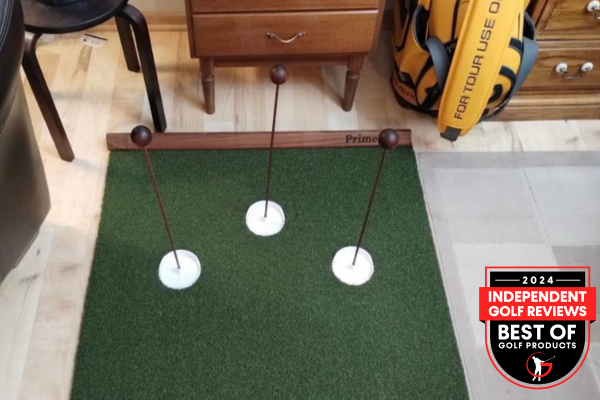
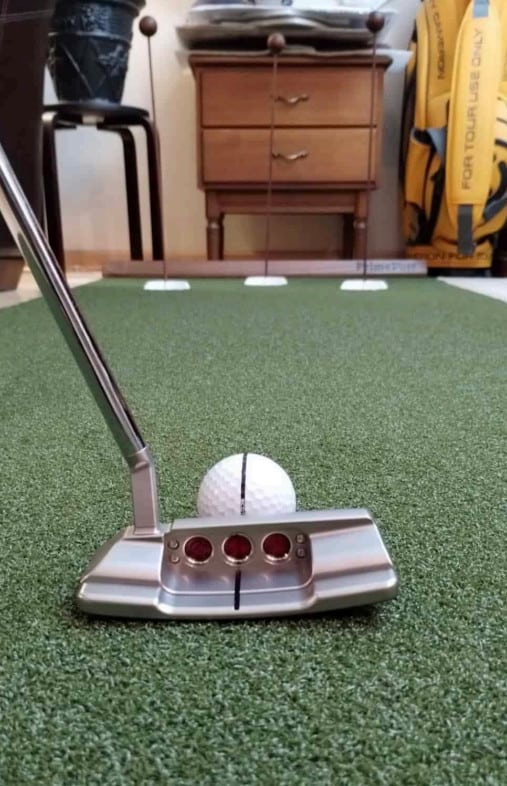
Testing the Prime Putt over several weeks revealed why serious golfers invest in quality practice equipment. The speed was the first thing I noticed during initial practice. This mat rolls true at speeds comparable to well-maintained greens, which is critical for developing touch and distance control that actually translates to the course.
What impressed me most was how putts reacted realistically throughout testing. Good strokes rolled smoothly without wobbling or deviating offline unexpectedly. Miss-hit putts showed their flaws immediately, giving me honest feedback about my stroke mechanics. This truthful response is what separates effective practice tools from cheap toys that reinforce bad habits.
The surface quality remained consistent across weeks of daily use. I was putting 50-100 balls per session, and the mat showed zero signs of wear or degradation. The material maintained its speed and smoothness without developing slow spots or irregularities. This durability justifies the investment for anyone serious about practice.
The auto-return feature proved more valuable than I anticipated before testing. Instead of constantly retrieving balls, I could focus entirely on stroke repetition. This uninterrupted practice flow allowed me to groove mechanics more efficiently. I found myself practicing longer simply because the process stayed engaging without tedious interruptions.
Setup and storage were straightforward during testing. The mat rolled out flat quickly and stayed that way without curling at the edges. When practice sessions ended, it rolled back up compactly for storage without fighting me. The weight suggested quality construction but meant this wasn’t something I’d casually move between rooms constantly.
Who It’s For
The Prime Putt is designed for dedicated golfers who practice regularly and have space to keep a mat set up or stored nearby. If you value realistic green speed and durability will find this investment worthwhile, particularly if you’re tired of practice equipment that doesn’t replicate actual course conditions.

Pros & Cons
- Extremely affordable entry point for practice
- Automatic ball return included at low price
- Adequate length for stroke development work
- Simple design eliminates unnecessary learning curve
- Lightweight construction eases movement and storage
- Speed slower than actual greens typically
- Surface quality basic compared to premium
Expert’s Thoughts
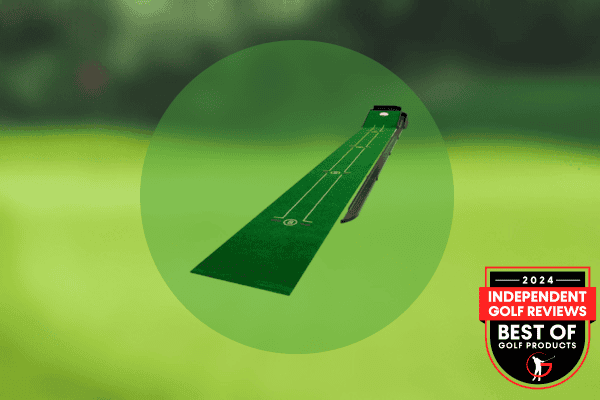
I approached the Amazon Basics putting mat with modest expectations given the rock-bottom pricing. After several weeks of testing, I can confirm this delivers functional practice for golfers on tight budgets, though with predictable compromises compared to premium options.
The biggest limitation during testing was the speed. Putts rolled considerably slower than actual greens, requiring more aggressive strokes to reach the hole. This speed difference meant I had to consciously adjust my tempo when transitioning back to the course. For pure stroke mechanics practice focusing on path and face angle, this worked fine. For developing distance control that transfers directly to real greens, the slow speed was problematic.
The auto-return feature at this price point impressed me. Instead of constantly bending over to retrieve balls, I could maintain practice flow with continuous repetition. This convenience improved my practice efficiency significantly and made sessions more enjoyable. For budget equipment, this inclusion added real value.
Surface quality was adequate but noticeably basic during testing. The material felt thin and showed some minor wear after weeks of heavy use. Putts occasionally encountered small irregularities that affected roll quality. These inconsistencies weren’t deal-breakers for casual practice but became noticeable during extended sessions.
The lightweight construction made moving the mat between rooms easy during testing. I could roll it up quickly and store it without hassle. However, this lightness meant the mat occasionally shifted during use, requiring repositioning. Heavier mats stay planted better but sacrifice portability.
For the price, this mat provides functional value for beginners or casual golfers who need something better than carpet.
Who It’s For
This mat is ideal for golfers just starting to take putting practice seriously or those unsure whether they’ll stick with a regular practice routine. If you’re on a tight budget and need something functional to work on basic stroke mechanics without a significant financial commitment, the Amazon Basics mat gets the job done. It’s also a smart choice for parents introducing junior golfers to practice or anyone who wants to test the waters before potentially investing in premium equipment down the road.

Pros & Cons
- Adjustable break angles simulate various slopes
- Helps develop green reading skills effectively
- Quality construction maintains consistent performance always
- Portable design folds away for storage
- Realistic speed transfers to actual greens
- Higher price than basic flat mats
- Setup requires adjusting break positions each time
Expert’s Thoughts
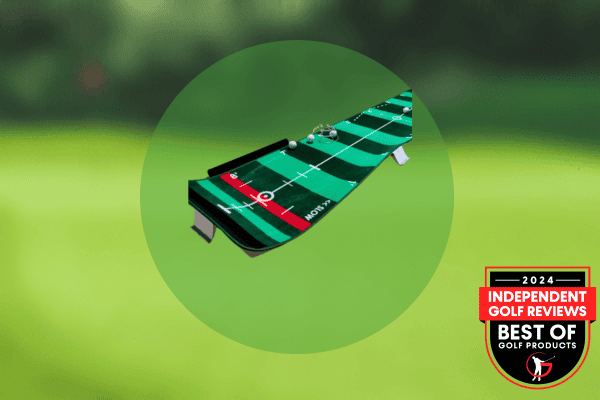
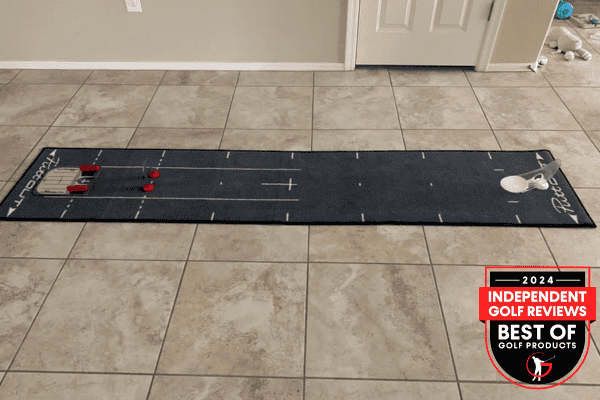
The ability to practice breaking putts at home intrigued me before testing the PuttOUT AirBreak. Most mats only allow straight putting, which represents maybe 10% of actual on-course situations. After weeks of working with the adjustable break system, I noticed genuine improvement in my green reading confidence.
The break adjustment mechanism worked smoothly throughout testing. I could create left-to-right and right-to-left breaks at various degrees, simulating the most common putts I face during rounds. This versatility transformed my practice from repetitive straight putting into dynamic scenarios that required reading breaks and adjusting aim points.
What surprised me was how practicing breaking putts improved my straight putting too. By working on different angles and speeds, I developed a better feel for how putts react to various stroke forces. This comprehensive understanding translated directly to better distance control on the course during subsequent rounds after testing periods.
The speed felt realistic compared to actual greens during testing. Putts rolled true without excessive friction or dead spots. This authentic response meant the skills I developed during practice sessions transferred effectively to real greens rather than requiring major adjustments.
The construction quality impressed me throughout testing. Despite frequent adjustments to the break angle and heavy daily use, nothing wore out or degraded noticeably. The surface maintained consistent roll characteristics across weeks of practice. The materials felt substantial enough to last for years.
Portability was decent during testing. While not as compact as some basic mats, it folded away reasonably well for storage. The setup process required a minute to adjust breaks to desired angles, which was slightly less convenient than unrolling flat mats.
Who It’s For
The AirBreak is perfect for mid-to-low handicappers who understand that green reading is just as important as stroke mechanics. If you struggle with breaking putts on the course or want to develop better instincts for how different slopes affect ball roll, this mat provides the varied practice conditions you need. Players who already own a basic flat mat and want to take their practice to the next level will appreciate the ability to simulate real course scenarios at home.

Pros & Cons
- Extremely compact storage footprint when folded
- Sets up in seconds without hassle
- Quality construction despite portable design priorities
- Good speed replicates actual green conditions
- Lightweight makes moving between locations easy
- Shorter length limits longer stroke practice
- Price higher than basic budget options
Expert’s Thoughts
Living in a smaller space, I appreciated how the PuttOUT mat addressed storage constraints during my testing period. This mat folds into a remarkably compact package that disappeared into my closet without consuming precious space, yet deployed quickly for practice sessions.
The folding mechanism was the standout feature throughout testing. Unlike mats that roll up into bulky tubes, this one folded flat like a piece of cardboard. The folded dimensions were small enough to slide under a couch or stand vertically in a narrow closet space. For apartment dwellers or anyone with limited storage, this space efficiency solved real problems.
Setup time was impressively fast during testing. I could unfold the mat, smooth it out, and start putting within 30 seconds. No wrestling with curled edges or waiting for the material to flatten. This convenience encouraged more frequent practice sessions because the barrier to entry was so low. When I finished, folding it back up was equally quick and painless.
The speed felt realistic during testing weeks. Putts rolled smoothly with authentic green-like pace that helped develop transferable touch. The surface quality was surprisingly good given the portable design priorities. I wasn’t sacrificing significant performance for the convenience of easy storage.
The material felt durable despite being foldable. After weeks of testing with multiple fold-and-unfold cycles, I saw no signs of wear at the creases or degradation of the putting surface. The construction seemed engineered thoughtfully to handle repeated folding without failing.
The length limitation was noticeable during testing. Longer putts weren’t possible, which limited distance control practice for lag putting development.
Who It’s For
This mat works beautifully for golfers living in apartments, condos, or homes where dedicated practice space simply isn’t available. If you need to share your living space with family or roommates and can’t leave equipment out, the folding design lets you practice whenever you want without creating clutter. It’s also excellent for travelers who want to maintain their putting routine on the road, as it packs easily into luggage while still providing quality practice opportunities.

Pros & Cons
- Extraordinary length enables long lag putting
- Realistic speed develops authentic distance control
- Professional grade construction lasts years of use
- Multiple break options simulate course conditions
- Improves pace control dramatically with practice
- Requires significant dedicated space for setup
- Premium pricing reflects professional quality level
Expert’s Thoughts
Testing a 60-foot putting surface felt almost comically luxurious compared to standard mats, but the Big Moss quickly demonstrated why serious distance control demands serious length. Over weeks of practice, my lag putting improved more dramatically than with any other training aid I’ve tried.
The length was immediately transformative during initial testing. I could practice 40-50 foot lag putts in my basement, working on pace control across distances that actually matter during rounds. Most three-putts happen from these longer ranges, and finally being able to replicate them at home addressed my biggest scoring weakness.
What struck me most was how the extended length revealed subtle tempo issues in my stroke. On short mats, inconsistent pace doesn’t show up clearly because everything reaches the hole relatively easily. On the Big Moss, tempo variations became glaringly obvious. Too aggressive and I’d blow putts eight feet past. Too tentative and I’d leave them halfway. This honest feedback accelerated my improvement.
The speed felt authentic throughout testing. Putts rolled with realistic pace that matched well-maintained greens closely. The distance I hit putts during practice translated directly to actual rounds without requiring mental adjustments. This consistency between practice and play is what makes effective training equipment worthwhile.
The construction quality was clearly professional-grade during testing. Despite walking on it frequently and putting hundreds of balls daily, the surface maintained perfect consistency. No dead spots, no wear patterns, no degradation.
The space requirement is substantial, so be forewarned, as you’ll need a genuinely large area to accommodate 60 feet of putting surface.
Who It’s For
If you have a finished basement, large garage, or spare room and struggle with three-putting from long distances, the Big Moss addresses your specific weakness. This mat is built for golfers who understand that lag putting is costing them multiple strokes per round and are ready to invest seriously in improvement. If you are blessed enough with the space and budget for professional-grade equipment will appreciate how dramatically this mat can transform distance control, particularly if you’re a low handicapper where eliminating three-putts is crucial for breaking scoring barriers.

Pros & Cons
- Compact length fits smaller rooms easily
- Quality construction despite space-saving dimensions always
- Realistic speed develops proper stroke tempo
- Multiple target zones improve accuracy focus
- Affordable pricing for quality level delivered
- Short length limits distance control practice
- Not suitable for lag putting development
Expert’s Thoughts
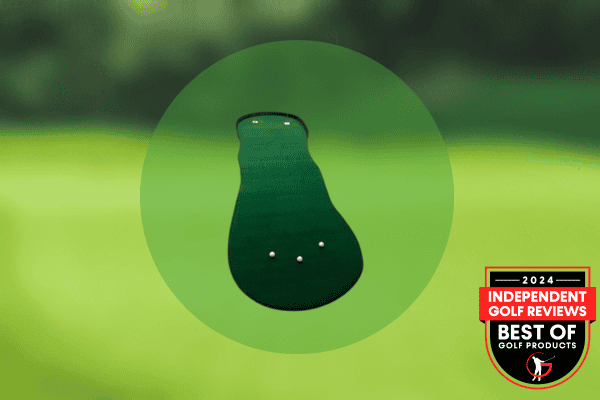
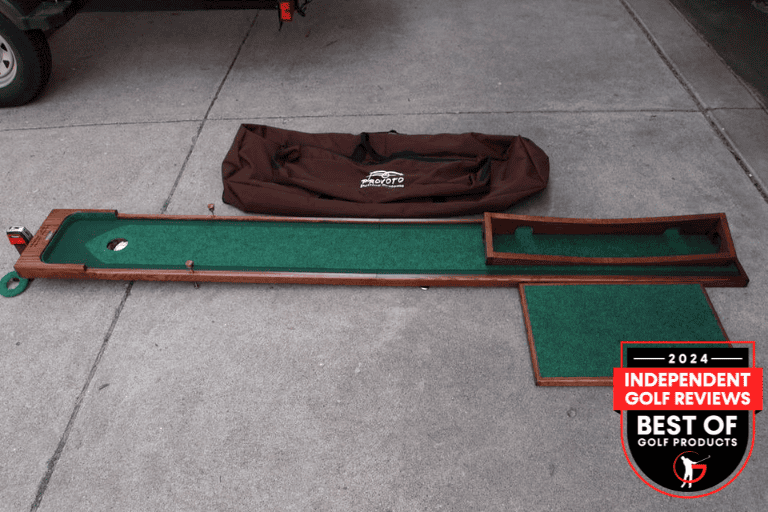
Finding quality putting practice equipment that fits into limited space challenged me until testing the Provoto 8-footer. This mat proved that effective practice doesn’t require massive length if the focus is stroke mechanics and short-range accuracy rather than distance control.
The compact footprint solved real problems during my testing period. At just eight feet, this mat fit comfortably in my home office without dominating the space or requiring furniture rearrangement. I could leave it set up continuously, which dramatically increased my practice frequency because there was zero setup friction. Whenever I had five minutes between tasks, I’d hit a few putts.
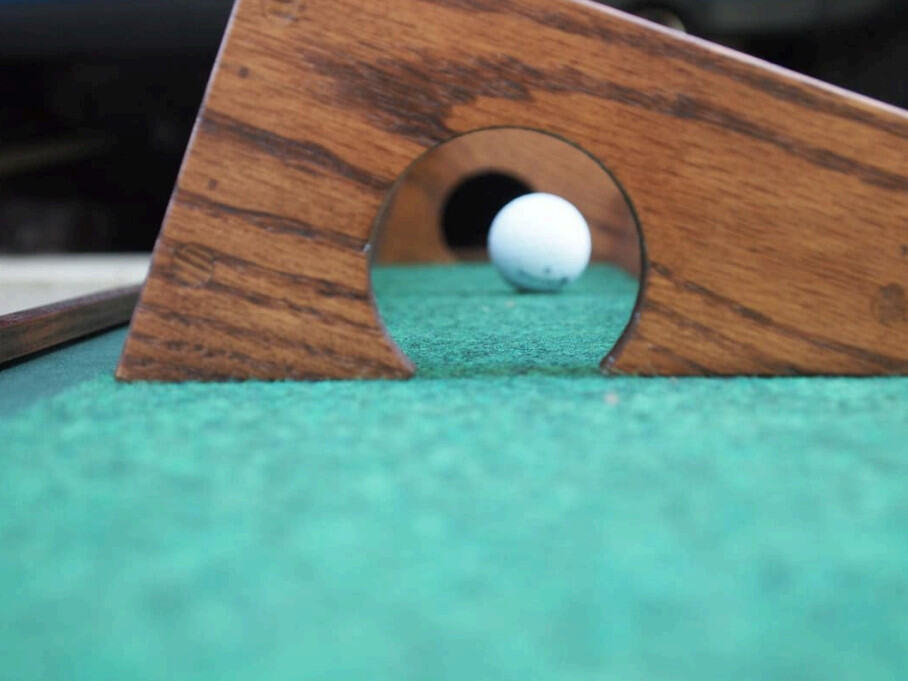
What impressed me was how much skill development happened within this limited length. The mat featured multiple target zones at different distances, turning practice into focused accuracy work. I’d challenge myself to hit specific zones repeatedly, which improved my starting line control noticeably. After weeks of this targeted practice, my short putt conversion rate on the course improved measurably.
The speed was realistic throughout testing. Eight-foot putts rolled with authentic pace that translated well to actual greens. The stroke tempo I developed during practice sessions felt appropriate when I returned to the course, requiring minimal adjustment. This transferability is what separates effective training aids from toys.
Construction quality exceeded expectations for this price point. The surface maintained consistent roll characteristics across weeks of heavy use. The material felt substantial and showed no signs of wear or degradation. The backing stayed flat without curling at the edges, which kept the mat stable during use.
The length limitation was obvious for distance control practice. Lag putting simply wasn’t possible.
Who It’s For
The Provoto 8-footer makes sense for golfers who work from home and want a mat they can leave set up in an office or spare bedroom for frequent short practice sessions. If your biggest putting weakness is missing short putts inside 8 feet rather than three-putting from distance, this mat focuses on exactly what you need to improve. It’s particularly valuable for players who practice better when equipment is always accessible rather than requiring setup and breakdown, as the permanent presence encourages consistent daily repetition that builds muscle memory efficiently.
How We Tested These Indoor Putting Mats
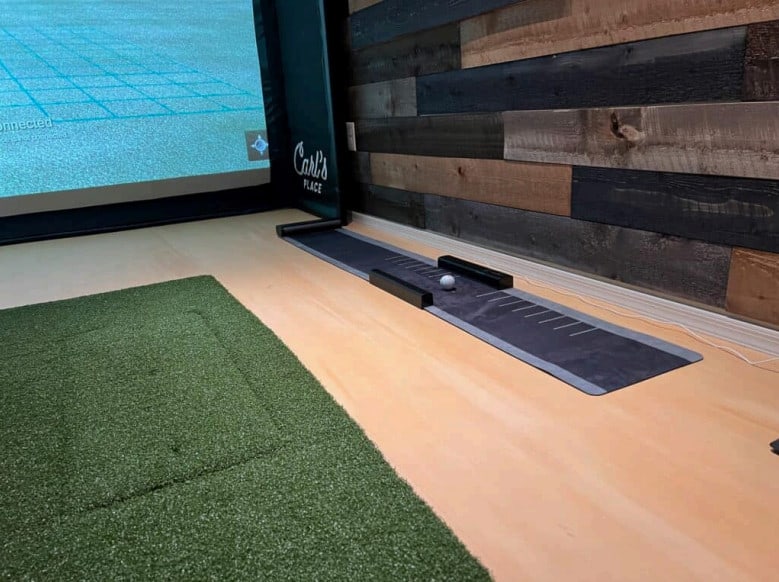
Each indoor putting green was independently and comprehensively tested to narrow all the options down to the best of the best. Unlike many of the clubs and golf accessories we test in our golf simulator and then out on the course, we tested indoor putting greens in controlled environments similar to the office and household settings where these greens will be mostly used.
We weighed various factors throughout the testing process, notably turf quality and ball roll, which are important for serious golfers who want their indoor artificial green to mimic the real thing or at least come as close as possible. Stability, durability, and other features or training aids were also key considerations in forming our list.
Join The CLub
Get insider access & stay up to date with the latest releases in golf
You may unsubscribe from the newsletters at any time.
How to Choose The Best Golf Indoor Putting Mat
Wondering what makes a good indoor putting green? Our testing and analysis carefully assessed each indoor green based on the following variables to create our list. Here’s a look at what factors we suggest assessing to determine the indoor putting green that’s best for you and your game.
Turf Quality and Ball Roll
The whole point of purchasing an indoor putting green is to get in putting reps while you’re away from the course or during the off-season. That said, one of the most important variables to weigh is the quality of the putting surface and how well your ball rolls over it as you practice your stroke.
Higher-end indoor greens tend to mimic a real green. They’re often made of nylon fiber, which is known for its durability and retention of shape over time, thereby providing a consistent, smooth roll when you strike your ball toward the cup. Other greens use dense, specialized fibers or engineered foam to simulate a real green and real green speeds, allowing for realistic ball interaction. These types of indoor putting greens tend to be best suited for serious golfers who are dedicated to the game and to lowering their handicap.
Budget indoor putting greens are typically just synthetic mats and are ideal for casual use. These mats are best for novice golfers who just want to put up some putts in their spare time and establish some consistency with their stroke.
Regardless of the type of indoor putting green that best suits your game, try to avoid selecting a model that creates a “wobble” after you strike the ball. Bad turf feels like carpet and can cause the ball to jump or veer, leading to inconsistent putts.
Another important consideration related to turf quality and ball roll is the green’s speed. The speed you select should be based on the types of courses that you frequently play. For instance, indoor greens are classified by Stimpmeter (aka “stimp”), which measures the speed of the green based on how many feet your ball rolls after being released from a specialized ramp device. Higher stimps indicate faster speeds, while lower stimps indicate lower speeds. Indoor greens tend to range from 9-13 in stimp. Stimps in the 9-10 range are typical of a public or municipal course, while faster stimps in the 11–13 range tend to be more reminiscent of high-end or private courses.
Size
While more subjective, the size of your indoor putting green is important depending on where you intend to use it. Indoor greens come in all types of shapes and sizes, from one-hole mats that are only a few feet long to dedicated, full-room setups for your man cave, garage, shed or game room. Typical indoor putting greens range in size from 2 x 10 feet (for small rooms) to 7.5 x 15 feet (medium rooms), though some custom options are designed to fit within several hundred square feet.
Be sure to measure the space you intend to use for your practice green and select a model accordingly. Some factors to consider based on the space you’re working with and your golf game include:
- Putting green length: If you’re a more advanced golfer, opt for an indoor putting green measuring 20-30 feet in length. This allows you to practice longer putts.
- Width and simulations: While some indoor greens are only a few feet wide and allow only one putting line to the cup, others can be up to 15 feet wide and allow multi-directional putting. Wider indoor greens are often ideal for golfers who want to line up more than just one type of putt.
- Shape: Indoor greens come in rectangles, ovals and custom shapes to suit all types of golfer preferences and spaces.
Putting Green Stability
Stability is also an important factor when selecting an indoor putting green to prevent slippage and to ensure the overall effectiveness of your putting practice. To ensure proper stability, look for putting greens with a stable and high-quality base. Some putting greens even have a rubber-like base, which helps them grip the surface better to avoid movement. Good bases also prevent the turf from deforming or tearing over time, especially in high-use areas around the hole and where golfers are lining up putts.
Advanced Features
From one cup to multiple cups to automatic ball return to alignment lines that help you line up putts, many indoor putting greens include advanced features that enhance the user experience and overall convenience. Here’s a look at some of the advanced features you can find in many of today’s indoor putting greens and what type of golfer they’re best suited for:
Areas for chipping: Some larger greens include areas where you can practice your chipping. These greens tend to be best for low-handicap golfers who want to work on their entire short game.
Adjustable contours and slopes: If you’re a serious golfer, you’ll likely benefit from a green that offers adjustable contours and slopes, challenging you to read breaks and adjust your putts accordingly.
Automatic ball return: Any type of golfer can benefit from automatic ball return on their indoor putting green. Rather than having to walk to the cup to retrieve your golf ball, indoor greens with an automatic ball return will conveniently deliver them back to you.
Multiple holes and multiple hole sizes: You can select a green with one hole or multiple holes for putting variation. On some greens, the cups may even be different sizes, allowing you to improve your accuracy and increase the difficulty as your game progresses.
Distance markings: Distance markings on turf can help you practice putts of a specific length. Alignment markers can also help you line up putts and fine-tune your stroke.
FAQs
What type of turf should I look for with an indoor putting green?
Higher-end indoor greens are often made of nylon fiber, which is known for its durability and retention of shape over time. These high-end fibers are designed to mimic a real putting green and offer a consistent, smooth roll when you strike your ball. Other higher-end indoor putting greens use dense, specialized fibers or engineered foam to simulate a real green and real green speeds, allowing for realistic ball interaction. These types of indoor putting greens tend to be best suited for serious golfers who are dedicated to the game and to lowering their handicap.
Is a budget indoor putting green worth it?
If you’re a novice golfer just looking to get some putts in during the off-season or between rounds, then a budget indoor putting green is worth it. Budget greens tend to have lower-quality turf and lack advanced features, but they’re ideal for getting practice reps in and building muscle memory. However, if you’re a low-handicap or serious golfer, you’ll likely benefit from a higher-end indoor green.
What does stimp mean on an indoor putting green?
Indoor putting greens are rated by Stimpmeter speed, which measures how fast the surface plays. “Stimp” is based on how many feet a golf ball rolls after being released from a specialized ramp. A higher stimp number means a faster green, while a lower stimp number means a slower green. Most indoor putting greens fall between 9 and 13 on the stimp scale. A stimp of 9–10 is similar to what you’d find on many public or municipal courses, while 11–13 more closely matches the faster greens typically found at private or high-end courses.
What advanced features are included with indoor putting greens?
Many indoor putting greens include features that make practice more realistic and convenient. Adjustable slopes and contours help golfers practice reading breaks, while automatic ball return saves time by delivering the ball back to the golfer after each putt. Some greens also include multiple holes or different cup sizes for added variety and difficulty, along with distance markings and alignment guides to improve setup and stroke consistency.
Why is automatic ball return useful with an indoor putting green?
Automatic ball return is primarily a convenience feature that enables continuous, uninterrupted practice without having to manually retrieve golf balls after putts.