
Independent Golf Reviews is reader-supported, when you buy through links on our site, we may earn a commission.

The Most Forgiving Drivers in 2026

Updated:
Ryan Heiman
Founder and Head Author of Independent Golf Reviews
Most Forgiving Drivers 2026

Behind Independent Golf Reviews: How we test & review


A forgiving driver helps you get away with imperfect swings. Every player misses the center of the face occasionally, and a forgiving driver is built to keep those mishits playable. It can be one of the best confidence-building tools you put in your golf bag. Modern driver heads use advanced face geometry and strategic weighting to protect ball speed and tighten dispersion when contact drifts away from the center. After years of testing drivers in real playing conditions, it’s clear that “forgiving” isn’t just a marketing term. It’s a measurable performance trait that shows up when your swing isn’t perfect.

This guide is written for golfers who want more tee shots to remain playable even when their strike isn’t ideal. That includes anyone who wants more stability without giving up distance and who values a predictable launch and spin. The focus here is on drivers that protect your average swing, not just your best one. Let’s explore how we put drivers to the test and what separates the most user-friendly designs from the rest.

Our Top Tested Picks

Most Forgiving Driver Overall

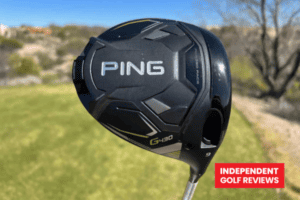
Ping G440 K Driver

Jump To Details

Easiest Driver To Hit

Cobra OPTM Max D Driver

Jump To Details

Most Forgiving Driver On A Budget

Vice VGD01 Driver

Jump To Details

Best For Most Distance / Longest

TaylorMade Qi4D Max Driver

Jump To Details

Most Forgiving Driver for Beginners

Wilson DYNAPWR MAX+ Driver

Jump To Details

Most Forgiving Driver for Slice

Tour Edge Hot Launch Max D Driver

Jump To Details

Most Forgiving Driver for Fast Swings

Callaway Quantom Triple Diamond Max Driver

Jump To Details

Most Forgiving Driver for More Height

Titleist GT1 Driver

Jump To Details

Best Feeling Forgiving Driver

Mizuno JPX One Driver

Jump To Details

Most Lightweight Forgiving Driver

PXG Lightning Max Lite Driver

Jump To Details

Most Forgiving Women’s Driver

Ping G Le3 Driver

Jump To Details

In More Depth: Our TOp Picks

Ping G440 K Driver

Most Forgiving Driver Overall

Ping G440 K Driver

5

Pros & Cons

  • Record-setting MOI over 10,300 g-cm²
  • Adjustable 32g tungsten backweight
  • Forged T9S+ face preserves ball speed
  • High launch without sacrificing distance
  • Natural draw bias helps right-side misses
  • Premium price makes it ideal for serious golfers
  • Blue colorway divides opinion

Why We Picked It

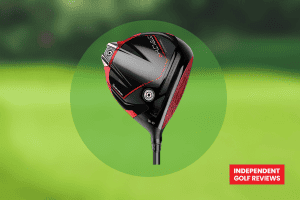
The Ping G440 K earns the top overall spot because it does a remarkable job of minimizing your misses when the ball wants to go offline on a less than perfect strike. 

With a combined MOI that exceeds 10,300 g-cm², this is the most stable driver Ping has ever built, and I felt that stability immediately when I started missing the center of the face during testing. You will find that your off-center hits produce tighter shot patterns and more usable distance than you have experienced from any previous driver.

What separates it from earlier high-MOI designs is that 32g adjustable tungsten backweight, which is four grams heavier than the G430 Max 10K it replaces. You can shift it into neutral, draw, or fade positions, giving you a level of customization that older 10K drivers simply could not offer. I tested the draw setting and found it genuinely moved the ball flight without making the club feel manipulated or unstable.

The Dual Carbonfly Wrap pulls 5 grams out of the crown and sole and pushes that weight as far back as possible, which drops the CG lower and deeper than any previous Ping driver. 

That lower CG is what gives you the high, penetrating launch even when your contact is slightly off. Your mishits will hold their line and carry farther than you expect, which is exactly what adds fairways to your scorecard.

Who It’s For

The G440 K is built for mid-to-high handicappers who want maximum forgiveness without giving up adjustability, and it is equally compelling for better players who simply want to find more fairways under pressure. If your typical miss is a fade or block to the right, the natural draw bias built into this head gives you extra protection right out of the box.

Cobra OPTM Max D Driver

Easiest Driver To Hit

Cobra OPTM Max D Driver

5

Pros & Cons

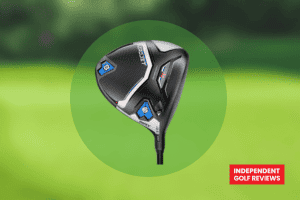
  • Most draw-biased driver in Cobra history
  • H.O.T. Face with 15 hot spots
  • Confidence-inspiring address at 460cc
  • FUTUREFIT33 offers 33 loft and lie settings
  • High launch makes ball easy to get airborne
  • Strong draw bias limits workability
  • Offset look at address isn’t for everyone

Why We Picked It

The Max D works so hard to keep your ball in play that you will feel its influence from the very first swing. 

The fixed 11g weight buried in the heel side creates a gear effect that turns a straight swing into a draw and turns a mild fade path into something much closer to straight. I genuinely could not hit this driver right during testing, no matter how hard I tried, and for most golfers that is precisely the point.

Cobra’s H.O.T. Face with 15 individual hot zones across the titanium face ensures that your off-center strikes still produce usable ball speed, so your mishits stay playable rather than costing you distance and position. 

You also get the innovative and extremely helpful FUTUREFIT33 adjustability, which means you have 33 unique loft and lie combinations at your disposal to help dial in your launch conditions at a fitting or with a knowledgeable friend.

The head sits slightly closed at address, which feels unfamiliar the first few swings but quickly becomes reassuring once you realize it is working to square the face for you at impact. If you have spent rounds watching the ball drift right, the Max D makes that miss feel like a thing of the past.

Who It’s For

If your most common miss is a fade or a slice, the Max D was designed around your exact problem. It is also a strong choice for any golfer who struggles to square the face consistently at impact, as the draw-biased setup and offset hosel do a significant portion of that work for you.

Vice VGD01 Driver

Most Forgiving Driver On A Budget

Vice VGD01 Driver

5

Pros & Cons

  • Exceptional value for budget-conscious golfers
  • Built-in draw weighting fights the slice
  • SpeedCore face preserves ball speed off-center
  • Lightweight construction boosts swing speed
  • OEM-level performance from a DTC brand
  • Fixed weighting limits adjustability
  • Bold crown aesthetic is divisive

Why We Picked It

The VGD01 gives you something the major brands rarely offer, a genuinely forgiving, draw-biased driver built from modern materials that perform like clubs costing twice as much. 

I was surprised by how playable it felt from the first swing, with a high launch that made my ball flight look better than my swing actually deserved. You will walk off the tee box with more confidence knowing your budget did not force you into an outdated design.

The one-piece titanium body with carbon crown and internal draw weighting is a genuinely smart construction at this price point, and Vice’s SpeedCore variable-thickness face does real work preserving your ball speed on heel and toe strikes. In benchmark testing against major OEM drivers costing two to three times as much, dispersion numbers held up far better than the price tag would suggest.

Your loft options are limited to 10.5° and 12.5° with no moveable weight, so you will want to make sure the stock setup works for your swing before buying. The performance behind the bold LASER TRACE face design is about as close to a legitimate OEM driver as any budget option has delivered in years, and your game will not know the difference.

Who It’s For

The VGD01 is the right call for mid-to-high handicappers who want a forgiving, draw-biased driver without spending $600 or more to get one. It is also a smart option if you are returning to golf after a long break and need a playable, modern driver that will not require a second mortgage to purchase.

TaylorMade Qi4D Max Driver

Best For Most Distance / Longest

TaylorMade Qi4D Max Driver

5

Pros & Cons

  • First modern adjustable non-titanium Max driver
  • 13g and 4g TAS weights allow spin control
  • Forgiving across the face
  • Confidence-inspiring shape at address
  • Near-10K forgiveness with adjustability
  • Feel divides opinion compared to Qi35
  • Speed gains modest for some swing types

Why We Picked It

The Qi4D Max picks up the distance title because of one engineering breakthrough that previous Max-style drivers never managed to pull off. 

TaylorMade replaced the titanium collar with forged 7075 aircraft-grade aluminum, saving 9 grams that were then converted into two adjustable Trajectory Adjustment System weights. You now have the ability to move the 13g weight forward and shed up to 300 RPM of spin, which means real added carry distance without needing to change your swing.

When I moved the heavier weight forward during testing, carry distance jumped by nearly 7 yards on average and spin dropped into a much more efficient window. That is a meaningful shift you can make at home without a fitter, and the redesigned roll radius also keeps vertical spin variation tighter across the face so your low-face contact no longer costs you the distance it once did.

The feel is slightly muted, but for distance-focused golfers who hit down on the driver or struggle with high spin, the performance data makes the feel secondary to what it does for your overall game off the tee box.

Who It’s For

The Qi4D Max is the right driver for golfers who need maximum forgiveness but also spin too much with traditional high-MOI designs. If you have ever been told you need a Max-style head but lost distance because the spin was too high, the adjustable weight system on this driver gives you a real solution.

Wilson Dynapower Max+ Driver

Most Forgiving Driver for Beginners

Wilson DYNAPWR MAX+ Driver

5

Pros & Cons

  • 10K MOI without increasing head weight
  • 26g flippable rear weight for draw or neutral
  • Reengineered PKR-360 face removes 5g
  • Six-way adjustable hosel for easy fitting
  • $499 undercuts most 10K competitors
  • Spins more than some 10K rivals
  • Not the longest driver in the category

Why We Picked It

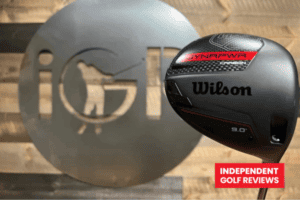
The DYNAPWR MAX+ does something that no driver in this price range does as it delivers genuine 10K MOI forgiveness without the heavy, unwieldy feel that often comes attached to it. 

Wilson achieved this by pulling 5 grams out of the reengineered PKR-360 face and pushing that mass into the 26g rear flippable weight, raising MOI without adding any overall head weight. What that means for your game is a club that launches high and flies straight without feeling like a weapon.

Your heel and toe strikes produce far less distance loss than you would expect from a driver in this price range, and I found it almost impossible to close this face and hit a hard left shot, which is exactly the protection a newer golfer needs. The six-way adjustable hosel also means a fitter can dial in your loft and lie without spending hours troubleshooting your setup.

At $499, this driver sits $150 to $200 below most comparable 10K competitors, and it does not feel like a budget compromise when you are standing over the ball. Flip the rear weight to the draw position and you get another layer of insurance against a slice, giving beginners two built-in protections for the price of one.

Who It’s For

New golfers and high handicappers who want maximum forgiveness at a fair price will find everything they need in the DYNAPWR MAX+. It is also a strong pick for seniors or anyone returning to the game who wants a modern, forgiving driver without the premium price that normally comes attached to 10K MOI technology.

Tour Edge Hot Launch Max D Driver

Most Forgiving Driver for Slice

Tour Edge Hot Launch Max D Driver

5

Pros & Cons

  • Offset hosel helps square face at impact
  • Fixed heel weight promotes consistent draw
  • Diamond Face VFT maximizes speed across face
  • V-Taper Sole lowers CG for higher launch
  • Outstanding value at $299.99
  • No hosel adjustability
  • Offset look requires adjustment period

Why We Picked It

The Hot Launch Max D attacks your slice from two directions simultaneously, which is something most draw-bias drivers only attempt from one. The offset hosel gives your hands a head start so the face squares up through impact even when your swing path is working outside-in, and the fixed heel weight adds a gear effect that pushes the ball further into a draw. You get both an alignment advantage and a ball-flight correction working together to keep your tee shot in play.

Tour Edge’s Diamond Face VFT technology, borrowed from their premium Exotics lineup, optimizes face deflection across a large hitting area so that your ball speed stays up even when contact is off-center. 

The V-Taper Sole lowers the CG by tapering weight toward the rear perimeter, making it easier to get the ball airborne, so if your slice has also cost you launch height this driver solves both problems at once.

At $299.99, you are getting technology that you would normally expect to cost twice as much from a major OEM, and Tour Edge delivers it without cutting corners on materials. The 15-degree HL loft option is a creative addition that gives you even more help launching the ball away from the tee if a standard loft is not quite enough.

Who It’s For

Chronic slicers who want the most aggressive slice-correction available at an accessible price point will find the Max D is purpose-built for exactly that fight. If you are a high-handicapper who loses multiple balls right every round, this driver is your most direct path to keeping the ball in play.

Callaway Quantom Triple Diamond Max Driver

Most Forgiving Driver for Fast Swings

Callaway Quantom Triple Diamond Max Driver

5

Pros & Cons

  • Tri-Force Face layers titanium, poly mesh, carbon
  • Adjustable 10g rear weight for fade or neutral
  • Elite ball speed with genuine forgiveness
  • Won 2026 major equipment head-to-head test
  • Low-spin profile suits faster swing speeds
  • $699.99 sits at the high end
  • Not designed for slower swing speeds

Why We Picked It

If you swing fast and have always had to choose between forgiveness and ball speed, the Triple Diamond Max makes that trade-off irrelevant. 

Callaway’s Tri-Force Face layers ultra-thin titanium, a poly mesh bonding layer, and carbon fiber into a three-piece system that allows the face to flex in ways a single-material design simply cannot. The result is elite ball speed that holds up even when your strike drifts off-center, giving your fast swing the protection it has always needed.

This driver routinely produced near-elite distance alongside genuinely tight dispersion, a huge boost if you are looking to attack courses with tighter fairways. I felt the difference in my own testing, finding that even my mediocre swings produced a surprisingly controlled shot pattern that stayed in play.

The 10g rear weight shifts to a toe-side position to produce a fade bias that reduces your left-miss anxiety when you are swinging hard and losing control of the face. At $699.99, it is a serious investment, but your swing speed will find a driver that finally delivers both the power and the protection you have been looking for.

Who It’s For

This driver suits better players and faster swingers who want low spin and tour-level ball speed but need more forgiveness than a compact players driver provides. If you swing at 100 mph or above and want a driver that can handle both your best strikes and your ordinary ones, the Triple Diamond Max is the head to be fitted into.

Titleist GT1 Driver

Most Forgiving Driver for More Height

Titleist GT1 Driver

5

Pros & Cons

  • Deepest CG in the entire GT family
  • Seamless Thermoform Crown saves critical weight
  • Speed Ring VFT face preserves off-center speed
  • Interchangeable back weight for custom fit
  • MOI in the 9K range for strong forgiveness
  • Spin is lower than some expect from a launch driver
  • Lightweight build may feel unfamiliar initially

Why We Picked It

Most drivers that promise high launch deliver it through added loft, which brings a spin penalty that kills distance for moderate swing speeds. But the GT1 solves this differently by pushing the CG to the deepest position in the GT lineup through Titleist’s Split Mass Construction.

This feature moves the mass to drive your launch higher while keeping spin and ball speed optimized. You get a ball flight that genuinely climbs without ballooning into a weak, drifting trajectory.

Titleist built the Seamless Thermoform Crown from a proprietary matrix polymer never before used in golf, and it saved enough weight to make the redistribution possible without bloating the head. 

The Speed Ring VFT face then maximizes your ball speed on center hits and preserves acceptable speed on the heel and toe strikes that happen regularly at moderate swing speeds. In testing, I found the launch angle genuinely impressive even on sessions when my swing speed was below average.

The GT1 is available in both an ultra-lightweight build and a standard build with a 15-gram headweight option, which means you can find the right configuration regardless of your swing speed. 

If you have been told a lightweight driver is not for you, the heavier setup opens the door to everything this head does without requiring you to overhaul your game.

Who It’s For

The GT1 is ideal for moderate swing speed golfers who struggle to get the ball up into an optimal trajectory, and it works equally well for any player who has been fitted into higher-lofted drivers in the past but still cannot find consistent height. If launch angle is the main thing holding your distance back, this driver addresses that problem with more precision than any other club on this list.

Mizuno JPX One Driver

Best Feeling Forgiving Driver

Mizuno JPX One Driver

5

Pros & Cons

  • World’s first Nanoalloy face technology
  • CORTECH face 15% larger sweet spot
  • Outstanding dispersion and sidespin control
  • Exceptional premium feel at impact
  • Distinctive blue crown looks stunning at address
  • Spinnier than most competing drivers
  • Ball speed lags behind top competitors

Why We Picked It

No driver in 2026 produces a more satisfying impact sensation than the JPX One, and once you feel it you will understand why. 

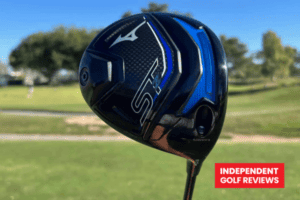
Mizuno built this face from Nanoalloy, a material developed with Toray that uses microscopic polymer dispersion to dynamically change face elasticity at the moment of impact. I felt the difference immediately as it provides a solid, fast, and deeply rewarding sensation that reminded me of Mizuno’s legendary forged irons, and your strikes will feel more purposeful because of it.

The Nanoalloy material also freed up enough mass to make the CORTECH face 0.35mm thinner than the previous generation, which expanded the high-rebound zone by more than 15 percent. Your mishits stay straighter than they have any right to, and the sidespin control on off-center contact is some of the best in the entire field this year.

The honest caveat is that spin rates run higher than most competitors and ball speed on paper does not lead the field. But if you value a meaningful, feedback-rich experience over raw launch monitor numbers, and you want a driver that makes every round more enjoyable to play, the JPX One delivers something no other driver in 2026 quite matches.

Who It’s For

The JPX One is the right driver for golfers who prioritize feel and straight ball flight over maximum distance, and particularly for Mizuno iron players who have always loved the brand’s feedback but never found a driver that matched the experience. If you play at a moderate swing speed and want a forgiving head that makes every round more enjoyable to hit, this driver earns its spot.

PXG Lightning Max Lite Driver

Most Lightweight Forgiving Driver

PXG Lightning Max Lite Driver

5

Pros & Cons

  • 189g head weight, 14g lighter than Max 10K
  • Frequency Tuned Face boosts energy transfer
  • Spined Sole locks in efficient vibration patterns
  • Single 12.5g rear weight keeps CG deep
  • No-cost custom shafts and grips at PXG
  • No moveable weight system
  • Only two loft options: 10.5° and 11.5°

Why We Picked It

PXG stripped the Lightning Max Lite down by removing the front weight ports entirely, making it lighter than the already-forgiving Max 10K to boost your swing speed to maximum velocity. 

That weight reduction sounds like a small number until you feel what it does to your clubhead speed, because even a modest gain at the bottom of your swing translates into meaningful added distance when you are starting from a slower baseline. I was genuinely surprised by how much faster this driver felt to swing compared to any standard-weight head in the lineup.

The single 12.5g rear weight pushes the CG as deep as possible for a lightweight head, helping you get the golf ball into the air quickly. PXG’s Frequency Tuned Face technology also works wonders by synchronizing face vibration with the moment of ball compression to preserve your ball speed across a wider area.

PXG’s no-additional-cost custom shaft and grip policy is a significant advantage here because the right shaft is especially critical in a lightweight head. You find the best shaft that complements the lighter head weight without paying an extra $300 to do it, which makes the affordable price ideal for all golfers and gives your game a properly matched setup from the start.

Who It’s For

The Lightning Max Lite is built for golfers with moderate swing speeds who need a lighter head to generate enough clubhead speed for decent distance, and it is equally compelling for seniors who have lost swing speed over time and want to recover some of it without resorting to an overly stiff or ill-fitted setup. If a heavy driver has always felt like a burden in your swing, this is the head that removes that burden without sacrificing meaningful forgiveness.

Ping G Le3 Driver

Most Forgiving Women’s Driver

Ping G Le3 Driver

5

Pros & Cons

  • Optimized for swing speeds 80 mph and below
  • Fixed back weight delivers high MOI and launch
  • Crown turbulators and Vortec cavity aid speed
  • ULT250 ultralight shaft included as stock
  • Ping’s longest women’s driver to date
  • Fixed weight limits flight shape options
  • Standard 11.5° loft only; limited options

Why We Picked It

Ping built the G Le3 around the insight that a golfer swinging at 80 mph or less needs the club to do more of the work, and every decision in this head’s design flows from that understanding. 

The fixed back weight positions the CG low and slightly toward the heel, creating a launch and forgiveness package that gives you higher ball flight and tighter dispersion without asking you to swing any harder. You do not have to change your game to get the ball in the air because this driver is already set up to launch it efficiently.

The crown turbulators and Vortec cavity are aerodynamic features borrowed from Ping’s premium G-family drivers, and they generate real clubhead speed for you through the swing arc by reducing drag at the bottom. 

Ping reports an average of four extra yards compared to the G Le2, and in testing I found the trajectory more penetrating and consistent than any earlier lightweight driver I have hit at this swing speed range.

The ULT250 shaft is specifically engineered to help your slower swing load and release the club efficiently rather than being an afterthought, and the navy, gold, and silver colorway gives the G Le3 a premium identity that feels purpose-built rather than borrowed from a men’s line. For a golfer whose equipment has historically been an afterthought in the store, having a driver designed specifically for your swing speed is a meaningful upgrade.

Who It’s For

The G Le3 is the clear choice for women golfers with swing speeds at or below 80 mph who want a driver purpose-built for their game rather than a standard driver with a lighter shaft bolted on. It is also a strong option for senior women and junior girls whose swing speeds fall in the same range and who would benefit from the same high-launch, high-forgiveness setup that the G Le3 delivers.

How We Tested These Most Forgiving Drivers

Our testing focuses on how a driver behaves when contact isn’t perfect. That’s where the real separation between models appears. The goal is to understand how each head protects ball speed and keeps launch conditions playable across a wide range of strike patterns and swing types. Our process is a mix of controlled testing and on-course evaluation. The results reflect measurable performance and real-world reliability.

Stability Across the Face: A forgiving driver resists twisting when impact moves away from the center. We evaluate how stable the head feels on heel, toe, high, and low strikes. We check to see how well it maintains a square orientation through impact. High-MOI designs tend to shine here, but the real test is whether the ball starts on a predictable line even when the strike isn’t ideal.

Ball Speed Retention: Distance loss on mishits is one of the clearest indicators of forgiveness. We look at how much ball speed drops when contact moves around the face and whether the driver maintains enough speed to keep a shot playable. Modern face technologies redistribute thickness to protect speed across a wider area. Some designs perform noticeably better than others. The most forgiving drivers minimize the penalty for slight mishits.

Launch and Spin Consistency: We evaluate how the head responds to different impact locations and whether the resulting flight stays predictable. A driver that launches too low on thin strikes or spins too much on high strikes can turn a minor miss into a headache.

Shot Shape Correction and Bias Control: Many golfers fight a consistent miss (usually a fade or slice). Some drivers are built to help reduce that pattern. We assess how weighting, face angle, and internal geometry influence curvature without overcorrecting. A forgiving driver should soften a common miss.

Feedback from a Range of Swing Speeds: Forgiveness isn’t the same for every golfer. A driver that’s stable for a high-speed player may behave differently for someone with a moderate or developing swing. We incorporate feedback from golfers with different speeds and strike tendencies to understand how consistently a head performs.

Real-World Testing: Controlled testing shows us how a driver behaves in isolation. Getting out on the course reveals how it performs when conditions change. We look at how the head responds to wind, uneven lies, and other variables. A forgiving driver should feel stable from the first tee to the 18th.

Join The CLub

Get insider access & stay up to date with the latest releases in golf

You may unsubscribe from the newsletters at any time.

How to Choose The Most Forgiving Driver

Choosing the most forgiving driver starts with understanding how different design elements will influence your shots. Golfers don’t strike the center of the face every time. Far from it! The most forgiving drivers protect you from those small misses. Let’s break down the factors that matter most to help you match a driver to your own tendencies.

Head Shape and Visual Confidence

Forgiveness starts before the club even moves. The shape of the head influences how confident you’ll feel when standing over the ball. That confidence will help with the quality of your strike. A larger head footprint and a slightly elongated shape tend to look more stable behind the ball. They frame the hitting area in a way that encourages a centered strike and reduces tension in the takeaway.

Some players prefer a more compact shape because it feels easier to maneuver. You might prefer a head that looks like it will do the work for you. There’s no right or wrong preference, but the visual impression matters. A forgiving driver should look like it’s built to help you specifically.

Face Technology

Modern driver faces are engineered to maintain ball speed across a wider area than just the center. Manufacturers vary the thickness of the face and use internal structures to stiffen specific zones. Design curvature influences how the ball launches when contact moves toward the heel or toe.

A forgiving driver will keep the ball speed higher, even when you miss slightly. That doesn’t mean every strike will be your longest of the day. It does mean you won’t lose 30 yards when you catch the ball a little thin or toward the toe. Golfers with moderate swing speeds benefit the most from this because they can’t afford to give away distance on mishits.

MOI and Stability Through Impact

Moment of inertia (MOI) is the technical backbone of forgiveness. High-MOI drivers resist twisting when the impact isn’t centered. This helps the ball start on a straighter line. You don’t need to memorize the physics. Just understand that a stable head reduces the severity of a miss.

Drivers achieve high MOI through perimeter weighting, deeper back weighting, and head shapes that distribute mass farther from the center. If you tend to miss toward the heel or toe, a high-MOI driver will keep more of your shots in play. It will also reduce the curve that sends drives into trouble.

Launch and Spin Windows That Fit Your Swing

Launch and spin need to fall within a window that works for your swing speed and angle of attack. Golfers with slower speeds often need help getting the ball airborne. A forgiving driver with a slightly higher launch profile will add carry distance. Players with faster speeds may prefer a head that keeps spin under control, so mishits don’t balloon. The key is choosing a driver that supports your natural tendencies.

If your typical miss launches too low, look for a driver with a deeper center of gravity. If your misses float high with too much spin, a more forward-weighted design can help. Forgiveness is most effective when the launch window matches your speed.

Adjustability

Many forgiving drivers include adjustable hosels, movable weights, or both. These allow you to adjust the head to your tendencies without changing your swing. It won’t replace good fundamentals, but it can make a meaningful difference in how the club performs.

A loft sleeve can raise or lower the launch, or tweak the face angle. Movable weights can soften a slice or a hook, providing a more neutral flight. Golfers who struggle with a consistent miss can often benefit from a driver that lets them shift weight toward the heel. You can also adjust the loft to find a more reliable trajectory. The goal of these tools is to create a setup that gives you the most playable version of your swing.

Shaft Profiles for Forgiveness

A driver paired with the wrong shaft can feel unpredictable. It affects how the club feels during the swing and how stable the face is at impact. The right shaft can stabilize the head and make it easier to square.

If you have a moderate swing speed, you may benefit from a mid-launch, mid-spin profile. It will help the ball climb without adding too much curvature to shots. Faster players may prefer a shaft that keeps the head from over-rotating. Plus, don’t forget about weight. A light shaft can feel loose, and one that’s too heavy can slow down your swing and reduce consistency. If the head feels like it’s arriving late or twisting, it’s time for a different shaft profile.

Shot Shape Bias and Managing Misses

Many golfers have a predictable miss, which is either a fade or a slice. Forgiving drivers often include built-in bias to help reduce these patterns. Heel-weighted designs help close the face for players who leave it open. Neutral heads provide stability without influencing curvature. You can also shift bias with movable weights in some models.

The key is choosing a driver that softens your misses without overcorrection. A slice-reducing head should turn a big fade into a manageable one. A neutral head should maintain your natural shot shape while reducing the severity of mishits. Forgiveness is most valuable when it supports your tendencies, rather than trying to replace them.

Matching Forgiveness to Your Swing Speed

Forgiveness looks different depending on the speed of your swing. High-speed players need stability to control curvature. Moderate-speed players need help maintaining ball speed and launch. Developing golfers need a club head that protects them from the variability that comes with learning the game.

A forgiving driver should make your average swing better. If you’re a beginner or intermediate player, that means choosing a head that keeps the ball in play and maintains distance, even when contact isn’t perfect. If you’re more experienced, it means choosing a driver that tightens dispersion and reduces the penalty for slight timing mistakes.

FAQs

Why do some drivers feel more stable even when I miss the center?

Stability comes from how the head distributes mass. Drivers with more weight pushed to the perimeter resist twisting when the impact drifts toward the heel or the toe. The resistance keeps the club’s face closer to square and produces a straighter line. That’s why the club feels steadier on imperfect swings.

Does a draw-biased driver automatically fix a slice?

It won’t eliminate a slice, but it can make it less severe. Heel-weighted designs help the face close more easily. This will soften the left-to-right curve that affects almost 80 percent of golfers, and keep the ball from peeling off the fairway. Good mechanics are the only way to truly eliminate a slice.

Why do some forgiving drivers launch higher than others?

Launch height is influenced by where the center of gravity sits inside the head. Designs with the weight set low-and-deep tend to launch the ball higher. This can help if you struggle to get enough carry. Drivers with a more forward center of gravity launch lower and spin less. These are ideal for faster players who already hit the ball high.

Is a larger head always more forgiving?

Not always. It can increase stability, but forgiveness also depends on internal weighting, face design, and how the head responds to off-center strikes. Some compact shapes are engineered to be extremely stable. Some larger heads prioritize aerodynamics over maximum forgiveness.

Why do my mishits sometimes go farther with one driver than another?

Ball speed retention varies from model to model. Some faces are engineered to maintain speed across a wider area, so a slight heel or toe strike can still produce a strong flight. Other designs lose speed quickly once you move away from the center. The difference becomes obvious when you compare average distances (not peak ones).

Should beginners choose the highest-MOI driver available?

It can help, but it’s not the only factor. A head with extreme stability might still feel difficult to square if it doesn’t match your personal tendencies.

Can a forgiving driver still work for better players?

Absolutely. Skilled golfers often choose forgiving drivers because they appreciate the tighter dispersion they provide.

Conclusion

Are you still struggling to choose from our list of forgiving drivers?

If your golf swing is in a consistent enough place, consider checking out a custom fitting through your local club fitting experts or the UTRY it program.

Still not sure which driver is best for you? Join the email list below and reply to the welcome email to receive a free personalized recommendation, we’ll tell you an exact driver that will be the perfect match.

About The Author

Ryan Heiman – Founder and Head Author of Independent Golf Reviews
Founder of Independent Golf Reviews, Ryan plays to about a 3 handicap and writes most of the articles about the equipment, accessories and travel. Now living in Tucson, AZ he enjoys year round golf. He’s been writing reviews here and for other websites for over 10 years now. He has worked with every brand over that time.
Learn more…