
Independent Golf Reviews is reader-supported, when you buy through links on our site, we may earn a commission.

The Most Forgiving Irons in 2026

Updated:
Ryan Heiman
Founder and Head Author of Independent Golf Reviews

Behind Independent Golf Reviews: How we test & review


When you’re choosing irons, it’s important to be honest about your golfing abilities. Rather than going for what you see the pros use, look for a set that’s suited to your game. This will reduce the number of out-of-bounds shots, may lower your score, and will definitely make each round a more enjoyable experience.

At Independent Golf Reviews, we’re dedicated to helping golfers choose the right equipment for their game. For medium-to-high handicappers, this means looking for irons with a forgiving nature.

In this context, “forgiving” means irons that will help improve your game. A forgiving iron does a better job of handling off-center hits, slow swings, steep swings, and striking the ball low on the club face.

This article explores how to choose the most forgiving irons. We’ve used our many years of experience, and done a lot of testing, to develop a carefully-considered set of recommendations. In doing this, we’ve taken account of how real amateur golfers play. The resulting list is intended for low, medium, and high handicappers, golfers who swing slowly as well as those who swing fast, senior golfers, female golfers, and of course, those among us who slice.

Our Top Tested Picks

Callaway Quantum Max Irons

Most Forgiving Irons Overall

Callaway Quantum Max Irons

Jump To Details
Cobra King MAX Irons

Easiest Irons To Hit Overall

Cobra King MAX Irons

Jump To Details
Takomo 101 MKII Irons

Most Forgiving Irons On A Budget

Takomo 101 MKII Irons

Jump To Details

Best For More Distance

Wilson DYNAPWR Forged Iron

Jump To Details
Srixon ZXi R Irons

Most Forgiving Irons for Fast Swings

Srixon ZXi R Irons

Jump To Details
Ping G440 HL Irons

Most Forgiving for More Height

Ping G440 HL Irons

Jump To Details
Mizuno Pro M-13 Irons

Best Feeling Forgiving Irons

Mizuno Pro M-13 Irons

Jump To Details
Callaway Quantum Max Fast Irons

Most Lightweight Forgiving Irons

Callaway Quantum Max Fast Irons

Jump To Details
Stix P02 Perform Irons

Best DTC Forgiving Irons

Stix P02 Perform Irons

Jump To Details
Tour Edge Hot Launch Max D Irons

Best Forgiving Irons for Slice

Tour Edge Hot Launch Max D Irons

Jump To Details

In More Depth: Our TOp Picks

Callaway Quantum Max Irons

Most Forgiving Overall

Callaway Quantum Max Irons

5

Pros & Cons

  • 360 Undercut Cavity rescues off-center strikes
  • AI-optimized face rewards where you actually make contact
  • Mishits carry farther than they have any right to
  • Progressive Tri-Sole keeps fat shots in play
  • Urethane microspheres soften that hollow-body clang
  • Firmer feel than most players expect
  • Bigger footprint may unsettle better players

Why We Picked It

Callaway built the Quantum Max around a simple truth that you need help across the entire face of the iron, not just on the toe and heel.

The 360 Undercut Cavity extends the weld line back toward the trailing edge, creating a face that flexes more efficiently and returns more energy on every off-center strike. The club is built for the other 80 percent of your swings, not just the ones you are proud of.

This is a club that puts honesty ahead of vanity. Callaway walked away from the hollow-body look of the Elyte and came back to the big cavity, confident shaping, and pronounced offset that defined their most popular irons of the 2000s.

The Quantum Max looks like a game-improvement iron because that is exactly what it is and you’ll feel the difference the moment it sits behind the ball.

The Progressive Tri-Sole changes sole geometry from the long irons into the wedges, with a chamfered leading edge that prevents digging even on steep swings. The AI-optimized face was calibrated from real-world impact data rather than theoretical center-strike models, which means the sweet spot is positioned where you actually hit it.

The Quantum Max is great for golfers who prioritize what happens to your average swing, not just your best one.

Who It’s For

The Callaway Quantum Max is built for mid-to-high handicap golfers, roughly 12 and above, who want a full set of irons that will forgive their most common misses and help them reach more greens. It suits golfers who are tired of watching their 6-iron leak 30 yards offline and just want a set that keeps the ball in the game. If you value forgiveness and carry distance over shot-shaping, this is the iron to try.

Cobra King MAX Irons

Easiest Irons To Hit Overall

Cobra King MAX Irons

5

Pros & Cons

  • Larger profile makes every address look makeable
  • 3D-printed medallion drops CG 2mm for easier height
  • SKID SOLE handles steep swings without digging
  • Draw bias helps square the face through impact
  • 360 SPEEDSHELL delivers 23% more face flex
  • Offset is pronounced, especially in mid-to-long irons
  • Firmer feel than premium game-improvement competitors

Why We Picked It

The Cobra King MAX achieves its place among the easiest iron sets to hit through a combination of head size, loft, and design choices that all point in the same direction.

The King MAX is two degrees weaker throughout the set compared to the standard King iron, and the larger footprint adds more heel-to-toe MOI. Together, those decisions make this one of the easiest irons to get airborne in the 2026 market.

If you have struggled for years to get long irons up off the ground, the King MAX can be a genuine turning point. Combined with the 80-gram catapult weight suspended in a shock-absorbing polymer, you get a ball flight that is noticeably higher and steeper than similarly sized irons. When you need shots to hold firm greens, that height matters as much as distance.

What separates the King MAX is the SKID SOLE. The pre-worn leading edge and flat mid-sole turn a club-stopping dig into a smooth glide, which is especially valuable if your swing tends to be steep. Every major design decision in this iron was made to reduce the number of ways you can ruin a shot.

The King MAX delivers outstanding results not because the head is large, but because everything working together makes it genuinely hard to hit a bad one.

Who It’s For

The Cobra King MAX is designed for golfers in the 15-to-28 handicap range who want the maximum possible help at address and through the swing. It suits golfers who battle a slice, who struggle to get long irons airborne, and who want a modern, confident shape without paying tour-iron prices. Slower swingers will appreciate the weaker lofts and the extra height, and anyone who tends to dig will benefit immediately from the SKID SOLE.

Takomo 101 MKII Irons

Most Forgiving Irons On A Budget

Takomo 101 MKII Irons

5

Pros & Cons

  • VFT face holds ball speed on off-center strikes
  • Hollow-body design produces real-world distance gains
  • Deep cavity delivers maximum perimeter weighting
  • Half the price of major-brand game-improvement competitors
  • No in-person fitting availability through retail
  • Feel is firmer than forged or premium-cast alternatives

Why We Picked It

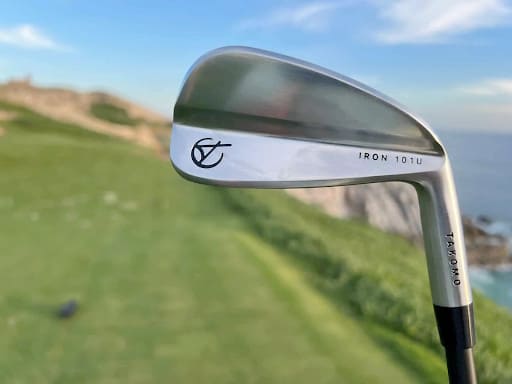
The Takomo 101 MKII punches well above its price point. At $579 for a five-through-gap-wedge set, you get hollow-body construction, a VFT face engineered from 17-4 stainless steel, and progressive perimeter weighting that competes with sets costing twice as much.

The VFT face plate in the 5-through-8-irons maintains over 95% ball speed on your off-center strikes. That is a statistic that belongs in a far more expensive iron.

The 101 MKII streamlines its price to consumers by removing the overhead. There is no retail markup, no advertising budget baked into the price, and no badge premium built into what you pay.

What you get is a well-built hollow-body iron that produces consistent distances, high launch, and genuine forgiveness on your most common misses. During testing, the 7-iron produced tight dispersion even from a steeper angle of attack, with mishits landing within a few yards of well-struck shots.

The move from a 4-through-PW configuration to a 5-through-gap-wedge set is a smart decision. You rarely need a 4-iron, and the included gap wedge gives you a better short-game option without an extra purchase. The two-tone finish dazzles on any first tee.

If you want honest game-improvement performance without paying the big-brand tax, the 101 MKII is the most compelling argument in 2026.

Who It’s For

The Takomo 101 MKII is ideal for mid-to-high handicap golfers, roughly 15 and above, who want to invest in quality irons without spending $1,100 or more. It suits golfers who know their own specs and are comfortable ordering online, and who want a set that will deliver legitimate distance and forgiveness improvements over older, worn equipment. Golfers who demand the feel of a premium forged iron will want to look elsewhere.

Best For More Distance

Wilson DYNAPWR Forged Iron

5

Pros & Cons

  • AI-optimized VFT face generates rare ball speed consistency
  • Power Holes in long irons promote easy, high launch
  • Toe-biased weighting kills dispersion on off-center contact
  • 8620 carbon steel delivers forged feedback in a distance club
  • Carries like a club longer without sacrificing stopping power
  • Feedback is muted compared to true blade alternatives
  • Strong lofts require a gap wedge to maintain short-game distance control

Why We Picked It

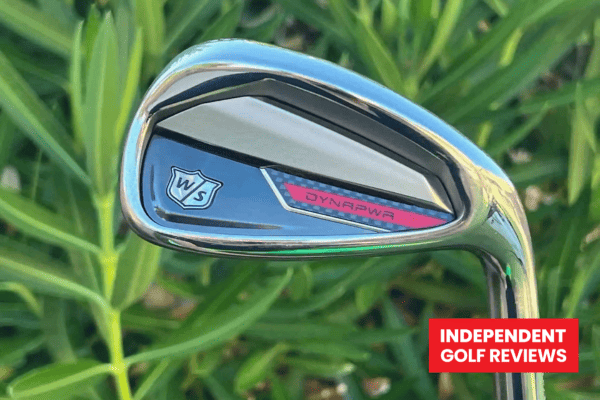
The Wilson DYNAPWR Forged Iron remains a viable option for adding distance because the ball speed off the face is among the best in the players-distance category. Yet it comes wrapped in the look of an iron that a 7-handicapper would not be embarrassed to carry.

The AI-generated variable face thickness produces what one tester called ball speed on repeat. The same high number kept appearing on the launch monitor regardless of swing quality, which is the hallmark of a genuinely forgiving club.

The Power Holes in the 4-through-7-irons create controlled sole flexion that gets your long irons airborne with less effort. Combined with the low-and-toe CG placement, the Dynapower Forged keeps your long iron shots in the air long enough to generate meaningful carry.

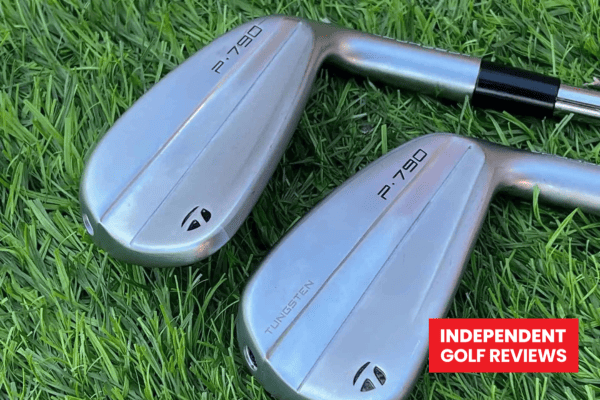
Testers who compared the Dynapower Forged against the TaylorMade P790 at equivalent lofts found nearly identical launch monitor numbers. You get that performance at a meaningfully lower price.

What makes this the best distance pick is the combination of power and a usable shape. The Dynapower Forged is not a game-improvement iron in profile or offset, but it gives you distance usually reserved for super-game-improvement irons.

If you have outgrown oversized heads but still want real speed gains, this is the right tool. The distance gains are real, repeatable, and available in a head you will actually want to put in your bag.

Who It’s For

The Wilson Dynapower Forged suits mid-handicap golfers, roughly 7 to 15, who want genuine distance gains from a compact head that does not look like a shovel. It is the right choice for golfers who have always wanted a players-distance iron but found the biggest names too expensive, and for anyone who wants to carry the ball farther without switching to a super-game-improvement design. Golfers who prioritize soft, blade-like feel over distance should look at the Wilson Staff Model CB instead.

Srixon ZXi R Irons

Most Forgiving Irons for Fast Swings

Srixon ZXi R Irons

5

Pros & Cons

  • i-ALLOY steel is 10% softer than standard 431 for premium feel
  • MainFrame milling positions sweet spot where fast swingers miss
  • Tour V.T. Sole glides cleanly through any turf condition
  • Progressive grooves optimize spin from long iron to wedge
  • Looks like a players iron, performs like a game-improvement iron
  • Strong lofts at 28.5 degrees for the 7-iron limit launch for slower swingers
  • On-course sound is slightly louder than Srixon’s players iron lineup

Why We Picked It

Srixon built the ZXiR for you if you have real swing speed but still need more forgiveness than the ZXi7 or ZXi5 provides. It is the most premium-looking game-improvement iron in the 2026 market.

The ZXiR uses i-ALLOY, a brand-new steel that is 10% softer and less dense than the 431 steel common in this category. The difference at impact is immediate. Your mishits feel subdued and cushioned rather than harsh or stinging.

The MainFrame milling pattern is specifically calibrated to protect your most common miss. Srixon analyzed where high-handicappers hit the face most often, which is low, and concentrated the forgiveness support there. Even your ugliest thin strikes carry their intended distance and hold their line.

The Tour V.T. Sole ensures the club keeps generating speed through the turf even from imperfect lies. The ZXiR delivers game-improvement forgiveness in a package you will actually put in your bag. If you swing a 7-iron at 95 to 105 mph, you have probably resisted game-improvement irons because of how they look and feel. The ZXiR resolves that conflict.

It looks like a natural extension of the premium Srixon family, sits elegantly behind the ball, and performs with the MOI and distance consistency of clubs twice its footprint.

Who It’s For

The Srixon ZXiR is built for golfers with faster swing speeds, generally 85 mph or more with a 7-iron, who play at a 10-to-20 handicap and want game-improvement forgiveness in a head that does not look or feel like a game-improvement iron. It suits golfers who have previously avoided the category because of how those clubs look and feel, and who want a set that fits cleanly alongside a premium Srixon bag setup.

Ping G440 HL Irons

Most Forgiving for More Height

Ping G440 HL Irons

5

Pros & Cons

  • HL build pairs lighter head with weaker lofts for easy launch
  • 9% thinner face generates more ball speed with a higher peak height
  • Longer 4-, 5-, and 6-iron shafts promote effortless long-iron height
  • PurFlex badge flexes to support the face on every strike
  • Draw-biased CG helps square the face for more consistent contact
  • Offset level may feel excessive for golfers who already draw the ball
  • Impact sound is crisper and firmer than some golfers prefer

Why We Picked It

Ping built the G440 HL to help those who generate distance, but struggle to launch the ball on a trajectory that stops quickly and efficiently on greens.

The HL stands for High Launch, and Ping achieved it through weaker lofts, lighter overall weight, and longer shafts in the 4-through-6-irons.That extra eighth of an inch in the long irons raises your launch angle and creates more consistent distance gaps at the top of the set.

The 9% thinner face saves approximately 4 grams per iron, and Ping redistributed every gram of those savings lower and deeper into the clubhead. The lower CG combined with the more aggressive PurFlex badge creates ball speeds that are faster across the full face.

During testing, even thin strikes flew 5 to 10 feet higher than expected and still reached full carry distance. That is the G440 HL doing exactly what it was built to do. Ping has long been the benchmark for game-improvement forgiveness, and the G440 HL sharpens that reputation with a more refined look than previous G-series irons.

The shorter blade length and thinner topline give it an address appearance closer to a players iron. If you need forgiveness but do not want to feel embarrassed at address, the G440 HL gives you both without compromise.

Who It’s For

The Ping G440 HL is ideal for senior golfers, moderate-swing-speed players, and anyone who fights a low, flat ball flight that causes shots to run through greens. It suits golfers in the 10-to-22 handicap range who want maximum height and stopping power without sacrificing the forgiveness Ping is known for. It is also an excellent option for anyone transitioning away from a hybrid-heavy setup who wants long irons that actually behave.

Mizuno Pro M-13 Irons

Best Feeling Forgiving Irons

Mizuno Pro M-13 Irons

5

Pros & Cons

  • 1.37mm Contour Ellipse face in long irons is Mizuno’s thinnest ever
  • Three-construction design delivers flighted launch through the set
  • Copper underlay produces that pure, distinctive Mizuno feel
  • Harmonic Impact Technology tunes sound without sacrificing feedback
  • Short irons forged from 1025E steel for precision scoring control
  • Premium pricing puts this above most game-improvement competitors
  • Better players will need a full fitting to close the 10-yard gap versus hollow-body rivals

Why We Picked It

There is a reason the phrase nothing feels like a Mizuno has persisted for decades in golf. The M-13 is the updated version of that feeling, built for you if you want a little more help than the purist S-Series provides.

The short irons are forged from a single piece of 1025E Elite soft carbon steel. Nothing stings on a thin shot, and nothing feels harsh on a toe strike. The feedback is genuine and useful without ever punishing you for an honest swing. The three-part progressive construction is one of the most sophisticated distance-gapping approaches in 2026.

Your 4- and 5-irons use a Chromoly face 35% thinner than the previous generation, more than doubling the CORAREA and opening the forgiveness window on your long irons.

Your 6-through-8-irons use Micro-Slot technology for a different balance of flex and control. Your short irons transition to pure 1025E steel, where feel and precision take over from power.

The M-13 offers a combination of superb forgiveness and feel, something golfers usually find clubmakers struggle to mesh well, yet Mizuno brought them together in one usable set. Testers who compared the M-13 against the M-15 at equivalent swing speeds found the M-13 surprisingly close in distance while noticeably better in feedback.

If you want to know exactly where you struck the ball, and want that information delivered through your hands rather than through the air, this is your iron for 2026.

Who It’s For

The Mizuno Pro M-13 is built for single-digit to mid-handicap golfers who have always wanted Mizuno’s legendary feel but also need the confidence of meaningful forgiveness in the long irons. It suits golfers in the 4-to-14 handicap range who play to score and value feedback, consistency, and distance gapping over raw distance. Players who primarily care about hitting it farther should look at the M-15 or one of the hollow-body options on this list.

Callaway Quantum Max Fast Irons

Most Lightweight Forgiving Irons

Callaway Quantum Max Fast Irons

5

Pros & Cons

  • Mitsubishi Vanquish graphite shaft unlocks clubhead speed effortlessly
  • Oversized head maximizes confidence at address for slower swingers
  • 360 Undercut Cavity returns speed on every off-center strike
  • Progressive Tri-Sole reduces digging across all swing types
  • Lighter total weight allows fuller swings through the hitting zone
  • Graphite-only configuration limits shaft upgrade options
  • Stronger lofts than the standard Quantum Max require fitting attention for proper gapping

Why We Picked It

The Callaway Quantum Max Fast resolves one of the most persistent problems in game-improvement iron design. Forgiving heads are usually heavy heads, and heavy heads fight against the swing speed you need to generate distance.

Callaway solved this by pairing the oversized Max Fast head with the ultra-lightweight Mitsubishi Vanquish graphite shaft as the standard build. The result is a total club weight that lets you complete a full, uninhibited swing. 

The Quantum Max Fast shares the same 360 Undercut Cavity as the standard Quantum Max, with the full perimeter undercut to allow maximum face flex.

The AI-optimized face is calibrated to match where you actually make contact, and the added face size and offset give you more room for error at every stage of your swing. The Progressive Tri-Sole ensures the club generates full speed even when you catch the turf before the ball.

What distinguishes the Max Fast within the Quantum family is the intentional lightness of everything. Lighter grip, lighter shaft, lighter head weight, all calibrated together to create an iron that generates your swing speed rather than fighting against it.

If you swing a 7-iron at 70 miles per hour or slower, a heavy iron is your primary obstacle to distance and solid contact. The Quantum Max Fast removes that obstacle.

Who It’s For

The Callaway Quantum Max Fast is designed for senior golfers, female golfers, and any player with a moderate-to-slower swing speed who needs a full set of irons they can actually swing at full speed. It suits golfers in the 15-to-30 handicap range who fight for height on long irons and want a complete set built around their physical needs. Golfers who generate above-average swing speed should consider the standard Quantum Max instead.

Stix P02 Perform Irons

Best DTC Forgiving Irons

Stix P02 Perform Irons

5

Pros & Cons

  • 17-4 stainless steel face promotes hot, consistent ball speeds
  • Deep cavity back positions CG low for easier launch
  • All-black minimalist aesthetic stands out on any course
  • Complete 12-club set available under $1,000
  • Draw-biased design helps casual golfers start the ball straighter
  • No fitting service or club customization available through retail
  • Durability concerns have appeared in some long-term user reviews

Why We Picked It

The Stix P02 Perform makes a compelling case for the direct-to-consumer model. These irons are built from 17-4 stainless steel, feature a genuine deep cavity back with perimeter weighting, and produce high ball flights with real forgiveness on off-center contact.

Reviewers were consistently surprised by how close your carry distances will come to irons costing two or three times as much. The face is hot, the launch is high, and your mishits stay playable. 

The all-black design is the Stix calling card, and it earns the best-looking iron designation in the DTC space without question. The blacked-out cavity back and minimalist branding create a head that looks more premium at address than its price tag suggests. When you set it behind the ball, the wide topline and squared-up look give you permission to swing freely rather than steer.

Where the Stix story matters most is in the complete-set value proposition. A 12-club package including driver, fairway wood, hybrid, irons, wedges, and putter is available at a price that competes directly with used sets from major brands.

If you need a full equipment overhaul and want something that looks and plays modern, the P02 Perform is one of the most practical choices in the market. Our choice for the  Best DTC for forgiveness reflects both the value and the straightforward accessibility of the iron set, helping you lower your scores.

Who It’s For

The Stix P02 Perform is ideal for beginner-to-mid handicap golfers who want a complete, modern-looking set without spending premium prices. It suits anyone transitioning from borrowed clubs or a basic starter set into their first real bag, and returning players who want a full refresh at a practical price. Golfers who want custom fitting, specific shaft options, or the feel of a premium forged iron should look at established retail brands with broader fitting programs.

Tour Edge Hot Launch Max D Irons

Best Forgiving Irons for Slice

Tour Edge Hot Launch Max D Irons

5

Pros & Cons

  • Offset hosel geometry promotes natural face squaring through impact
  • Internal heel weighting builds draw bias into every swing
  • Hollow-body ironwood construction maximizes MOI in long irons
  • Low-profile face generates effortless, towering launch
  • V-taper sole lowers CG for better forgiveness from any lie
  • Heavy draw bias may overcorrect for golfers who already hit a draw
  • Ironwood shaping in the long irons is less traditional at address

Why We Picked It

Tour Edge built the Hot Launch Max D to help you fight a slice with better launch, ball speed, and dispersion.

The offset hosel geometry and internal heel weighting physically design the club to reach impact with the face pointing left of where an open face typically sends it.

During testing, even moderately off swings produced draws rather than the fades or slices that would normally result. If you have spent years fighting a right miss, the Max D gives you a different ball flight before your first lesson.

The hybrid-style construction in the 4- and 5-irons is a practical decision for your long-iron game. If you fight a slice, your worst shots typically come from the longer end of the bag, where a smaller face and lower loft amplify every off-center impact.

By using a hollow ironwood build there, Tour Edge gives you the stability and MOI of a hybrid with the gapping behavior of an iron. Your heel and toe strikes become far more playable as a result.

The Max D addresses the problem at the equipment level rather than asking you to fix your swing first. Strong lofts, a low-profile face, and a V-taper sole that lowers the CG make the ball fly high and straight even from imperfect lies.

Tour Edge makes this available at a price well below what major brands charge for comparable slice-correction technology. If you want an immediate improvement in ball flight direction without overhauling your swing, this is among the most effective tools in 2026.

Who It’s For

The Tour Edge Hot Launch Max D is designed for high-handicap and beginner golfers who fight a consistent slice or a significant right miss. It suits players in the 20-to-36 handicap range who want their equipment to help straighten their ball flight while they work on their swing. Golfers who already hit a draw or a controlled fade should look at the standard Hot Launch Max or one of the other options on this list to avoid overcorrecting.

How We Tested These Forgiving Golf Irons

We test golf clubs by seeing how each club looks, feels, and performs. Performance is of course the predominant consideration, although appearance and feel are important too, as clubs you like can help boost your confidence out on the course.

Club testing starts in our indoor facility in Arizona. Here we use advanced launch monitoring technology to gather objective data on swing, ball trajectory, and ball spin. Importantly, we take multiple strokes to account for variability, which lets us form a view on how a club facilitates consistent performance.

From there we take clubs out on the range. This lets us assess the impact of factors that can’t readily be simulated, like awkward lies, different lengths and types of grass, and of course, weather.

When we’re testing clubs, and other golf equipment too, we’re careful to only compare the most recent models and versions. We don’t see any value in comparing the latest club from one manufacturer with another that’s several years old. This approach ensures the list we create covers what you will find in a well-stocked golf store (and also what’s available online), rather than what you might see on eBay.

Since 2011, we’ve tested over 1,000 golf clubs, both indoors and out. This means we have an immense amount of club experience, and we’re very familiar with the design philosophies and styles of the leading manufacturers. As a result, we endeavor to offer well-grounded advice for every type of golfer, from young to old, big to small, and strong to not-so-strong.

Join The CLub

Get insider access & stay up to date with the latest releases in golf

You may unsubscribe from the newsletters at any time.

How to Choose The Most Forgiving Irons

For medium and higher handicappers, switching to a more forgiving set of irons can lead to better scores and more enjoyable rounds. However, not all irons that are designed to be more forgiving behave in the same way. Accordingly, when choosing irons to improve your game, start by considering what level of golfer you are, and what aspects need most attention.

In the following list of points to consider when choosing clubs, we start with some specific issues, then move out to broader suggestions for different types and levels of player.

Hitting Off-Center

Most amateurs struggle to find the sweet spot consistently. They either strike towards the toe or the heel, or too low on the club. This costs distance, and can also cause slices and hooks.

Many of the most forgiving irons incorporate features to help. They use a cavity-backed design which pushes mass towards the heel and toe. This increases the club’s moment of inertia (MOI), which reduces the tendency of the face to turn.

Cavity-backed irons also have a larger sweet spot and a lower center of gravity, both of which will add distance.

Some irons are also designed with a variable face thickness (VFT). This is another feature that increases sweet spot area, which leads to more distance when hitting off-center.

Inconsistent Direction

This can stem from hitting off-center, but is also often due to the hands turning the club face slightly as the ball is struck. Perimeter weighting, where mass is moved out to the heel and toe, helps with the former (see also the Hitting Off-Center section), but club offset can have a big impact too.

Offset refers to the position of the club face relative to the shaft and hosel. An increased offset, where the face is behind the shaft, helps a player square-up the club face immediately before impact, which improves shot direction.

Slow Swing Speed

Higher club head speed at impact translates to greater distance, but most of us can’t simply swing faster. This is where shaft construction and club mass come into play.

Graphite shafts are lighter than steel, and provide greater flexibility. This increased flexibility creates more of a whip effect during the downswing, and less weight makes it easier to swing faster. Likewise, an iron with a lighter head will be easier to swing faster.

More Loft

If you’re happy with the direction and distance you hit, but need increased loft or carry, there are more forgiving irons designed to help.

What’s needed is a center of gravity that’s lower and further back in the club head. This means looking at cavity-backed and perimeter-weighted designs, and also for clubs with more offset.

Incidentally, a longer shaft can help increase launch angle. This however, is something to address during club fitting.

Digging-In

Golfers who take a steep downwards swing often struggle with their irons cutting into the turf. If this is a problem you want to address, take a look at how the club sole is designed.

A wider sole encourages the base of the club to skate across the ground rather than dig in. (It also pushes the center of gravity back in the head, which helps with loft.) Some of the most forgiving irons were designed with close attention to the sole width and geometry, so if you’re trying to avoid digging-in, prioritize this characteristic during your selection process.

High Handicap Players

If you consistently shoot in the 90s, more forgiving irons will definitely help. Features to seek out are a cavity-backed design with perimeter weighting, an offset, and a wider sole. Having tracked down clubs that prioritize these features, look for those with variable face thickness technology, and that weigh less.

Medium Handicappers

Golfers with handicaps in the teens should determine what aspect of their game they are looking to improve. This will then drive the club selection process.

For example, if you hit off-center and feel the club twisting at impact, seek out clubs with a higher MOI. This will lead you to cavity-backed, perimeter-weighted designs. Alternatively, if the problem is more hands turning the club at impact, irons with a pronounced offset may have a bigger benefit.

Senior Golfers

As we age we tend to lose mobility and swing slower. If this is you, the solution may be to look for lighter clubs with graphite shafts.

Graphite shafts also provide higher vibration dampening. This is often much appreciated by players whose joints are starting to give them trouble.

Smaller Golfers

Achieving high swing speeds is often a bigger challenge for those golfers who are on the shorter side. Low club mass and graphite shafts can help significantly, and you might also want to look for designs that maximize sweet spot performance (meaning the VFT technology.)

Another consideration is to get a club fitting. This isn’t possible with those clubs that are sold online only, so if you fit into this category of golfer, you may want to look only at clubs available from reputable golf retailers.

Downsides of More Forgiving Irons

There are some trade-offs from investing in and playing with the most forgiving irons. Most golfers with handicaps in the teens and higher find the benefits outweigh the downsides, but those with low single-digit numbers often prefer irons that need more skill to play well.

The two issues this group cite with more forgiving irons are reduced feel, and less shot-shaping ability. If your game is at a point where you prize being able to tailor each shot to meet your needs, you may not want cavity-backing, perimeter-weighting, or the other features discussed here. For most weekend players though, the most forgiving irons can make a round a more enjoyable experience.

FAQs

Are “forgiving” and “game improvement” different terms for the same kind of iron?

For all practical intentions, yes. However, “game improvement” refers specifically to features incorporated into the club design. This is why you might see irons marketed as “game improvement” clubs. In contrast, a club may have features that make it more forgiving – cavity-backing and so on – while not being marketed as a “game improvement” club.

In short, if you’re looking for irons that will help improve your game, consider the characteristics we’ve discussed here, and not the label the manufacturer has applied.

As a mid-to-high handicapper, should I consider custom fitting when choosing forgiving irons?

Custom fitting is definitely beneficial, and the more you are spending the more you want to choose it. In addition, it’s especially useful if your build is significantly different to that of most golfers. However, if you’re confident you know your game, and especially your strengths and weaknesses, it’s probably not essential.

How does increased perimeter weighting make an iron more forgiving?

The issue here is inertia, the reluctance of a mass to start moving when a force is applied. Putting more of the club head mass further from where the ball is struck increases the resistance to twisting, or the torque applied by striking off-center.

If I move to more forgiving irons, will I find I get less feel from my shots?

The simple answer is, yes. A larger sweet spot, cavity-backing, perimeter weighting, and an offset, will all result in the club sending less information back to your hands about what it’s doing. However, most higher-handicap players find this to be a worthwhile trade-off.

About The Author

Ryan Heiman – Founder and Head Author of Independent Golf Reviews
Founder of Independent Golf Reviews, Ryan plays to about a 3 handicap and writes most of the articles about the equipment, accessories and travel. Now living in Tucson, AZ he enjoys year round golf. He’s been writing reviews here and for other websites for over 10 years now. He has worked with every brand over that time.
Learn more…