
Independent Golf Reviews is reader-supported, when you buy through links on our site, we may earn a commission.
The Best Golf Wedges in 2026

Behind Independent Golf Reviews: How we test & review
1000+
Clubs Tested
14+
Years of Reviews
100%
Unbiased
Our Top Tested Picks
– Best Wedges Overall
– Best Wedges for Mid Handicappers
– Best Wedges for High Handicappers
– Best Budget Wedges
– Best Wedges for Beginners
– Best Wedges for Seniors
– Best Complete Wedge Set
– Most Underrated Wedges
– Best Premium Wedges
How We Tested These Wedges
How to Choose The Best Wedge
FAQs
The wedge is one of the most important clubs in your bag. An accurate, precise wedge is well worth the investment. You’ll reach for the wedge most of the time when approaching the green, and over time, it should be the club you favor for accuracy and precision. The right wedge can make a massive difference in strokes to finish a hole.
We’ll go over the best wedges on the market right now. There are options on this list for beginners and skilled golfers, including those who have held an out-of-alignment club and felt the inferior impact on the game. Our experience is exceptional, both in testing the best wedges and also in playing the game at a championship level. You’ll find this article simplifies the selection process, no matter what specific objectives you have for your next wedge purchase.
Numerous choices exist, including the shaft material and flex, grip size, and the lie angle. The right adjustments in these areas mean shaving strokes off your game. This guide will help you choose the best wedges for your game.
Official Wedge Rankings 2026


In More Depth: Our TOp Picks

Best Wedges Overall
Titleist Vokey SM11 Wedges
Pros & Cons
- Progressive CG across all lofts
- Six tour-proven grind options
- Heat-treated grooves double durability
- Four premium finish choices available
- Most played wedge on Tour
- Premium $199 per wedge price
- Subtle gains over SM10 predecessor
Expert’s Thoughts
The Titleist Vokey SM11 is the standard every other wedge is measured against, and after six rounds with a full set in the bag, that reputation is completely justified. These wedges do not reinvent anything. They simply refine what was already the best option on the market into something even more precise.
What stands out immediately is how consistent your ball flight stays regardless of which grind is in play. Titleist eliminated CG variation across grinds within the same loft, so switching from an S grind to an M grind no longer changes your launch window. That consistency showed up beautifully on the course during my testing. Every pitch, chip, and bunker shot came off the face with a predictable trajectory, and that kind of reliability will make your distance control feel almost automatic. Getting up and down becomes a reasonable expectation for you rather than a hopeful outcome.
The groove upgrades matter for your game too. Playing early morning rounds through heavy dew, my spin numbers stayed remarkably stable when other wedges would normally lose bite. Those 5% larger groove volumes channel moisture away from the contact point, and the difference will show up on your scorecard. Wet lies around the green stop costing you automatic bogeys.
Six grind options and 27 loft, bounce, and grind combinations mean a proper fitting session will unlock exactly the right setup for your swing. The investment in a fitting pays for itself in strokes saved. If you take your scoring game seriously, these are the complete package.
Who It’s For
The Titleist Vokey SM11 is built for golfers who take their short game seriously and want the most comprehensive wedge system available in 2026. Players who benefit from a professional fitting to dial in the perfect grind and bounce for their swing will find these wedges reward that investment with unmatched consistency and control, and anyone currently gaming SM9s or older should see a meaningful improvement in their greenside performance.

Best Wedges for Mid Handicappers
Callaway Opus SP Wedges
Pros & Cons
- Spin Pocket raises CG effectively
- Lower launch with higher spin
- Tour-validated Shape 6 profile included
- Six grind options for customization
- Spin Gen 2.0 face maximizes bite
- Premium $200 per wedge pricing
- Lower flight takes slight adjustment
Expert’s Thoughts
If your wedge shots fly too high and land with too little spin, the ball is rolling well past the pin every time. The Callaway Opus SP solves that problem through a genuinely innovative Spin Pocket design, and after five rounds of testing, the results were undeniable. Every scoring-zone shot came in lower and checked harder than what your typical mid-handicap swing normally produces.
The transformation happens most noticeably between 50 and 70 yards. That awkward three-quarter swing distance that usually produces unpredictable results for you will become one of the most reliable shots in your bag. The ball comes off the face on a penetrating trajectory with enough bite to hold firm greens. My playing partners started asking why my pitches were stopping so close to the pin, and the answer is the lower launch creating a steeper descent angle with more spin. That combination is what tour players have, and the Opus SP manufactures it for your game without requiring any swing changes.
Around the greens, the compact Shape 6 profile inspires confidence to commit to aggressive shots. Bunker play will impress you too. The sole glides through sand without resistance, and the ball comes out with controlled spin rather than ballooning skyward. Tight lies that normally create anxiety in your game become opportunities to attack.
Callaway built these wedges around Xander Schauffele and Jon Rahm’s feedback, and now you get to benefit from that tour-level input at your local course every weekend.
Who It’s For
The Callaway Opus SP fits mid handicap golfers who want to close the gap between their current wedge play and what skilled players experience around the greens. Players who lose strokes on approach shots between 50 and 100 yards will benefit most from the low-launch, high-spin characteristics, and anyone frustrated by wedge shots that release too far past the hole will find the stopping power immediately improves their scoring from inside 120 yards.

Best Wedges for High Handicappers
Cleveland RTZ Wedges
Pros & Cons
- Outstanding forgiveness with generous spin
- Wide sole prevents chunking and digging
- Easy to hit from any lie condition
- Confidence-boosting profile at setup
- Consistent distance even on mishits
- Less workability than player-focused wedges
Expert’s Thoughts
Cleveland has been making wedges longer than most companies have existed, and the RTZ might be the finest expression of that expertise to date. The new Z-Alloy steel is the headline, but the on-course impact of this material matters far more to your game than the metallurgy behind it. After four rounds, my short game felt noticeably more connected and responsive.
The softer feel translates directly into better feedback on every shot you hit. Learning where the ball contacts the face is one of the fastest ways for you to improve, and the RTZ communicates that information clearly without punishing your mistakes harshly. Centered strikes produce a satisfying, dense thud. Toe and heel misses register differently enough to educate your hands without stinging them. That kind of teaching feedback will accelerate your improvement faster than any lesson video.
If you struggle with bunker play, the Adapt grind with full-face grooves is a revelation. The wider sole prevents digging, the extra bounce keeps the club moving through sand rather than burying, and those grooves across the entire face mean even your toe-heavy contact still produces usable spin. Fear of the sand starts to fade, and once that mental barrier drops, your entire short game benefits.
Cleveland priced these competitively at $170 per wedge, making a three-wedge set significantly cheaper than comparable premium options. The value here is exceptional for you because the performance is genuinely elite.
Who It’s For
The Cleveland RTZ is ideal for high handicap golfers who need a wedge that provides clear feedback while being forgiving enough to keep poor strikes in play around the greens. Players who dread bunker shots will love the Adapt grind option, and anyone upgrading from a box set wedge will experience a dramatic improvement in feel, spin, and overall confidence within their first few rounds of play.

Best Budget Wedges
Takomo Skyforger 002 Wedges
Pros & Cons
- Outstanding $99 per wedge price
- Full-face grooves on every loft
- Two grind options provide versatility
- Premium KBS Tour shaft included
- Spin rivals $200 competitors consistently
- Limited customization from factory
- Direct-to-consumer only sales model
Expert’s Thoughts
Spending $200 on a single wedge feels absurd when a $99 alternative performs at the same level. The Takomo Skyforger 002 is that alternative, and after seven rounds of testing, the performance gap between this and the premium competition simply did not exist. Every shot type you need will work. Flops, bumps, pitches, spinners, bunker escapes. All of them.
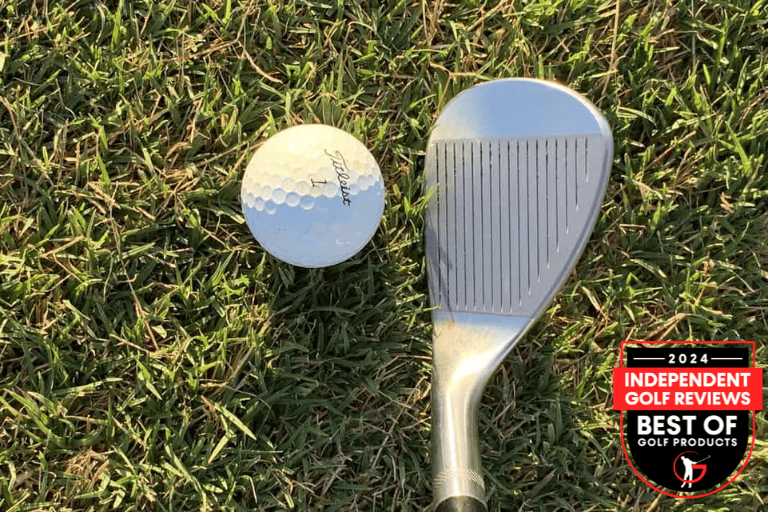
The full-face grooves earn their place here because most recreational golfers miss toward the toe more often than they realize, and if that sounds like your game, pay attention. On those toe-side strikes, premium wedges without full-face grooves produce dead, spinless shots that run well past your target.
The SF002 keeps imparting spin even on your less-than-perfect contact, and that forgiveness translates into tighter proximity to the hole. Testing confirmed spin numbers that matched or exceeded wedges at double the price, and the consistency from shot to shot will genuinely impress you.
Testers in a recent blind comparison preferred the feel of the SF002 over several name-brand alternatives without knowing what they were hitting. The matte finish looks clean at address, the minimalist branding exudes quiet confidence, and the responsive feedback at impact tells your hands exactly what happened. Nothing about this wedge announces its price point to your playing partners.
Three SF002s cost less than two Vokeys. The savings can fund a short game lesson, extra rounds, or simply stay in your wallet. Either way, the performance does not ask you for any compromise.
Who It’s For
The Takomo Skyforger 002 is perfect for budget-conscious golfers who refuse to sacrifice performance to save money and want a complete wedge set without spending $500 or more. Players replacing worn-out grooves will find this an easy decision, and any golfer curious about direct-to-consumer equipment will discover that Takomo delivers legitimate tour-level spin and feel at a price point that makes upgrading wedges annually a realistic option.

Best Wedges for Beginners
Edison 2.0 Wedges
Pros & Cons
- 5x forged for exceptional feel
- Dual-bounce Koehler Sole simplifies turf
- Higher CG improves amateur consistency
- No bounce fitting confusion needed
- Free trial period offered directly
- $200 per wedge is not cheap
- Odd-numbered lofts take adjustment
Expert’s Thoughts
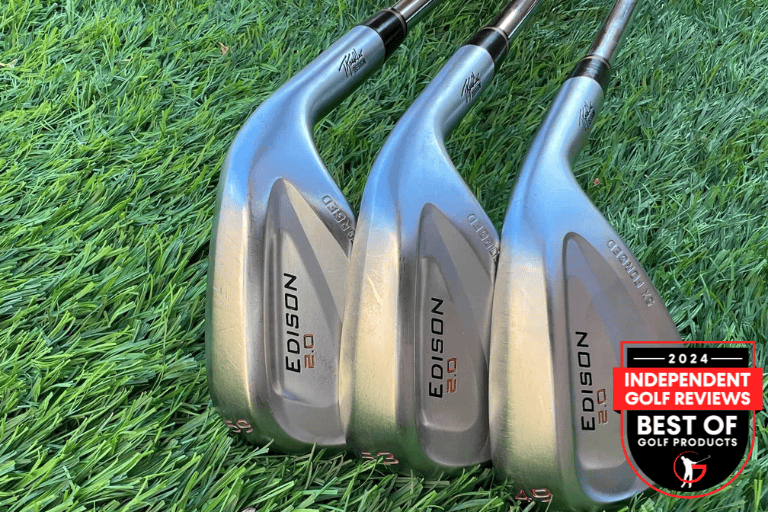
Most wedges are designed for tour players and then sold to everyone else. The Edison 2.0 was designed specifically for your game as an amateur golfer, and that distinction changes everything about how it performs in your hands. After four rounds, the consistency from 100 yards and in was unlike anything a beginner-focused wedge normally delivers.
The Koehler Sole is what makes these special if you are newer to the game. Traditional wedges require understanding bounce, grinds, and turf interaction before the club works properly. The Edison’s dual-bounce design handles all of that automatically for you. High bounce at the leading edge prevents digging on steep swings.
Low bounce toward the trailing edge allows versatility when the face opens. One sole design works from tight fairway lies, thick rough, firm sand, and soft turf without requiring you to make any technique adjustments. That simplicity removes a massive barrier to your short game improvement.
Weight distribution is the other game-changer for your scoring. Edison moved 14 to 17 grams higher in the head, placing mass where you actually make contact. Your mishits that normally lose 15 to 18 percent of their energy will maintain significantly more distance and spin consistency. The scorecard impact shows up immediately because those chunked and thinned wedge shots around the green produce results that stay closer to your intended target.
Edison offers a risk-free trial period, which means you can try these without financial commitment. For someone still building confidence in their short game, that freedom to experiment is invaluable.
Who It’s For
The Edison 2.0 is tailor-made for beginner and high handicap golfers who want a wedge that eliminates the confusion of bounce fitting and delivers consistent results regardless of technique. If you struggle with chunked or thinned short game shots you will notice immediate improvement. With the higher CG design, anyone intimidated by the complexity of wedge selection will appreciate how the Koehler Sole simplifies turf interaction into one versatile solution.

Best Wedges for Seniors
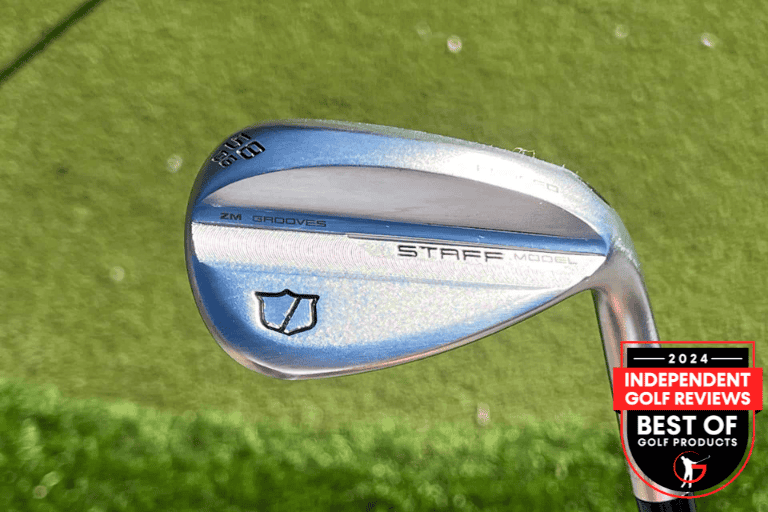
Wilson Staff ZM Wedges
Pros & Cons
- Forged 8620 steel feels soft
- Garnet face blast improves wet spin
- Competitive $149 per wedge price
- High toe option adds forgiveness
- Dynamic Gold Spinner shaft included
- Only one finish option available
- Fewer grind options than competitors
Expert’s Thoughts
If your swing speed has slowed down, you need a wedge that delivers maximum stopping power without requiring aggressive speed through impact. The Wilson Staff ZM does exactly that, and after five rounds of testing, the combination of soft feel, reliable spin, and accessible pricing made these impossible to overlook. Padraig Harrington helped design them, and his input shows in every detail.
The forged 8620 steel creates a buttery feel at impact that your hands will appreciate. Firm, harsh wedges create discomfort that discourages practice and erodes confidence over time. The ZM communicates strike quality through pleasant, informative feedback that never punishes you.
Playing 18 holes and still wanting to practice chipping afterward says something important about how good these feel through the hitting zone, and that comfort keeps you engaged with your short game.
Spin retention in wet conditions is where the garnet face blast technology earns its place in your bag. Morning golf with dew-soaked rough is probably a regular reality for you, and losing spin on those early shots can inflate your scores quickly. The ZM maintained impressive bite through damp lies where other wedges in this price range would have produced dead, running shots. That wet-condition consistency gives you predictable results all day long.
At $149, these cost $50 less per wedge than most premium competitors. A complete three-wedge set costs less than two Vokeys or two Opus SP wedges. The savings add up without sacrificing the soft feel and spin performance that will keep your short game sharp as your swing speed decreases.
Who It’s For
The Wilson Staff ZM is built for senior golfers and anyone with moderate swing speed who needs a wedge that produces reliable spin and exceptional feel without requiring a fast, aggressive swing through the ball. Players on a budget who still want forged quality and tour-level groove technology will find the ZM delivers premium performance at a mid-range price, and the high toe option provides extra forgiveness for seniors who need help on less-than-perfect contact around the greens.

Best Complete Wedge Set
Kirkland Signature 3 Piece Golf Wedge Set
Pros & Cons
- Three wedges for under $170 total
- Classic 52/56/60 loft configuration included
- Milled face generates impressive spin
- Clean traditional aesthetic appeals widely
- Costco satisfaction guarantee included
- No custom loft or grind options
- Feel lacks premium forged softness
Expert’s Thoughts
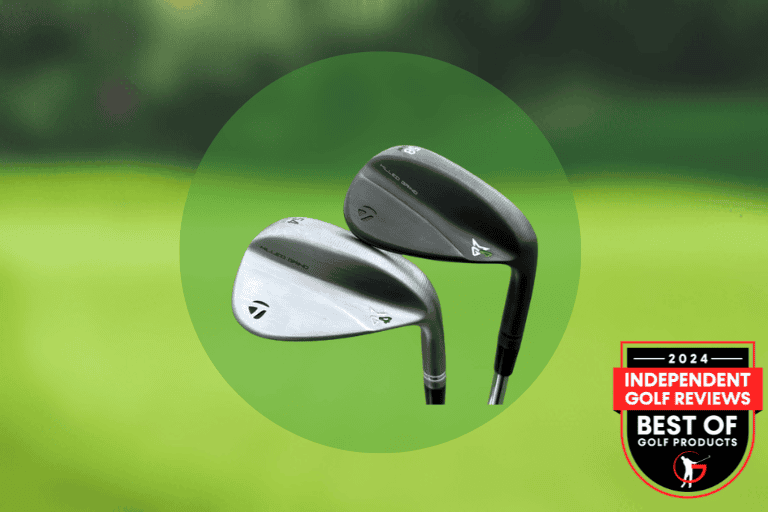
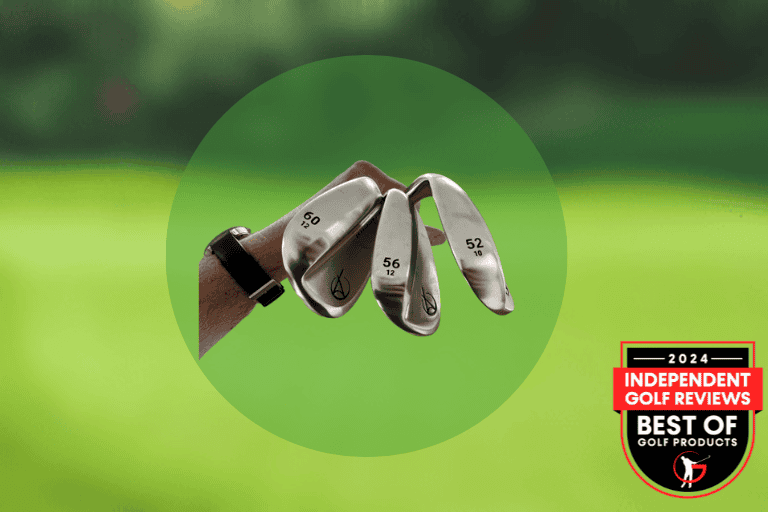
Buying three premium wedges in 2026 costs between $500 and $600. The Kirkland Signature set delivers three wedges for under $170, and the performance gap between these and the expensive alternatives is far smaller than the price gap suggests. After three rounds, the value proposition became undeniable for any golfer watching their budget.
The 52, 56, and 60 degree configuration covers the loft gaps you need without any overthinking. Taking three matching wedges out of one box and putting them straight into your bag simplifies equipment decisions when you do not want to navigate grind charts and bounce specifications. The matching aesthetics create visual consistency that builds your confidence when switching between wedges around the green, and the clean chrome finish looks genuinely premium in the bag.
Spin performance surprised me throughout testing. The milled face generated impressive grab on full approach shots, and greenside chips checked up well enough to attack pins with confidence.
These are not going to out-spin a fresh set of Vokeys in a launch monitor shootout, but the real-world difference on your actual golf shots is marginal. Bunker performance was solid, with the 10-degree bounce on the sand wedge providing reliable float through the sand for you.
The Costco satisfaction guarantee removes all risk from your purchase. Play them for weeks, and if the performance disappoints, return them. That backing alone makes this the smartest entry point if you need a complete wedge setup without the financial commitment of premium alternatives.
Who It’s For
The Kirkland Signature 3 Piece set is ideal for golfers who want a complete, matched wedge setup at a fraction of the cost of buying individual premium wedges. Players upgrading from a box set, recreational golfers who replace wedges infrequently, and budget-conscious players who want functional performance without spending $500 or more will all find these deliver far more than their price suggests, backed by the peace of mind of Costco’s legendary return policy.

Most Underrated Wedges
Cobra King Wedges
Pros & Cons
- Metal Injection Molding construction excels
- Progressive CG optimizes every loft
- Enlarged Speed Notch improves turf interaction
- Four versatile grind options available
- Competitive $139 per wedge pricing
- Brand perception lags behind performance
- Raw finish durability may vary
Expert’s Thoughts
Cobra dominates conversations about drivers and fairway woods, but rarely gets mentioned when you are shopping for wedges. That oversight is a mistake, because the 2025 King wedges deliver performance that competes with anything on the market at a price that undercuts the major players significantly. After six rounds, these earned permanent consideration in any wedge conversation.
The Metal Injection Molding construction produces a forged-like softness that your hands will appreciate immediately on delicate greenside shots. The feel is responsive and controlled, with enough feedback to help you distinguish between pure strikes and slight misses.
Your improvement in the sand will impress you too with these wedges. The enlarged Speed Notch allows the sole to glide through bunkers without resistance, creating that effortless float feeling that builds your bunker confidence over time. Even on steeper entry angles, the club never feels like it wants to dig on you.
Progressive CG placement across the loft range is something only the most serious wedge manufacturers implement properly. Cobra nailed it here, and your game benefits automatically. Lower lofts produce penetrating trajectories ideal for your full approach shots, while higher lofts create steep descent with maximum stopping power. That optimization happens without any conscious adjustment from you and delivers the right ball flight for each specific shot type.
At $139 per wedge, a complete three-wedge set of Cobra Kings costs what two Vokeys or two PXG Sugar Daddy wedges cost individually. The performance-to-price ratio here is among the best available to you in golf equipment for 2026.
Who It’s For
The Cobra King wedges are perfect for golfers who value performance over brand prestige and want to build a complete wedge set without overspending. Players already impressed by Cobra’s woods and irons will find the wedges match that same quality, and anyone willing to look beyond the traditional wedge brands will discover a legitimately elite option that saves meaningful money while delivering tour-caliber spin, feel, and versatility.

Best Premium Wedges
PXG Sugar Daddy III Wedges
Pros & Cons
- 100% CNC milled for exact precision
- Triple-forged 8620 carbon steel feel
- Precision Weighting Technology customizes swing weight
- Wider grooves maximize spin aggressively
- Three grind options with fitting support
- Premium $299 per wedge investment required
- Fewer grind options than some competitors
Expert’s Thoughts
Premium pricing demands exceptional performance, and the PXG Sugar Daddy III delivers it for your short game without reservation. After extensive testing, these wedges produced the most consistent spin numbers, the best feel at impact, and the most impressive stopping power of anything in this roundup. The craftsmanship is visible, tactile, and translatable to your on-course results.
The triple forging and 100% CNC milling process creates a level of precision that mass-produced wedges cannot match. Every groove is cut to exacting tolerances, and the result is spin performance that holds up across the entire face for you. Heel misses, toe misses, and centered strikes all produced spin numbers that stayed remarkably close together during testing.
That consistency will transform your short game because shots from imperfect lies and less-than-perfect contact still check and hold the green. Now you’ll see approach shots from 80 to 120 yards will check up with authority making you feel like a significantly better player.
Precision Weighting Technology sets these apart from every other wedge on the market for you. The adjustable weight in the back allows a fitter to dial in the exact swing weight that matches your tempo and preference. Believe it or not, just two grams of difference in head weight can change how a wedge releases through your impact zone, and getting it exactly right makes every shot feel deliberate rather than hopeful.
The $299 price tag is significant, but these wedges are built to last longer than competitors thanks to the triple forging process that extends groove life. The cost per round of ownership tells you a different story than the sticker price.
Who It’s For
The PXG Sugar Daddy III is built for golfers who demand the absolute best in craftsmanship, feel, and performance from their wedges and are willing to invest accordingly. If you appreciate PXG’s Precision Weighting Technology and how it adds a dimension of personalization that no other manufacturer offers, you will find these wedges reward your commitment with unmatched precision and stopping power.
How We Tested These Wedges
To test them, we took them to the green with a lineup of some of the latest on-brand and off-brand wedges. All products received vigorous testing, with careful attention paid to the swing, feel, and movement. We looked at various uses on the course to see how each wedge compared in the same scenario. Whether sand trap or chip shots, we used the same stance, positioning, and force to feel realistic differences in each.
I’ve tested each of the wedges listed here. There are many others on the market, but from hours spent on shots, these are the best products for most people. Our equipment specialists have tested most wedges under various conditions, including both practice and competition play, to determine which models are most forgiving, best suited to skill levels, and worth the investment.
To determine the best wedge, it’s essential to visit the green. A wedge typically makes shots within 120 yards, and while differences vary among users, there are several factors we consider when comparing wedges.
Chip and pitch shots, which you’ll use the golf wedge for most, need to feel good, with the clubhead gliding along the turf with ease. Consider spin performance and how the club performs on different turf types. Testing requires a look at all your typical shots, including chips, pitches, a few bunker shots, and short full swings, to determine spin, distance, and overall performance.
Join The CLub
Get insider access & stay up to date with the latest releases in golf
You may unsubscribe from the newsletters at any time.
How to Choose The Best Wedge
A wedge, also called an approach wedge or gap wedge, fills the distance between your pitching wedge and sand wedge. Typical wedges usually have a 50-to-52-degree loft. It’s designed specifically for executing a precise approach shot on the green. Your distance is short, too short for a pitching wedge, but it’s still long enough that a sand wedge isn’t a solution.
Typically, your bag should contain several types of wedges (with the typical “wedge” or “approach wedge” being what we’ve discussed at length). Other wedges that may fit within your bag include:
- Pitching wedge: This is your stock wedge present in virtually every set of irons. They have more loft between 42 and 48 degrees than your 9-iron. Use them for full shots and some chip shots. You can go with the pitching wedge that’s standard in your clubs, but precision players can select a more precise option for their needs.
- Approach wedge: Your gap wedge, sometimes referred to as an attack wedge, fills the gap between your sand wedge and pitching wedge. It has more loft between 48 and 54 degrees and a shorter shaft.
- Sand wedge: Most golfers use a sand wedge, which isn’t just for hitting from the bunker. It can be ideal for numerous shots thanks to its shorter size (than the approach wedge) and more loft of between 53 and 58 degrees. It’s versatile for full shots, bunker shots, and chip shots.
- Lob wedge: Your bag likely needs a lob wedge, which provides 58 to 64 degrees of loft. It’s a very versatile club for short-range needs. The most skilled golfers have a lob wedge at their ready because of the amount of spin they produce. They also work well for short-sided shots.
To choose a wedge for your game, you’ll need to consider several key areas.
Clubhead Features
The clubhead is the biggest differentiating feature. You’ll notice differences in material, groove patterns, and weight, all of which impact the way the club interacts with the ball and the turf itself. When choosing a wedge, consider these clubhead features:
Size
Bigger isn’t always better. A larger clubhead creates clean contact with the ball. However, a smaller clubhead is far easier to adjust to shape your shot. For those who are newer to the game, choosing a larger clubhead makes sense. Once you start perfecting your swing, you’ll appreciate a slightly smaller clubhead that provides better overall control.
Groove Patterns
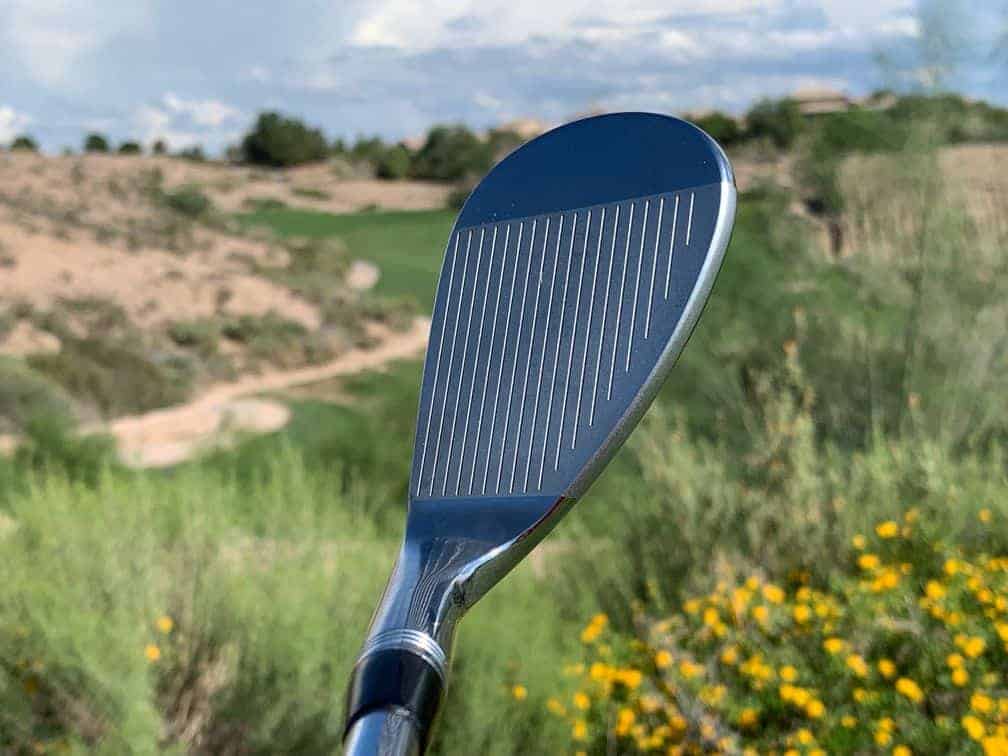
Patterns matter. The pattern ultimately maximizes spin, creating the height of your shot and determining when and how it stops. Deeper groove patterns can typically enhance the club’s function, allowing it to last longer. Compare groove patterns to notice height, stopping speed, and accuracy.
Also, note that some clubs will have a smaller area of grooves than others. That limits the main striking surface. Full-face groove designs add grooves across the entire face. That gives you added control and forgiveness.
You can choose various finishes for your wedges. These contribute less to performance, but are a preference option for most golfers.
Material
The clubhead material is often thought of as an aesthetic. However, while you can choose the material you like, look for materials that are resistant to damage and can handle the game over time. Softer face materials are becoming more common, which can improve the club’s feel somewhat.
Bounce
When buying a golf club, the bounce (and grind) are critical aspects to consider. These are areas that cannot be altered once you own the club in a golf fitting. Bounce is a measurement of the angle between the leading edge of your club and the lowest point of its sole. It’s represented in a percentage. Bounce creates space between the turf and the ledge edge. This allows the sole of the club to glide across the turf. It keeps the leading edge suspended for just the right length of time to create a solid connection with the ball. This limits the club’s dig into the turf.
Bounce has three typical ranges:
- Low-bounce: A wedge with a low bounce typically has a 4-to-6-degree range. This is best for dense bunkers and firmer turf. These wedges are better for shots close to the green. Precision and a short turf also benefit from a low bounce percentage.
- Mid-range bounce: The mid-range is between 7 and 10 degrees. These are more typically used. They are beneficial for your fairway turf. If you’re used to playing in various conditions, the midrange is a solid bet for its versatility. If you make small to moderate divots with your wedge, this range is best.
- High-bounce: A higher bounce is anything over 11 degrees. This type of wedge has critical benefits when the turf is soft, and it is also a necessary choice for drier, softer bunkers. If you’re golfing in wetter conditions, where the grass is longer, especially along fairway edges, this wedge is beneficial. The height gives you more ability to get the ball out of the rough.
Loft Selection
Another factor to compare is loft selection, or the angle of the clubface relative to the turf. Choose a higher loft to shorten the distance of the shot. This creates more height and allows the ball to stop faster once it strikes.
Beginner: Higher-lofted clubs are better because they launch the ball higher while providing significant control and forgiveness. Wedges for beginners benefit from the following ranges:
- Pitching wedge: 42 to 46 degrees
- Gap wedge: 50 to 53 degrees
- Sand wedge: 54 to 58 degrees
- Lob wedge: 58 to 60 degrees
Average, recreational player: Most average golfers, with a modern swing speed of 85 to 100, will benefit from a 10.5- 12 degree loft. Choose a higher loft if you need more help with launch.
Depending on which wedge you’re selecting, aim for a range within the following, as an average player:
- Pitching wedge: 42 to 46 degrees
- Gap wedge: 48 to 52 degrees
- Sand wedge: 54 to 56 degrees
- Lob wedge: 58 to 60 degrees.
Fast swing speed: A fast swing speed, typically over 105 mph, benefits from a lower-lofted wedge. That helps manage the high spin better and prevents ballooning.
- Pitching wedge: 44 to 46 degrees
- Gap wedge: 48 to 50 degrees
- Sand wedge: 54 to 56 degrees
- Lob wedge: 58 to 60 degrees
Skill
If you’re looking for a simple way to choose a golf wedge, think about your skill level. Here’s a look:
- You’re just starting out. Choose a high-bounce sand wedge for the easiest play option.
- You’re a mid-range player who knows the course well. Choose a mid-range bounce for versatility and control.
- You’re elite. You probably know what works best for you, with a more precise wedge selection in your bag.
Course Conditions
Another tool for choosing the right golf wedge is to consider the course you plan to play, especially if it’s a regular location. That doesn’t mean you need a different set for each course, but you will notice differences in play based on course conditions.
For a firm course, a low-bounce golf wedge may be beneficial. Wetter, softer courses are going to require a higher bounce to get over the muck.
Budget
It’s certainly important to consider your budget when choosing a wedge. If you’re keeping closer tabs on what you’re spending, and want versatility, aim for a mid-range product. You don’t need to overspend on a wedge unless you’re looking for precision control.
A quality wedge should be built to last. As noted, over time, groove wear and some materials become less durable. That means you’ll need to replace it sooner. The good news is that if you’re just starting out, a budget wedge is a great place to learn. Over time, increase your spending as you get more accustomed to your fit and play style, as well as to how much spin and forgiveness you need.
FAQs
What is the best wedge for a golf beginner?
The best wedges to carry are a pitching wedge and a sand wedge, if you have a limited line-up. For your approach wedge, beginners benefit from a mid-range, full-groove patterned face wedge.
Do I need a 52-56 or a 60 wedge?
It’s beneficial to choose a wedge based on your game. A 52-degree wedge is ideal for longer chips and any situation where you want a lower loft and more roll out. A higher, 56-degree wedge is better for a balanced experience. It’s a good all-around option for chip shots. Conversely, a 60-degree wedge will produce the ideal high lofted shot and create a fast ball stop.
What wedges does every golfer need to have?
Your golf bag should include a pitching wedge and a sand wedge at the very least. An approach wedge is beneficial for most players as well. The lob wedge is less necessary initially but becomes critical as your game improves.
Which is the easiest wedge to chip with?
Generally speaking, the easiest wedges for most people to chip with are the pitching wedge and sand wedge. Both offer a good balance of control and roll.
Should I choose the same golf wedges the pros use?
While choosing golf club brands recommended by your favorite athletes is important, it’s not the only factor in selecting a golf wedge. It’s easy to overspend on precision golf wedges that cannot improve your game play because you don’t have the experience and refined skill (yet) to use them. Instead, choose the club that matches your skill level.
What about wedge shaft flex?
Getting the right shaft matters, and you can place the same flex for your wedges as you do with your other irons. It is also possible to choose a flex that is slightly heavier. Doing so gives you more control over the swing.
Ideally, you’ll want to consider the following:
- Regular flex: Ideal for a 6-iron swing speed of 70 to 80 miles per hour
- Stiff flex: Ideal for a 6-iron swing speed that’s higher at 80 to 90 miles per hour
- Light flex: This is beneficial for a 6-iron swing speed of 60 to 70 miles per hour (often referred to as a senior flex)
Most of the time, clubs will have a standard wedge flex that works well for the shorter club. Most of the time, you’re not swinging these at a high rate of speed. That means it’s less important to choose based on flex and more important to choose based on the feel of the club.