
The Best Golf Drivers of 2026
Our three testers, from a 3-handicap to an 18-handicap senior, hit every driver on sale in 2026, then took the best of them to the course. These are the 12 best, each matched to the golfer it helps most.

Tested and written by Ryan Heiman, Founder and Head Reviewer
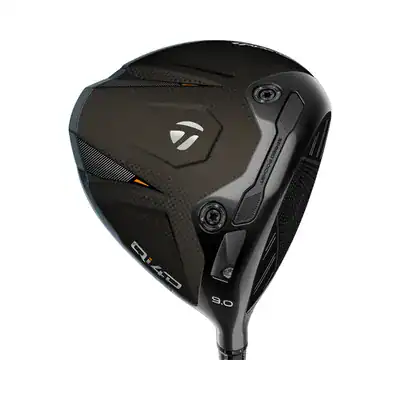
Best Driver Overall: TaylorMade Qi4D Driver

- Three real golfersA fast-swinging 3-handicap, a 12-handicap who slices and an 18-handicap senior hit every driver.
- Proven on courseWe play our top picks on the golf course, not just in a hitting bay.
- Every pick playedEach of our 12 picks gets five rounds on the course before it makes the list.
- Fully independentNo brand can buy a spot on this list. Every pick is earned in testing.
Independent Golf Reviews is reader-supported. When you buy through links on our site, we may earn a commission. Learn more
Our top picks
The TaylorMade Qi4D is the best driver for most golfers: long, forgiving and the top-rated driver in our 2026 test. Strong, consistent players get more distance from the Titleist GTS4. Slicers should get the PING G440 SFT, our slicing tester's straightest driver. If you mishit often, the PING G440 K is the most forgiving. Slower swingers should try the TaylorMade Qi4D Max Lite, and the $399.99 Tour Edge Exotics Max is the best value.
What kind of golfer are you?
-
Best Driver Overall
Our pick for most golfers: straight, long and forgiving on misses
-
Best Driver for Low Handicappers
For fast, consistent ball-strikers who want the most distance
-
Most Forgiving Driver (High Handicap)
For high handicappers who need more drives in the fairway
-
Best Budget Driver
For golfers who want a top-rated driver without paying $650
-
Best Driver for Beginners
A big, forgiving first driver that keeps the ball in play, for about $400
-
Best Driver for Seniors
TaylorMade Qi4D Max Lite Driver
The lightest Qi4D, for seniors and slower swingers who need height
-
Best Driver for Distance (average player)
For golfers who want more distance: our longest driver at an average swing speed
-
Best Driver for Slice
The straightest driver we tested for slicers, now $449 after a price cut
-
Best Mini Driver
TaylorMade R7 Quad Mini Driver
Nearly full-size distance for tight tee shots where a driver feels risky
-
Best Looking Driver
Classic Titleist looks and real distance for steady ball-strikers
-
Best Driver For High Launch
The highest-launching driver we tested, for golfers whose drives stay low
-
Most Underrated Driver
For faster swingers who want a lower flight that still forgives, now $449





Our picks in detail
Each review below explains the problem the driver solves, how it performed for our three testers and who should skip it.
Our IGR score, out of 5, sums up how each driver did in our testing for the golfers it’s made for.
Best Driver Overall

TaylorMade Qi4D Driver
Most golfers want a driver that is long, forgiving and straight, and few deliver all three. The Qi4D does. I found 9 of 10 fairways with it, the most of any driver we tested. It's the safest choice on our list.
Why we picked it
Accuracy. This is what earned it the top spot. No driver kept me in the fairway more often, and our 12-handicapper, who fights a slice, found nearly 8 of 10, tied for his best. Averaged across all three testers, the Qi4D found more fairways than any other driver, including the PING G440 SFT, which PING designed specifically to fight a slice.
Distance. It gives up very little here. Only the Titleist GTS4 went farther for me, and only by a yard. More important, it stayed long for all three of us while also being forgiving, meaning you keep more of your distance when you miss the center of the face. Few drivers manage both.
Adjustability. Four movable weights on the bottom of the head let a fitter set it up to fight a slice, calm a hook, add forgiveness or find a few more yards. It also won't look dated soon: TaylorMade says it won't release a new driver in 2027. The standard head is $649.99; the LME and Shadowfall versions cost $699.99.
Who it’s for
Mid and low handicappers who want one driver that does everything well, golfers whose miss drifts right but who don't need a dedicated slice fix, and players working with a fitter, since the four weights give real options. With no replacement coming in 2027, it's a sound buy for anyone who keeps a driver for several seasons.
Look elsewhere if: you swing on the slow side. The TaylorMade Qi4D Max Lite is lighter and easier to swing, and it launched our senior tester higher.
Our test numbers
Ryan, 3 handicap, Fast swing: 109 mph
- Total distance
- 296 yds
- Carry
- 283 yds
- Off line
- 4.6 yds avg
Tester 2, 12 handicap, Average swing: 94 mph
- Total distance
- 231 yds
- Carry
- 218 yds
- Off line
- 4.8 yds avg
Tester 3, 18 handicap, Senior swing: 80 mph
- Total distance
- 184 yds
- Carry
- 169 yds
- Off line
- 4.0 yds avg
Where to buy
Prices update daily.
Best Driver for Low Handicappers

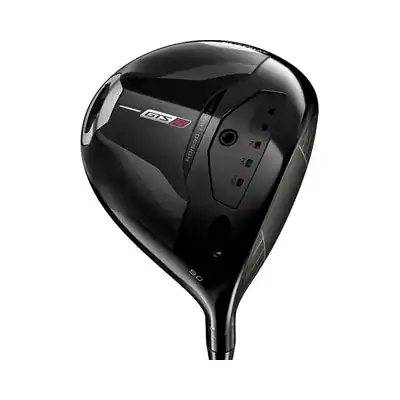
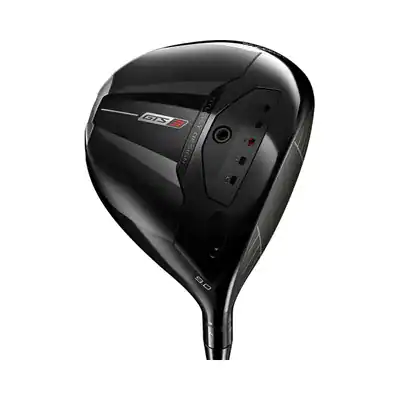
Titleist GTS4 Driver
Strong players lose yards when drives spin too much and climb. The GTS4 is Titleist's lowest-spinning 2026 driver, and it was the longest driver I hit. If you find the middle of the face most of the time, this is the one.
Why we picked it
Distance. It sends the ball out with less backspin, so drives fly flatter and run out farther. I averaged 297 yards with it, a yard more than the TaylorMade Qi4D and the most of any driver I hit.
Forgiveness. It's the first Titleist “4” driver with a full 460cc head, so it's more stable than the smaller-headed models before it. It still isn't built for big misses: it was a little less straight than the Qi4D for all three of us.
Fitting. A sliding weight track, two weight ports and an adjustable hosel let a fitter tune the flight, spin and shot shape. It rewards getting the setup right, so it's worth a fitting.
Who it’s for
Low handicappers, fast swingers who spin the ball too much, and golfers who find the center of the face most of the time and want every yard.
Look elsewhere if: you miss the center often. The TaylorMade Qi4D gives up almost nothing in distance and is more forgiving. If your swing is slow, the extra distance goes away: our senior tester went no farther with it than with the Qi4D.
Our test numbers
Ryan, 3 handicap, Fast swing: 109 mph
- Total distance
- 297 yds
- Carry
- 283 yds
- Off line
- 4.7 yds avg
Tester 2, 12 handicap, Average swing: 94 mph
- Total distance
- 233 yds
- Carry
- 220 yds
- Off line
- 4.9 yds avg
Tester 3, 18 handicap, Senior swing: 80 mph
- Total distance
- 184 yds
- Carry
- 166 yds
- Off line
- 4.1 yds avg
Where to buy
Prices update daily.
Most Forgiving Driver (High Handicap)

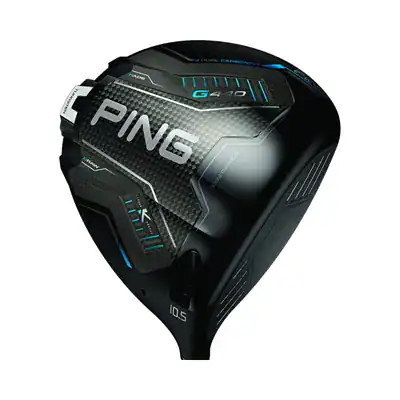
PING G440 K Driver
PING built the G440 K for one job: staying steady when you miss the middle of the face. It was one of the 10 straightest drivers in our test at all three swing speeds. If you hit it all over the face, start here.
Why we picked it
Forgiveness. MOI measures how much a club head resists twisting on off-center hits, and the G440 K reaches the 10,000 mark that the most forgiving drivers aim for. Less twisting means fewer wild misses, and it showed: it was top 10 for straightness for every tester.
Distance. You give up a few yards on good swings. I hit it about 290 yards, 6 behind the TaylorMade Qi4D. Our average-swing tester was a yard behind the Qi4D, and our senior tester was just as long with it.
Fitting. A 32g back weight moves to favor a draw, a fade or neither. An HL version with a lighter build helps slower swingers get the ball up.
Who it’s for
High handicappers who miss the center a lot, golfers who lose balls off the tee, and anyone who would rather be in the fairway than 10 yards longer.
Look elsewhere if: slicing is what costs you shots; the PING G440 SFT is built to fight it. For less money, the Tour Edge Exotics Max is nearly as forgiving and costs $399.99.
Our test numbers
Ryan, 3 handicap, Fast swing: 109 mph
- Total distance
- 290 yds
- Carry
- 278 yds
- Off line
- 4.4 yds avg
Tester 2, 12 handicap, Average swing: 94 mph
- Total distance
- 230 yds
- Carry
- 217 yds
- Off line
- 4.6 yds avg
Tester 3, 18 handicap, Senior swing: 80 mph
- Total distance
- 184 yds
- Carry
- 170 yds
- Off line
- 3.9 yds avg
Where to buy
Prices update daily.
Best Budget Driver

Tour Edge Exotics Max Driver
The newest big-brand drivers cost $650 to $700. The Exotics Max costs $399.99 and still holds its own against them in our test. It's the best value on our list.
Why we picked it
Value. Tour Edge is a smaller brand than TaylorMade or Callaway, and it prices like one. The Exotics Max launched at $499.99 and now sells for $399.99, $250 less than our top pick. It still rates with the best: in our overall scoring it finished ahead of drivers that cost $250 more.
Forgiveness. The head is big and built to stay steady on off-center hits, and toe strikes never felt dead to me. A sliding weight on the back moves toward the heel or toe to nudge the ball's curve, and the adjustable hosel, where the shaft meets the head, has eight settings.
Distance. The savings cost a few yards: all three testers lost 6 to 7 yards to the TaylorMade Qi4D. For golfers who struggle more with contact than direction, that's an easy trade for $250. Slicers won't find much help here, though; our 12-handicapper found just 4 fairways in 10.
Who it’s for
Mid and high handicappers who want a top-rated driver without paying big-brand prices, and golfers with inconsistent contact who care more about staying in play than chasing every yard. The sliding weight and eight-setting hosel also make it a good fit for anyone booking a fitting.
Look elsewhere if: your main miss is a slice. Spend about $50 more on the PING G440 SFT. If you want the most forgiving option for the money, the Cleveland HiBore XL costs about the same.
Our test numbers
Ryan, 3 handicap, Fast swing: 109 mph
- Total distance
- 288 yds
- Carry
- 276 yds
- Off line
- 4.4 yds avg
Tester 2, 12 handicap, Average swing: 94 mph
- Total distance
- 228 yds
- Carry
- 216 yds
- Off line
- 4.5 yds avg
Tester 3, 18 handicap, Senior swing: 80 mph
- Total distance
- 184 yds
- Carry
- 169 yds
- Off line
- 3.8 yds avg
Where to buy
Prices update daily.
Best Driver for Beginners

Cleveland HiBore XL Driver
A first driver should keep the ball in play and leave money for lessons. The HiBore XL does both: it was one of the three straightest drivers in our test at every swing speed, and it costs about $400. It's the driver we'd hand a new golfer.
Why we picked it
Forgiveness. Cleveland built a big, triangle-shaped head with a face about 10% larger than the average driver, and pushed weight to the edges so it twists less on off-center hits. That showed in our testing: it was one of the three straightest drivers for all three testers.
Launch. It gets the ball up easily, with one of the higher launches in our test. An 8g weight in the grip end makes it feel lighter and easier to control, which helps new golfers swing with confidence.
Distance and value. It gives up some distance on good swings: I hit it about 8 yards shorter than the TaylorMade Qi4D, but for our senior tester the gap was only a yard. At about $400 it costs $250 less than the newest big-brand drivers. There's more in our HiBore XL review.
Who it’s for
New golfers, golfers on a budget, and anyone who misses the fairway more than they miss distance.
Look elsewhere if: you already hit the ball solidly and want every yard; the TaylorMade Qi4D is longer. If you like a more traditional round head, the Tour Edge Exotics Max is nearly as forgiving for about the same price.
Our test numbers
Ryan, 3 handicap, Fast swing: 109 mph
- Total distance
- 288 yds
- Carry
- 277 yds
- Off line
- 4.3 yds avg
Tester 2, 12 handicap, Average swing: 94 mph
- Total distance
- 228 yds
- Carry
- 216 yds
- Off line
- 4.5 yds avg
Tester 3, 18 handicap, Senior swing: 80 mph
- Total distance
- 183 yds
- Carry
- 169 yds
- Off line
- 3.8 yds avg
Best Driver for Seniors

TaylorMade Qi4D Max Lite Driver
Slower swings need help getting the ball in the air. The Qi4D Max Lite is the lightest driver in TaylorMade's 2026 family, and it launched our senior tester's drives among the highest of any driver we tested. If you swing under 90 mph, try it first.
Why we picked it
Launch. TaylorMade made the head, shaft and grip lighter together, and even swapped the titanium collar for aluminum to save weight. A lighter club is easier to swing, and the ball gets up more easily: our senior tester's launch with it was among the highest in our test.
Distance. For our senior tester it carried 169 yards and finished at 183, within a yard of the standard Qi4D. On faster swings the light build works against you: I hit it about 10 yards shorter than the Qi4D.
Price. It costs $649.99, the same as the standard Qi4D, so choose between them by swing speed, not budget. It comes only in 10.5° and 12°, both on the high side to help slower swings.
Who it’s for
Seniors, golfers who swing under 90 mph, and anyone whose drives come out low and don't carry.
Look elsewhere if: you swing fast; the light build cost me about 10 yards against the TaylorMade Qi4D. If straightness matters more to you than height, the PING G440 K was straighter for our senior tester.
Our test numbers
Ryan, 3 handicap, Fast swing: 109 mph
- Total distance
- 286 yds
- Carry
- 275 yds
- Off line
- 4.7 yds avg
Tester 2, 12 handicap, Average swing: 94 mph
- Total distance
- 226 yds
- Carry
- 215 yds
- Off line
- 4.9 yds avg
Tester 3, 18 handicap, Senior swing: 80 mph
- Total distance
- 183 yds
- Carry
- 169 yds
- Off line
- 4.1 yds avg
Where to buy
Prices update daily.
Best Driver for Distance (average player)

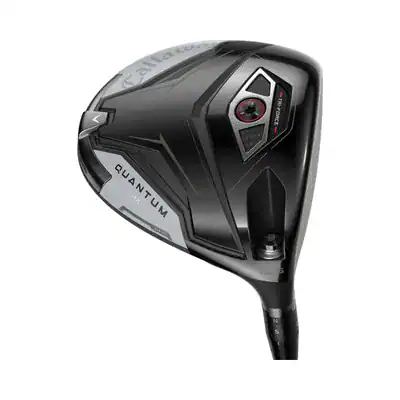
Callaway Quantum Max Driver
Plenty of golfers want more distance without swinging harder. The Quantum Max delivers it best: it was the longest driver for our 12-handicap tester.
Why we picked it
Distance. Drives that come down steeply stop quickly, and that costs many average golfers yards. It spins less than most drivers we tested, so drives come in on a shallower line and keep going. It was the only driver in the top three for distance for all three of our testers, and on firm Tucson fairways my drives ran a long way after landing.
Accuracy. The extra distance costs some fairways. Our 12-handicapper found about 6 of 10 with it, against nearly 8 of 10 with the TaylorMade Qi4D, which was only about 2 yards shorter for him. My off-center hits wandered more than with the Qi4D, too. A movable weight has a draw setting that can nudge the ball left, but it's no fix for a real slice.
Value. It was full price, $649.99, when we checked. For less, look at Titleist's previous-generation GT2: it's about $449 at retailers while stock lasts, and it went nearly as far for our 12-handicapper.
Who it’s for
Mid-handicappers who already find a fair share of fairways and now want more yards, golfers whose drives stop quickly after landing, and players with a slight fade who can use the draw setting to straighten it. It went a long way for our fast and slow testers as well, so it suits a wide range of swing speeds, and left-handed golfers can get it too.
Look elsewhere if: you already miss too many fairways; the TaylorMade Qi4D is straighter for nearly the same distance. Slicers will get more help from the PING G440 SFT.
Our test numbers
Ryan, 3 handicap, Fast swing: 109 mph
- Total distance
- 295 yds
- Carry
- 281 yds
- Off line
- 4.6 yds avg
Tester 2, 12 handicap, Average swing: 94 mph
- Total distance
- 231 yds
- Carry
- 217 yds
- Off line
- 4.7 yds avg
Tester 3, 18 handicap, Senior swing: 80 mph
- Total distance
- 183 yds
- Carry
- 167 yds
- Off line
- 4.0 yds avg
Where to buy
Prices update daily.
Best Driver for Slice

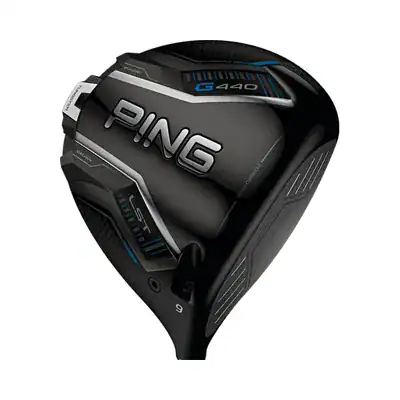
PING G440 SFT Driver
A slice costs more strokes than a short drive, and the G440 SFT takes much of the curve out. Our slicing 12-handicapper found nearly 8 of 10 fairways with it. If you slice, this is the first driver we'd recommend.
Why we picked it
Accuracy. A slice happens when the clubface still points right as it meets the ball. The SFT fights that two ways: its face is angled slightly left, and a movable weight in the back helps the face turn back to straight in time. For our slicing tester, it was the straightest driver in the test, while Callaway's longer, draw-biased Quantum Max D found him only about 4 fairways in 10. Even my small fade flew straight with it.
Adjustability. The weight has two settings, Draw and Draw+, so you choose how much help you get, and the hosel adjusts loft. A 9-degree head is available too, so a faster swinger who slices isn't stuck with extra loft.
Value. PING cut the price from $619 to $449 in August 2026. What you give up is distance: our slicer lost about 15 yards to the TaylorMade Qi4D. For a slicer, a drive in the fairway is worth more than a long one in the trees. A replacement is expected around January 2027, but at $449 the current model is a fair buy.
Who it’s for
Chronic slicers and golfers who push the ball right, especially mid-to-high handicappers who would trade some distance for more fairways. The 9-degree head suits a faster swinger with a slice, and a left-handed version serves left-handed slicers. Right-handers whose home course has trouble down the right side should take a look as well.
Look elsewhere if: your ball only drifts a little right; the TaylorMade Qi4D goes farther and still finds fairways. If your swing is slow, the TaylorMade Qi4D Max Lite is the better fit.
Our test numbers
Ryan, 3 handicap, Fast swing: 109 mph
- Total distance
- 289 yds
- Carry
- 278 yds
- Off line
- 4.4 yds avg
Tester 2, 12 handicap, Average swing: 94 mph
- Total distance
- 226 yds
- Carry
- 215 yds
- Off line
- 4.6 yds avg
Tester 3, 18 handicap, Senior swing: 80 mph
- Total distance
- 182 yds
- Carry
- 169 yds
- Off line
- 3.9 yds avg
Where to buy
Prices update daily.
Best Mini Driver

TaylorMade R7 Quad Mini Driver
On tight holes, many golfers leave the driver in the bag and settle for 3-wood. The R7 Quad is a better answer. It's the best mini driver we tested, and it still went about 290 yards for me.
Why we picked it
Distance. A mini driver has a smaller head and a shorter shaft than a normal driver, which makes it easier to swing with confidence when the hole is tight. You usually give up some distance for that, and the R7 Quad gives up the least: it was the longest of the four minis we tested for all three testers. On my swing it finished about 7 yards short of the full-size TaylorMade Qi4D.
Accuracy. It became my club for tight par 4s. I found nearly 8 of 10 fairways, and it felt like a real driver rather than an oversized 3-wood. It won't straighten out a slice, though: our 12-handicap tester, who slices, found fewer than half the fairways with it.
Adjustability. Four small weights change how it flies. Heavy weights forward keep the ball lower with more roll; heavy weights back make it more forgiving. It can be tricky off fairway grass, so treat it as a tee club first. It also costs about $70 less than Titleist's GTS300.
Who it’s for
Golfers who reach for 3-wood on tight holes and would like that shot to go farther, solid ball-strikers with a faster swing who want a second club for the tee, and players who like a smaller head behind the ball. A strong player can make it the only driver in the bag, but most golfers will get more from it alongside a full-size driver.
Look elsewhere if: you're hoping a smaller head will cure a slice. It won't: our 12-handicap slicer found far more fairways with the full-size PING G440 SFT.
Our test numbers
Ryan, 3 handicap, Fast swing: 109 mph
- Total distance
- 276 yds
- Carry
- 265 yds
- Off line
- 5.1 yds avg
Tester 2, 12 handicap, Average swing: 94 mph
- Total distance
- 214 yds
- Carry
- 203 yds
- Off line
- 5.3 yds avg
Tester 3, 18 handicap, Senior swing: 80 mph
- Total distance
- 172 yds
- Carry
- 159 yds
- Off line
- 4.5 yds avg
Where to buy
Prices update daily.
Best Looking Driver

Titleist GTS3 Driver
Some golfers swing more freely when they like what they see. Our testers rated the GTS3 the best-looking driver we tested, and it went about 295 yards on my swing. It's the right choice for steady ball-strikers who value looks.
Why we picked it
Looks. If a driver looks wrong behind the ball, it's hard to make a relaxed swing. The GTS3 has the clean, classic shape Titleist is known for, and our testers scored its looks the highest in the test. It felt solid to me, too, and the ball jumped off the face whenever I found the middle.
Distance. It's long, and not only for fast swings. It was one of the longest drivers I hit, and for our 12-handicap tester only one went farther.
Value. The catch is Titleist's own GT3, which now sells for about $449 and went about as far for me. In the GTS3's favor, our 12- and 18-handicap testers found more fairways with it than with the GT3, and it's Titleist's most adjustable driver, with a sliding weight a fitter can use to fine-tune your ball flight. If you love the look, that confidence is worth paying for.
Who it’s for
Golfers who play better when they like what they see, steady ball-strikers who usually find the middle of the face and want distance to match, and players who plan to get fitted and will use its adjustable weight and loft settings. You don't need a tour-level swing to get its distance, either.
Look elsewhere if: off-center hits are a regular part of your round. For about $50 less, the TaylorMade Qi4D is far more forgiving, and each of our three testers found more fairways with it.
Our test numbers
Ryan, 3 handicap, Fast swing: 109 mph
- Total distance
- 295 yds
- Carry
- 282 yds
- Off line
- 4.6 yds avg
Tester 2, 12 handicap, Average swing: 94 mph
- Total distance
- 231 yds
- Carry
- 218 yds
- Off line
- 4.8 yds avg
Tester 3, 18 handicap, Senior swing: 80 mph
- Total distance
- 184 yds
- Carry
- 169 yds
- Off line
- 4.0 yds avg
Where to buy
Prices update daily.
Best Driver For High Launch

Wilson DYNAPWR Max+ Driver
The DYNAPWR Max+ launched the ball higher than any other driver we tested, for all three testers. That makes it the answer for golfers whose drives stay low and land short. Choose it when height is the one thing you need.
Why we picked it
Height. I don't need the extra height, but our senior tester does. His drives usually come out low and land short, and with the Max+ they climbed higher than with any other driver he hit.
Accuracy. That height came at a price. Our senior tester found only 4 of 10 fairways with it, and his misses were the widest of any driver he hit. Wilson sells the Max+ as a very forgiving driver, but in our test it finished in the bottom half for keeping distance on off-center hits.
Value. At $499.99, it costs about $150 less than most big-name 2026 drivers. Wilson's older DYNAPWR Max, now about $350, went a little farther for every one of our testers, though. If you swing slowly, try the 12° Lite version, which has a lighter shaft. We cover both models in our Wilson DYNAPWR review.
Who it’s for
Slower and senior swingers whose drives come out low and run, golfers who have already tried more loft and still can't get the ball up, and higher handicappers on courses with room to miss off the tee. Most faster swingers will find it flies higher than they want.
Look elsewhere if: you need fairways more than height. The PING G440 K is built for stability first, and the TaylorMade Qi4D Max Lite also launches high.
Our test numbers
Ryan, 3 handicap, Fast swing: 109 mph
- Total distance
- 290 yds
- Carry
- 278 yds
- Off line
- 4.5 yds avg
Tester 2, 12 handicap, Average swing: 94 mph
- Total distance
- 228 yds
- Carry
- 216 yds
- Off line
- 4.6 yds avg
Tester 3, 18 handicap, Senior swing: 80 mph
- Total distance
- 183 yds
- Carry
- 169 yds
- Off line
- 3.9 yds avg
Most Underrated Driver

PING G440 LST Driver
The G440 LST came out in 2025, so shoppers overlook it. They shouldn't: it rated just behind our top pick, costs $449, and gives faster swingers a lower flight without punishing off-center hits.
Why we picked it
Forgiveness. Lower-flying drivers usually suit only very good players, because they give up a lot on misses. The LST keeps most of PING's usual forgiveness, close to the G440 K, our most forgiving pick. On my swing, the misses stayed in play, and I found 8 of 10 fairways.
Value. Since PING's August price cut, it costs $449, down from $619. That's $200 less than the TaylorMade Qi4D, which was the only driver to rate higher in our test.
Distance. It isn't the longest driver here. I hit it about 291 yards, 6 yards short of the Titleist GTS4, but it held more of its distance when I missed the center, and it costs $250 less. It sits a little flatter than the G440 Max, which helps keep the ball from going left, and a heavy back weight lets a fitter tune it. There's more in our G440 LST review.
Who it’s for
Faster swingers who don't always find the middle, players whose miss is a hook, and value-minded buyers who prefer a proven $449 driver to a new one at $650 to $700. It launches low, so it's a poor match for slower swings.
Look elsewhere if: your drives struggle to get airborne. The TaylorMade Qi4D Max Lite launches higher; slicers should choose the PING G440 SFT.
Our test numbers
Ryan, 3 handicap, Fast swing: 109 mph
- Total distance
- 291 yds
- Carry
- 278 yds
- Off line
- 4.9 yds avg
Tester 2, 12 handicap, Average swing: 94 mph
- Total distance
- 228 yds
- Carry
- 215 yds
- Off line
- 5.1 yds avg
Tester 3, 18 handicap, Senior swing: 80 mph
- Total distance
- 182 yds
- Carry
- 167 yds
- Off line
- 4.3 yds avg
Compare our picks
How our picks compare on distance and straightness for each swing type, then all 12 side by side on head size, lofts, adjustability, ball flight, left-handed options and price.
How our picks compare
From our launch-monitor testing at each swing speed.
Total distance Tester 2, 12 handicap, Average swing: 94 mph
- Titleist GTS4Best Driver for Low Handicappers 233 yds
- TaylorMade Qi4DBest Driver Overall 231 yds
- Callaway Quantum MaxBest Driver for Distance 231 yds
- Titleist GTS3Best Looking Driver 231 yds
- PING G440 KMost Forgiving Driver 230 yds
- Tour Edge Exotics MaxBest Budget Driver 228 yds
- Cleveland HiBore XLBest Driver for Beginners 228 yds
- Wilson DYNAPWR Max+Best Driver For High Launch 228 yds
- PING G440 LSTMost Underrated Driver 228 yds
- TaylorMade Qi4D Max LiteBest Driver for Seniors 226 yds
- PING G440 SFTBest Driver for Slice 226 yds
- TaylorMade R7 Quad MiniBest Mini Driver 214 yds
Specs come from each manufacturer. Prices are Global Golf's and update daily.
How we test drivers
Every driver on this page went through the same process. All three of us hit every driver on sale in 2026, minis included. I'm a 3 handicap with a fast swing. Our other two testers are a 12-handicap who slices and an 18-handicap senior, so between us we cover a wide range of golfers.
The full method is on our how we test page.
- 01Fit every head
Before we record a single shot, each tester is fitted for loft and settings in every driver. That way we judge each driver at its best for that swing, not straight out of the box.
- 02Test three swings
A driver that suits a fast 3-handicap can be wrong for an 18-handicap senior. So all three of us hit every driver, and we say plainly when one only works for certain swings.
- 03Take them to the course
A hitting bay only tells part of the story. The best drivers come out for real rounds, on tight holes and windy days, before we finish a review or name a pick.
- 04Pick for real golfers
We match each driver to the golfer it helps most, using all three testers' results, the price and how it played on the course.


How to choose the right driver
Two things decide the right driver for you: how far you hit it now, and where your bad drives go. Your distance points to the loft and shaft. Your usual miss points to the head.
You don't need to know your swing speed. Start with the table below, then match the head to your miss.
Start with how far you hit it
Find how far your drives usually go, roll included. Each row gives you a starting loft and shaft, plus the picks that suit that distance best.
Under 200 yds
- Start with loft
- 12°, or the highest loft offered
- Shaft flex
- Senior or lightweight regular
- Look for
- Light, forgiving and easy to get up
Picks from this list that suit you
200–230 yds
- Start with loft
- 10.5° to 12°
- Shaft flex
- Regular or senior
- Look for
- Forgiving and light enough to swing freely
Picks from this list that suit you
230–260 yds
- Start with loft
- 10.5°
- Shaft flex
- Regular, or stiff if you swing hard
- Look for
- Balanced all-rounder, or slice help
Picks from this list that suit you
260+ yds
- Start with loft
- 9° to 10.5°
- Shaft flex
- Stiff
- Look for
- Flatter flight that still forgives misses
Picks from this list that suit you
These are starting points, not rules. For reference, our senior tester swings about 80 mph and averaged about 185 yards across the drivers we tested. Our 12-handicapper swings about 94 mph and averaged about 230. I swing about 109 mph and averaged about 290.
Loft
Loft is the easiest place to find distance, and many golfers use too little. A 9° driver sounds like a better player's club, but many of us carry the ball farther with 10.5° or 12°. More loft gets the ball in the air sooner, keeps it there longer and usually takes some curve off a slice.
Start at 10.5° if you hit it 230 to 260 yards, and add loft if you're shorter. Nine degrees suits fast swingers whose drives climb too high and drop short. Every pick on this list lets you adjust the loft later, so you aren't locked in.
Forgiveness vs distance
A forgiving driver keeps more of your distance when you miss the center of the face. Most golfers miss the center more often than they think, so forgiveness usually matters more than a few extra yards on a perfect swing.
Our testing shows the trade-off. The PING G440 K was one of the straightest drivers for all three testers, but on my swing it was one of the shorter ones. The Titleist GTS4 was the longest driver I hit, but it was less straight. The TaylorMade Qi4D balances the two, which is why it's our top pick.
Shaft flex and weight
Flex should follow how hard you swing. Senior flex suits most golfers who hit it under about 200 yards, regular suits most between 200 and 260, and stiff suits longer hitters. The wrong flex can cost you both distance and direction.
Weight matters as much as flex. A lighter driver is easier to swing fast, which helps slower swingers most. The TaylorMade Qi4D Max Lite launched our senior tester's drives among the highest in our test, but on my faster swing it was one of the shorter drivers. PING's HL versions of the G440 work the same way, with lighter shafts and grips.
Adjustability
All 12 of our picks have an adjustable sleeve where the shaft meets the head. A turn of the wrench adds or takes off a degree or two of loft. Most also have a movable weight. Set toward the heel, it helps the ball turn left for a right-handed golfer. Set toward the back, it makes the head more forgiving.
Treat these settings as fine-tuning. They won't turn a low-flying driver built for strong players into one that's easy to get airborne. Choose the right head first, set it up once with a fitter or our distance table, then leave it alone.
Fixing a slice
A slice happens when the clubface is still open, pointing right for a right-handed golfer, as it meets the ball. A draw-biased driver is built to help the face close in time, so the ball curves less to the right.
The PING G440 SFT did that best in our test. Our 12-handicapper, who slices, found nearly 8 fairways in 10 with it, and his misses stayed closer to the fairway than with any other driver. The cost was about 15 yards against the Qi4D. A draw label alone isn't enough: Callaway's Quantum Max D went a long way for him but found only about 4 fairways in 10.
Mini drivers
A mini driver has a smaller head, about 305cc on our pick against 460cc for a standard driver, and a shorter shaft. Many golfers find it easier to control, and some also use it off the fairway.
It won't automatically make you straighter. On my swing the TaylorMade R7 Quad Mini went a few yards shorter than the full-size Qi4D and found fewer fairways. It didn't fix our 12-handicapper's slice either. For most golfers, a mini works best as a second tee club for tight holes.
Last year's models and 2026 price cuts
Several good drivers cost much less than they did at launch. In August, PING cut its 2025 G440 Max, LST and SFT from $619 to $449. PXG now sells its Lightning drivers for $449, down from $649, and Tour Edge's Exotics line dropped from $499.99 to $399.99. Srixon's 2024 ZXi drivers are $399.99 ahead of the new ZXi RKT, due October 16 at $649.99.
The discounted drivers held up well in our test. The $449 PING G440 LST rated just behind the $649.99 Qi4D, and Titleist's older GT2, about $449 at retailers, wasn't far behind either.
Driver FAQs
What is the best golf driver of 2026?
The TaylorMade Qi4D. It was the top-rated driver in our test and worked well for all three of our testers: long, forgiving and the straightest overall.
If you're a strong, consistent player who wants more distance, look at the Titleist GTS4.
What is the best driver for an average golfer?
The TaylorMade Qi4D. Our 12-handicap tester hit it long and found nearly 8 fairways in 10, tied for his best.
If you want more distance, the Callaway Quantum Max was his longest driver. If you slice, start with the PING G440 SFT.
What is the most forgiving driver?
The PING G440 K. Its 10K MOI head stays steady on off-center hits, and it was one of the 10 straightest drivers in our test at all three swing speeds.
The trade-off is a few yards on your best swings, and at $700 it isn't cheap. The Tour Edge Exotics Max is nearly as forgiving for $399.99.
What is the best driver for a slice?
The PING G440 SFT. PING built it to fight a slice, and its movable weight has two draw settings. Our 12-handicapper, who slices, found nearly 8 fairways in 10 with it. It's also $449 after PING's August price cut.
Expect to give up some distance. If your ball only drifts a little right, the TaylorMade Qi4D went farther for him and found fairways just as often.
What is the best driver for seniors?
The TaylorMade Qi4D Max Lite. It's the lightest driver in the Qi4D family, which makes it easier to swing fast, and it comes only in 10.5° and 12° to help the ball get up. It launched our senior tester's drives among the highest in our test.
It costs $649.99, the same as the standard Qi4D, so choose between the two by swing speed.
Should I get a 9° or 10.5° driver?
Most golfers should start with 10.5°. It gets the ball up more easily, so most of us carry it farther, and it usually curves less. Choose 9° only if you swing fast and your drives climb too high. If your drives go under 200 yards, try 12° or the highest loft offered.
Every one of our 12 picks has an adjustable sleeve, so you can fine-tune the loft later.
How much should I spend on a driver?
About $400 to $450 buys a top driver this year. The PING G440 LST is $449 and rated just behind our top pick. The Tour Edge Exotics Max is $399.99 and holds its own against drivers that cost $250 more.
If money is tight, the Cleveland HiBore XL is about $400 and even easier to hit. Our top pick, the Qi4D, is $649.99. It's the best all-rounder, but the cheaper picks aren't far behind.
Is last year's model worth buying?
Often, yes. A driver doesn't get worse when a new one comes out, and the price usually drops. Several picks here, including PING's G440 models, are 2025 drivers that now cost far less than they did at launch.
PING cut its 2025 G440 Max, LST and SFT to $449 in August. Check that your loft, and a left-handed version if you need one, is still in stock.
Do I need a fitting?
Not always, but it helps, especially if you slice or your drives come up short. A basic fitting means hitting a few drivers while someone watches the ball and adjusts the loft and shaft. It matters most for drivers with lots of settings, like the Titleist GTS3.
If you can't get fitted, use our distance table above and buy from a store with a fair return policy.

Ryan Heiman
Ryan Heiman founded Independent Golf Reviews in 2011 and still tests the clubs himself. He plays to a 3 handicap out of Tucson, Arizona. He writes for everyday golfers, with clear verdicts, honest downsides and a straight answer on which clubs are worth the money.
More about Ryan


